Do You Have a Winning Attitude?

Credit: Google Images

Your attitude, not your aptitude, determines your altitude. – Zig Ziglar

I read a story once by Michael Hodgin about two Kentucky racing stable owners who had developed a rivalry.

Each spring, they both entered a horse in a local steeplechase. One of them thought that having a professional rider might give his horse an edge in the race, so he hired a hotshot jockey.

Well, the day of the race finally came, and as usual, their horses were leading the race right down to the last fence. But the final fence was too much for both of the horses. Both of them fell, and both riders were thrown. But that didn’t stop the professional jockey. He remounted and easily won the race.

When he got back to the stable, he found the horse owner fuming with rage. The jockey really didn’t understand the owner’s behavior, because he won the race. So the jockey asked, “What’s the matter with you? I won the race, didn’t I?” 

The red-faced owner nodded, “Oh yes, you won the race. But you won it on the wrong horse!”

The determination of the jockey is admirable despite the fact that he made that critical mistake. 

In leadership, you will be regularly challenged by your attitude. It comes with the territory. Sometimes the attitude challenges that we face are the result of our own poor choices. At other times, our attitude is challenged by external forces beyond our control.

In the book Winning The War in Your Mind, Craig Groescel writes, “Our lives are always moving in the direction of our strongest thoughts. What we think shapes who we are.” And this is precisely why our attitudes matter. Our thoughts and attitudes are moving us in a certain direction. The question is: Are you headed in the right direction?

Poor attitude choices can be a detriment to your leadership. Your attitude is basically the thermostat by which your team members adjust. When you are upbeat and positive, others tend to adopt that attitude. The same holds true if it’s negative. So, as a leader, what posture should you take with your attitude? Here are a few simple approaches worth consideration.

Guard your thoughts

This first piece of advice is all about your discipline as a leader. It’s a profoundly simple piece of advice. And it’s a profoundly difficult discipline to master.  But much is riding on the outcome.

I would like for you to think of guarding your thoughts not from a defensive posture, which we’ve all been accustomed to, but from a proactive posture.

When it comes to guarding our thoughts, what does a proactive posture look like? Here are a few examples:

  • Practice gratitude and random acts of kindness
  • Prayer or meditation
  • Volunteer/ serve others
  • Exercise/walks 

When your thoughts and actions are others-centered and when you are intentional about what you choose to watch and listen to, then you are, in a proactive way, guarding your thoughts. You have less time to be self-absorbed and more time to focus on others.

Guard your company

We don’t always control what happens to us, but we do control how we will respond. This is crucial to understand. 

When you are proactive about guarding your mind in the ways that I have already outlined, the next thing you need to do is guard your company. Here’s a truth you must embrace: Not everyone belongs in your circle. 

As a leader, you will have many interactions with people within and outside your organization. These are generally tied to your specific duties as a leader. 

But when it comes to your inner circle- the people closest to you by choice- you must guard your company. To be clear, I am not advocating being a snob. I am, however, saying that to protect and guard your attitude, you can’t allow others with poor attitudes into your inner circle, who could potentially drag you down. Your winning attitude is too valuable and must be protected.

Final Thoughts

Possessing a winning attitude takes work, discipline, and determination. It is incumbent upon you to be proactive and wise in your choices. A winning attitude is attainable, but you must guard your thoughts and your company to maintain it.

©2026 Doug Dickerson

 

When Time Becomes The Teacher

Credit: Google Images

Don’t wait. The time will never be just right. – Napoleon Hill

After much anticipation and hype, here we are. Welcome to 2026! The rush of the holidays is in the rearview mirror, and credit card statements will soon arrive like the ghost of Christmas past. 

New Year’s resolutions will soon be put to the test, and you will quickly question the legitimacy of that new gym membership. The new year begins with much promise and good intentions, but will it last? 

Business consultant and author Michael LeBoef says, “Devoting a little of yourself to everything means committing a great deal of yourself to nothing.” And this is precisely the trap that you want to avoid. Your time matters, and so does how you use it. Be it resolutions, professional development goals, family priorities, etc., don’t commit chunks of your time to doing nothing of consequence.

I’d like to share a few things I’ve learned over the years about this topic, in hopes they will add value to your leadership journey. 

I had to learn the myth that everything matters equally.

I learned this principle from Gary Keller’s book, The One Thing. In it, he writes: “When everything feels urgent and important, everything seems equal. We become active and busy, but this doesn’t actually move us any closer to success. Activity is often unrelated to productivity, and busyness rarely takes care of business.” And this is such a necessary thing to learn in leadership.

Keller argues that a to-do list can easily lead you astray. More often than not, it’s simply the things you think you need to do, which often is nothing more than the first thing you thought of. Keller adds, “If your to-do list contains everything, then it’s probably taking you everywhere but where you really need to go.” In short, the most menial thing on your to-do list is not equal to the most important thing. Stop buying into the myth that all things are equal. They’re not. As Keller recommends, replace a “to-do” list with a “success list.” It will change your mindset and your focus. 

I had to learn that I choose my life by how I spend my time

I learned this fundamental principle from John Maxwell. In his book, Today Matters, he writes, “If you’re over the age of twenty-one, your life is what you’re making it. To change your life, you need to change your priorities.”

The playing field, over time, is level. We all get the same amount regardless of who we are. The priorities you set determine how you use your time. Changing our approach to our days makes all the difference between time well spent and time wasted. Maxwell framed it in three useful questions.

  1. What is required of me? When ordering priorities, always start with the requirement question and give it careful thought before moving on to the next question.
  2. What gives me the greatest return? As you grow as a leader, you will discover that some things will give you a greater return than others. What are they? 
  3. What gives me the greatest reward? If you only do what you must and what is effective, you will be highly productive, but you may not be content. It’s important to consider what gives you personal satisfaction. But don’t get these questions out of order. 

As a leader, you have to understand that you can’t, and shouldn’t, do everything. And this is why establishing your priorities is so important. You have to be your own timekeeper. Your time is too valuable to relinquish to someone else. 

©2026 Doug Dickerson

Are You Thinking About Your Legacy?

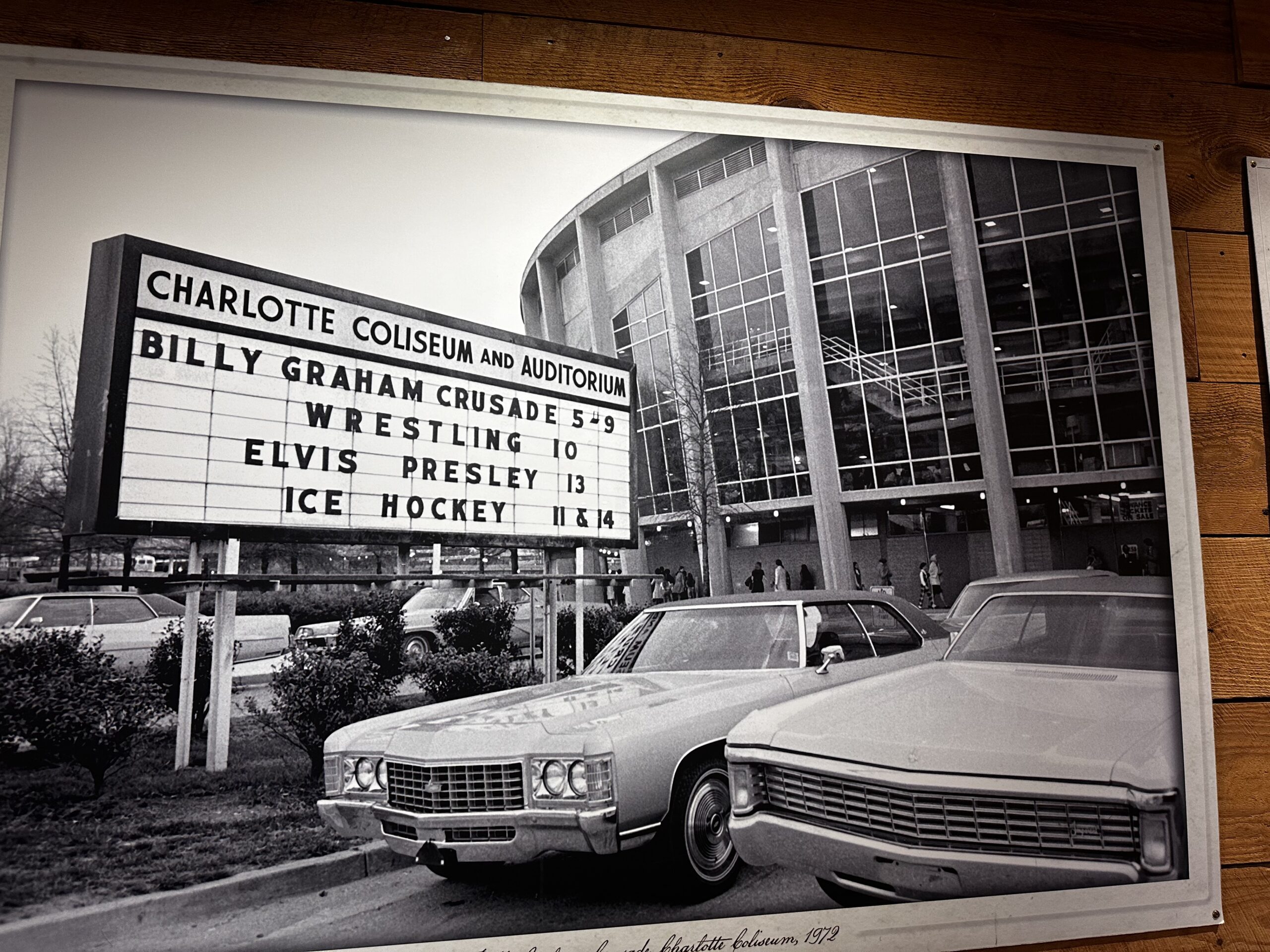
Photo Credit: Doug Dickerson


At your funeral, people shouldn’t have to guess the kind of life you lead or the legacy you left behind, what you stood for should be evident by your actions. – John Maxwell

Recently I had the opportunity to spend an afternoon at the Billy Graham Library in Charlotte, NC. It was a beautiful day with just an ever-so-slight hint of autumn in the air. The sun was shining bright and there was a cool breeze.

The tour was intriguing on many levels. Walking through the various stages of Graham’s life from his humble beginnings to the massive crusades around the world, the tour was both historical and inspirational.

One of the pictures that captured my attention was one that perhaps you might not expect. Sure, there were pictures of the massive crowds at the Crusades, pictures with presidents, and pictures with his family. But the one that jumped out to me oddly enough was of the Charlotte Coliseum billboard advertising an upcoming crusade. Below the crusade dates were the next attractions: Wrestling, Elvis Presley, and Ice Hockey.

In the grand scheme of things, I suppose it would take Elvis, wrestling, and ice hockey to come close to the impact of Billy Graham. 

When it comes to your impact, and leaving your legacy, what thoughts come to mind? What is important to you? What’s the “one thing” you want on your marquee? 

For each person, it will look different, but for you as a leader, it will always come down to the things that you are most intentional about. As I reflect upon my visit to the Billy Graham Library and what legacy is all about, here are my three takeaways.

His legacy was built on his faith

Today we remember Billy Graham as a man of faith – an evangelist. The bedrock of his legacy was an enduring faith that spanned many decades.

Reflecting on his legacy and life, Graham said, “The greatest inheritance you can pass on to your children and grandchildren is more than money or material possessions you get. It’s a legacy of both character and faith.” And this is exactly what Graham did.

Building your legacy on faith is to build it on something that will outlive you. Faith is that foundation. Click To Tweet

His legacy was built on family

Graham’s most enduring legacy, aside from his evangelistic work, was undoubtedly his family. He was married to his wife Ruth for 63 years. They had five children, and a slew of grandchildren, great-grandchildren, and even great-great-grandchildren. Family meant more to him than anything else.

Graham once said, “Nothing is closer to my heart than my family.” And this was a core value that also defined his legacy. 

Many opportunities and accomplishments will help define you as a leader. For Graham, he knew what was the most important.

His legacy was built on humility

Billy Graham exemplified what it meant to be a servant-leader. He understood that his life and leadership were about something greater than himself and he passionately lived it out.

One of Graham’s longtime associates observed, “Billy always saw himself as just a farm boy from Mecklenburg County, North Carolina. He was amazed that God could use him like he did.” 

One of the most enduring qualities of any leader is that of humility. Humility will keep you grounded when your ego gets too big and will instill a deeper sense of gratitude for all that you have. I believe Graham lived a life marked by a true sense of humility and awareness of the gift that he had.

As you consider your legacy and what it will mean to those you love, consider the role of faith, family, family, and humility. It’s a good starting place for a life well lived.


©2024 Doug Dickerson

What Brings Your Team Back on Monday?

Credit: Google Images

On Monday mornings, I am dedicated to the proposition that all men are created jerks. – H. Allen Smith

Writing in The 360° Leader, John Maxwell shares a humorous story about a turkey and a bull. “I would love to be able to get to the top of that tree, “ sighed the turkey, “but I haven’t got the energy.” 

“Well,” reapplied the bull, “why don’t you nibble on some of my droppings? They are packed with nutrients.” The turkey pecked at a lump of dung and found that it gave him enough strength to reach the lowest branch of the tree.

The next day, he reached the second branch after eating some more dung. Finally, after a fourth night, there he was, proudly perched at the top of the tree. But a hunter promptly spotted the turkey and shot him out of the tree. The moral of the story: BS might get you to the top, but it won’t keep you there.

Monday mornings can either be a day of dread or one filled with expectation for what lies ahead. And yes, you may have to contend with those whose path is full of droppings or who BS their way to the top. But as a leader, what motivation do you want your team to bring to the workplace on Monday? What do you truly believe motivates your team to keep coming back? 

Here are a few qualities that will endear you to your team and make them proud to be by your side.

Being a leader with a servant’s heart

A leader with a servant’s heart is consumed with centering the organization around his or her own needs, but in being the facilitator to make those around him successful. The mentality is not “What can you do for me?” but rather, “What can I do for you?”

When you engage your team members with a servant’s heart, you help them see and understand that you are about the big picture, not being the big person. Click To Tweet


Being a leader with an open mind

I’ve said it often that the best ideas don’t always flow from your office, they flow into it. When you lead with an open mind and are open to the ideas and expertise of your team, the potential of your team is unlimited. Martha Stewart put it this way, “Without an open-minded mind, you can never be a great success.” And this is what makes your workplace enjoyable. When leadership is open-minded to new ideas, thinking outside the margins, and vesting trust in the team, great things are within your reach.

What brings your team back on Monday is an environment where ideas are welcomed, where leaders are not insecure, where respect abounds, and where team members see each other not as the competition, but as fellow teammates striving toward mutual goals.

Being a leader with a clear vision

Monday is the least of your worries if your team members do not have their hearts and minds wrapped around the vision and mission of what they are doing and why.

Warren G. Bennis said, “Leadership is the ability to translate vision into reality.” And this is the responsibility of your leadership: to map out a vision that is in clear terms that your team can embrace and where the buy-in is authentic. When your team knows where they are going and why they will buy in and go there with you.

Final Thoughts

What brings your team back on Monday is a leader with a servant’s heart (it’s not about you). What brings your team back on Monday is a leader with an open mind; don’t BS them. What brings your team back is a leader with a vision; share it.

Now, put yourself in the shoes of your team. Would you want to come back on Monday?


©2024 Doug Dickerson

Embracing The Hard Things


Credit: Google Images

We all have an unsuspected reserve of strength inside that emerges when life puts us to the test. – Isabel Allende 

A story is told about three military recruiters who went to address a group of high school seniors. Each recruiter represented a branch of the military and each was given fifteen minutes to speak.

The Army and Navy recruiters got carried away, so when it came time for the Marine to speak, he had just two minutes. He walked up and stood utterly silent for a full sixty seconds, half of his time. Then he said, “I doubt whether there are two or three of you in this room who would even stand a chance in the Marine Corps. But I want to see those two or three immediately in the dining hall when we are dismissed.” He turned smartly and sat down.


When he arrived in the dining hall, there was a crowd of students interested in the Marines. The recruiter knew that commitment cannot take place without recognizing the potential for difficulty.

As a leader, you are familiar with difficulty. It comes with the territory. Not everything about being in positions of leadership is as glamorous as they are sometimes perceived. There’s a big gap between the perceptions and the reality. And sometimes the gap is wide.

But despite the fact that difficulties are common among leaders, they don’t have to be fatal, permanent, or avoided. You can succeed-even thrive in the face of them. Here are three things you need to know about facing your difficulties in leadership.

The hard things today preparing you for greater success tomorrow

Your life in leadership will often be met with difficulties. Nothing worth achieving or accomplishment worth attaining is ever going to come without challenges along the way. That being said, your attitude towards your difficulty today is what will keep you where you are or move you forward. 

Earl Nightingale said it this way, “When we set an important goal for ourselves, we present to our minds a problem to be solved, a challenge to be successfully fulfilled.” And this is the essence of the challenges you face today. The greater the accomplishment you want to have tomorrow will have to be met with a greater determination today to achieve it. Once you do, you will create momentum that will carry you to greater success.

The hard things bring you new lessons to learn

With each set of difficulties that you encounter come new opportunities to grow and learn as a leader. The hard things you are dealing with today may not be the ones you dealt with a year ago. And they will look different a year from now Click To Tweet. With each new season in your leadership, you are equipped with new and better ways to handle them. 

It was Thomas Edison that said, “ I have not failed. I’ve just found 10,000 ways that won’t work.” And this highlights the value of difficulties or obstacles. They are great teachers. The question is – what are we learning from them and are we properly applying those lessons?

The hard things take your leadership to new levels

Your growth as a leader is important and at times it comes with some friction. It’s just part of the process. As a leader, you’re not going to be exempt from facing the hard things. But when you embrace them for what they are – opportunities to learn and grow, you will then discover that they are hindering you, they are now empowering you. And this is when the tide begins to turn in your favor. 

Rumi framed it this way, “Seek the wisdom that will untie your knot. Seek the path that demands your whole being.” And herein lies the challenge. In order to untie your knot, you must seek the right path. What are we prone to do? Our human nature wants the path of least resistance. But it’s when we embrace the hard things that we grow as a person and as a leader.

Final Thoughts 

Embracing the hard things that come your way is not always easy. I get it. But let me encourage you to rise to the challenge and embrace them with a renewed determination and attitude. You will be a better leader for it.


©2023 Doug Dickerson


Manufacturing Energy


Credit: Google Images

You are responsible for the energy that you create for yourself, and you’re responsible for the energy that you bring to others.” – Oprah Winfrey

Since the onset of the CoronaVirus pandemic and more specifically since March, how have your energy levels been? I have spoken to many people who are feeling overwhelmed, mentally, and emotionally drained, and much more. Sadly, many studies point to a spike in the number of people who are suffering from depression and other related issues. 

How are you holding up? 

One of the challenges for leaders during this time is in sustaining energy levels within their organizations to meet new demands and challenges they are now facing. Many are trying to keep up with the same workload but now with fewer people due to layoffs, etc.

Adapting to these new challenges and demands often requires more energy than was needed prior to conditions in March. Talk about your stress levels increasing!

I became more aware of the importance of energy levels after reading an article by Carey Nieuwhof in which he made the point about how manufacturing energy is exhausting for everyone. Nieuwhof states, “Everyone’s already tired, and please hear me, I am a huge fan of hard work- throwing your heart into the mission is critical. But there’s a big difference between throwing your heart into the mission and throwing your heart into a method.” And herein lies my point.

How many of you have had to change your methods of operation since March? For many, how you operate today looks a lot different than it did back in January. 

While you must preserve the integrity of your mission, you can and should consider your method of delivery. Out of necessity, many of you already have. Your energy levels are driven by your passion for what you do. Nothing can be more demoralizing than seeing your energy levels decline because discouragement set in when what you were so passionate about was taken from you or has been very slow in returning.

Maintaining your energy is as important as ever, but manufactured energy may not be the answer to your current situation. So, what is a leader to do? Here are a few simple tips.

Channel your energy toward what you can control

If we’ve learned anything in 2020 it’s that nothing is for certain. In your business or organization, focus your energy on what you can control today and going forward. Focus on your mission, be flexible with your methods. Don’t burn up energy defending the practices of the past when they are no longer relevant today. Click To TweetWhile it’s true that you can’t control everything that happens to you, what you can control deserves the best form of energy you can give it.

Reserve your energy for the long haul

Whether we like it or not, we are in a marathon, not a 50-yard dash. And since we don’t know how long this marathon will last, it’s important to reserve our energies for the long haul. This will require focus and discipline and a think-long attitude. It’s best to make your necessary adjustments now than regret it later when you are burned out. Manufactured energy is no substitute for the real thing. Click To Tweet

Practice self-care 

Just as you need to embrace a think-long attitude, you must also take into account the fact that no one is going to practice self-care for you. That’s on you. So it’s imperative that you take time to rest, refresh, and recharge on a regular basis. This can be something as simple as going for a long walk, a run, swim, or whatever it is that nourishes your mind and soul. And while you’re at it – be mindful of what you eat.

Credit: Google Images

A proper balanced diet and exercise are as important now as ever. If you are tired, rundown, and low on energy you are not at your best and it’s a drag on the rest of your team. 

Final Thoughts

My tips barely scratch the surface as it relates to steps you can take to make sure you have harnessed all the energy you need during this time. But it’s a starting place. My hope is that you will see that manufacturing energy is wearisome and in times like this and can be counterproductive to achieving your goals. 


©2020 Doug Dickerson

Embracing the Hard Things in Leadership

Credit: Google Images

We all have an unsuspected reserve of strength inside that emerges when life puts us to the test. – Isabel Allende 

A story is told about three military recruiters who went to address a group of high school seniors. Each recruiter represented a branch of the military and each was given fifteen minutes to speak.


The Army and Navy recruiters got carried away, so when it came time for the Marine to speak, he had just two minutes. He walked up and stood utterly silent for a full sixty seconds, half of his time. Then he said, “I doubt whether there are two or three of you in this room who would even stand a chance in the Marine Corps. But I want to see those two or three immediately in the dining hall when we are dismissed.” He turned smartly and sat down.


When he arrived in the dining hall, there was a crowd of students interested in the Marines. The recruiter knew that commitment cannot take place without recognizing the potential for difficulty.

As a leader, you are familiar with difficulty. It comes with the territory. Not everything about being in positions of leadership is as glamorous as they are sometimes perceived. There’s a big gap between the perceptions and the reality. And sometimes the gap is wide.

But despite the fact that difficulties are common among leaders, they don’t have to be fatal, permanent, or avoided. You can succeed-even thrive in the face of them. Here are three things you need to know about facing your difficulties in leadership.

The hard things today are preparing you for greater successes tomorrow

Your life in leadership will often be met with difficulties. Nothing worth achieving or accomplishment worth attaining is ever going to come without challenges along the way. That being said, your attitude towards your difficulty today is what will keep you where you are or move you forward. 

Earl Nightingale said it this way, “When we set an important goal for ourselves, we present to our minds a problem to be solved, a challenge to be successfully fulfilled.” And this is the essence of the challenges you face today. The greater the accomplishment you want to have tomorrow will have to be met with a greater determination today to achieve it. Click To TweetOnce you do, you will create a momentum that will carry you to greater success.

The hard things bring you new lessons to learn

With each set of difficulties that you encounter come new opportunities to grow and learn as a leader. The hard things you are dealing with today may not be the ones you dealt with a year ago. And they will look different a year from now. With each new season in your leadership, you are equipped with new and better ways to handle them. 

It was Thomas Edison that said, “ I have not failed. I’ve just found 10,000 ways that won’t work.” And this highlights the value of difficulties or obstacles. They are great teachers. The question is – what are we learning from them and are we properly applying those lessons?

The hard things take your leadership to new levels

Your growth as a leader is important and at times it comes with some friction. It’s just part of the process. As a leader, you’re not going to be exempt from facing the hard things. But when you embrace them for what they are – opportunities to learn and grow, you will then discover that they are hindering you, they are now empowering you. And this is when the tide begins to turn in your favor. 

Rumi framed it this way, “Seek the wisdom that will untie your knot. Seek the path that demands your whole being.” And herein lies the challenge. In order to untie your knot, you must seek the right path. What are we prone to do? Our human nature wants the path of least resistance. But it’s when we embrace the hard things that we grow as a person and as a leader.

Final Thoughts 

Embracing the hard things that come your way is not always easy. I get it. But let me encourage you to rise to the challenge and embrace them with a renewed determination and attitude. You will be a better leader for it.


©2020 Doug Dickerson

7 Tips to Help You Teach Your Child at Home


Credit: Google Images

Guest Blog Post

On March 15, the lives of thousands of families turned upside down. Already experiencing fear of illness, parents were hired for a new job – teacher. A few weeks into this, you may still be struggling to figure out the how-tos of your new role. Perhaps you are feeling a bit overwhelmed.

I thought maybe as a teacher turned tutor, I could offer some tips to make school at home a little easier.  All of these ideas are adapted from the way we approach helping students and families find success.

S- START with a meeting- Many of your little kiddos have a morning meeting. They say the pledge, talk about the day and discuss their feelings before they ever get started. Rest assured they have lots of feelings right now! If you are still working just let it happen before school starts.

U- UTILIZE the experts- Don’t be afraid to ask for help. Stay in contact with your child’s teachers. Seek out a tutor. Check out some of the free offerings ( just a few,  it can become overwhelming) or ask a homeschool parent for advice.

C- CHUNKS– Do the hard stuff in small bites. If your kid hits a wall switch subjects, take a break and then come back to it.

C- CHOICE– Give the kids a choice of something they want to do. Remember a lot of learning (most actually) comes from discussion, exploration, and doing. We can’t go anywhere, but we can make the most of where we are. If you have more than one child let each one have a day to choose something to do – make a birdhouse, take a walk, play a game, or take a virtual field trip.

E – EXPECTATIONS – As mentioned earlier, kids thrive in routine. They also find success in expectations. Tell them what you expect to accomplish, guide them, and cheer them on as they reach their goals. 

S- SUPPORT – There is power in numbers. Some of you are missing your play dates, Mom & Me Classes, or conversations with your co-workers. Find a way to connect with those folks. Grab your coffee or glass of wine, and set up a chat and share a win from the day or share a loss, or just talk about everything but homeschooling and COVID-19 for a minute. 

S- SHAKE if off – If Monday was a bad day, shake it off. Tomorrow is a new day. Take it from a 30-year teacher, we have bad days too. Give yourself and your kids some grace and start again tomorrow. 


©2020 Alicia Dickerson

Alicia Dickerson, M.Ed, is a retired school teacher with more than 30 years of classroom experience. Alicia is the director of The Success Center- a tutoring center located in South Carolina specializing in one to one tutoring including an online option.

Here’s how to reach her:

Email: [email protected] 

On the web at https://thesuccesscenter.myschoolbooks.com/

Leadership Lessons From Rudolph the Red-Nosed Reindeer

Credit: Google Images

Then all the reindeer loved him as they shouted out with glee, Rudolph the Red-nosed reindeer, you’ll go down in history!- Robert L. May

For many years, the story goes; Montgomery Ward department store in Chicago purchased and gave away coloring books as a promotional during the Christmas season. In 1939, company executives wanted to do something that would both reduce costs and be new and different.

To help with the new project they turned to Robert L. May, a 34-year old Montgomery Ward copywriter who was known to dabble in children’s limericks and stories. His creation was a short story written in rhyming verse and differed from the version known today. The original Rudolph lived in the woods with his loving parents far from the North Pole.

May’s story became an immediate success. Montgomery Ward gave away 2.4 million copies of the story in 1939 and by 1946, despite wartime paper shortages; over 6 million copies had been distributed. Faced with large medical bills because of his wife’s battle with cancer, May asked Montgomery Ward officials if he could have the copyright to Rudolph turned over to him. The company agreed and that same year the story was published commercially.

May also asked his brother-in-law, songwriter Johnny Marks, to adapt his basic story idea to music. When Marks was done, one singer after another, including Bing Crosby, declined to record the song. Finally, in 1949, Gene Autry accepted and Rudolph the Red-Nosed Reindeer shot to the top of the charts. Autry’s version is now the second best-selling Christmas song of all time, surpassed only by Crosby’s White Christmas.

From the song, Rudolph the Red-Nosed Reindeer, come leadership lessons that are still applicable today. Here are three leadership lessons that will serve you well regardless of the season.

We all have natural gifts and abilities

Rudolph was the object of scorn by the other reindeer who mistakenly thought that because he was different from the others he didn’t have anything to contribute.

We all come in different shapes, sizes, and with unique gifts. It is not in the similarities that we stand out but in our differences. The gifts and talents you bring to the table of your business or organization may not look like anything else in your company, but that is your gift Click To Tweet. As you embrace and celebrate those gifts, others will also come to appreciate what you have to offer.

We all face opposition

Because his appearance was different from others around him, Rudolph faced opposition. There will always be an element of people who will oppose you not based on your appearance as in the story, but because you have a different perspective, you have a different attitude, and you bring an optimistic mindset to the challenges your company faces.

When you embrace that which causes you to stand out you are on your way to the top. Others can ridicule you or join you but the choice is theirs. Regardless of the opposition you face, never surrender your uniqueness to any opposition. Click To Tweet

Your moment to shine will eventually come

It is your daily faithfulness in the little things that you prove yourself. Even though Rudolph faced opposition from the others, he didn’t allow their negativity to defeat him. In the moment of crisis when Santa needed a go-to Reindeer, Rudolph was ready. Armed with his natural giftedness and positive attitude, he navigated the team of fellow reindeer to a successful completion of the Christmas mission.

Your moment of destiny will come one day and it may not happen the way you expected. Open your eyes to all the possibilities that your leadership can provide. As you remain faithful your big moment will come. Click To Tweet

This Christmas season, celebrate your gift as a leader, rise above your opposition, and stand ready to embrace your destiny. As you do, you will have a greater understanding of just how special the season can be.


© 2018 Doug Dickerson

  • I originally posted this article a few years ago, I bring it back during the Christmas season.

Why Your Employees Stand On The Sidelines

Credit: Google Images

I like work; it fascinates me. I can sit and look at it for hours. – Jerome K. Jerome

According to Gallup’s 2017 State of the American Workplace, only 33% of full-time employees in the U.S. are engaged at work. The majority of employees are indifferent.

Chances are you know one of these persons. They show up at work. They do their job. Then they go home. They don’t go above and beyond what’s required of them to improve the company or advance its goals.

We’ve known for some time that engagement in the workplace is a challenge. It’s been written about extensively.

Sideline employees make up what Gallup identifies as the “actively disengaged” – those who do not enjoy going to work and are sucking the morale out of your organization. They’re unhappy and everyone knows it.

Why employees opt for the sidelines will vary from organization to organization. Understanding why is crucial. While this is not an attempt to identify all of those reasons, perhaps these observations will help.

Indifferent leaders produce indifferent employees

Leaders set the tone for the organization. If the leadership is indifferent towards its team members – not engaged with them, listening to them, empowering and equipping them, then it’s going to be a stretch to think the team members will be enthusiastic about coming off the sidelines. If you want your employees to have skin in the game they first need to see your investment.

The mission isn’t clear

If your team members can’t identify the mission of the organization then don’t expect them to commit to uncertainty. Click To Tweet. Team members will come off the sidelines when they know the mission when the vision is clear, and when they know what impact their contribution will make. Don’t expect your team members to stick their necks out for what you as a leader haven’t made clear.

The risk isn’t worth the reward

Leaders move employees off the sidelines by not only sharing the mission and vision but painting a picture of what victory looks like. Engaged employees had rather risk defeat by being in the game and contributing than watching others celebrate a victory they had nothing to do with. Click To Tweet It could be that some on the sidelines are there because there’s no incentive to be in the game.

Poor company culture

According to YouEarnedlt, 49% of employees say culture influences their employee experience more than the physical environment or the technology to do their job. Company culture is a two-edged sword that cuts both ways for sideline employees. They are on the sidelines because of their perception of a poor company culture but are too indifferent to step up to change it. The culture of your organization sets the tone for the productivity of your people. As a leader, you must accept responsibility for this. Click To Tweet

Moving your people from the sidelines to an all in commitment requires strong leadership. The foundational principles are relationships, communication, engagement, and culture. It’s time to get your players in the game!


©2018 Doug Dickerson