When Critics Come Calling (Part 2)

Credit: Google Images


No matter what happens, you’re always going to have those critics and haters. You just have to learn to deal with that. – Tim Tebow

During his last years in office, Winston Churchill attended an official ceremony. Several rows behind him two gentlemen began whispering, “That’s Winston Churchill.” “They say he is getting senile.” “They say he should step aside and leave the running of the nation to more dynamic and capable men.” 

When the ceremony was over, Churchill turned to the two men and said, “Gentlemen, they also say he is deaf!”

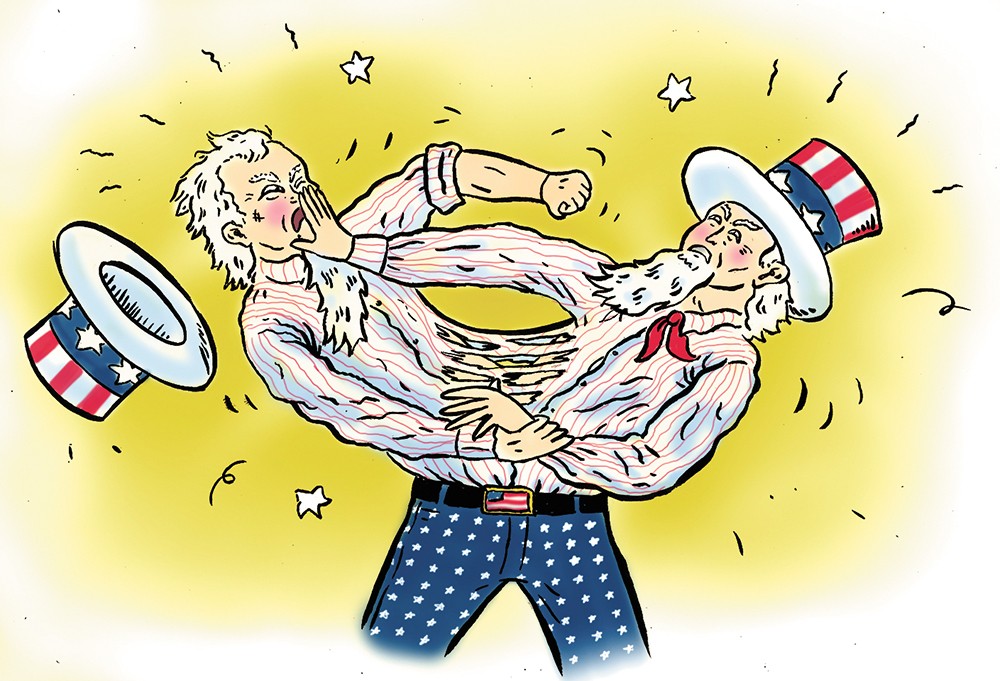
Criticism is a way of life for the leader. It may not be a pleasant part of it, but it’s a constant companion nonetheless.

Learning how to deal with criticism is important for you as a leader. In part one of “When Critics Come Calling”, I shared three common reactions we have when critics come calling:

  • We take it personally
  • We retaliate
  • We put up walls

Any of those sound familiar? 

While it’s just in our human nature to take on any or all of these postures, we also have to understand the unintended consequences when we do. While we don’t typically like criticism, we can cut ourselves off from voices around us that can help us if we are willing to listen.

So when critics come calling, why not take these questions into consideration.

What’s true about the criticism?

Not all criticism from your critics is meant to be harmful. And while your feelings or ego might be bruised, perhaps some introspection is in order. When you hear from your critics, stop and consider what parts have merit. From there you can determine if it’s just a case of sour grapes on their part, or if it’s something you work on to make better. 

In the long run, your critic may be doing you a favor by pointing out a blind spot you didn’t see. Click To TweetOn the other hand, your critic may just be blowing off steam and it has no merit. But before dismissing it out of hand, as yourself if it’s true.

What’s the motive behind the criticism?

When hearing from your critics – directly or indirectly- you have to take into consideration the motivation behind it. Does the person have an ax to grind with you? Is there politics at play? Understanding the motivation behind the criticism will enable you to better know how to handle it.

A word of encouragement to you as a leader here – don’t look for ulterior motives that don’t exist. Don’t let your imagination run wild. Be more concerned as to why a person with a legitimate issue was not comfortable in approaching you to begin with.

What can I learn from criticism?

When the critics come calling is a good time to reflect upon your leadership. Is there any validity to the criticism? Was the criticism helpful? Some of your best growth opportunities will come not when everything is smooth and calm. It will come when you feel everyone is against you. Click To Tweet

Final Thoughts

“The final proof of criticism,” said Elbert Hubbard, “lies in being able to endure criticism without resentment.” And this will always be the test of your leadership. So the next time critics come calling ask yourself is it true? What’s the motive? What can I learn?  Above all, keep your attitude in check and keep climbing upward. 


©2020 Doug Dickerson

When Critics Come Calling (Part 1)

Credit: Google Images

Criticism is something we can avoid easily by saying nothing, doing nothing, and being nothing – Aristotle

In a Peanuts cartoon Linus is curled up in a chair, reading a book, while Lucy stands behind him with a funny look on her face. Lucy then says, “It’s very strange. It happens just by looking at you.” 

“What happens?” Linus asks. 

Lucy calmly answers, “I can feel a criticism coming on.”

Criticism. It’s the constant companion of leaders. Hang around long enough and you will come to know this truth about leadership. Click To Tweet

“No leader lives a day without criticism,” said J. Oswald Sanders, “and humility will never be more on trial than when criticism comes.” 

What about you? What’s been your experience? How have you dealt with criticism? 

Let’s look at three common reactions when critics come calling.

We take it personally

Most leaders I know have a deep sense of pride in their work and otherwise like to think of themselves as good leaders. When critics come calling, it’s a normal reaction to take it personally and get defensive. 

Another consideration is the source of the critic. While it can be easy to brush it off as petty behavior from a disgruntled colleague, it especially hurts when it comes from someone we once considered close. 

While this is a common reaction, it may not always be the most healthy reaction. More about that later.

We retaliate

A sure sign that we have taken the critics too seriously is that we retaliate. We justify ourselves by pointing out the faults of the accuser. How many times have you, or someone you know gone down this road? How did that work out?

The trap here, if you go down this road, is now you have entered into an unhealthy game of comparison. In order to justify your hurt ego, you now have to engage on the level of the critic in an unhealthy way. Now, by your act of retaliation, you have escalated the situation whereby making amends becomes more difficult because you allowed your bruised feelings to get in the way.

While this may make you feel good in the short-term, you have now put up barriers and slowed any chance of reconciliation.

We put up walls

Among these three common reactions, this is perhaps the most destructive to your leadership. And this reaction has nothing to do with your critics. This response is all on you. 

To be sure, no one likes it when critics come calling – especially when the critic has less experience or is nothing more than arm-chair quarterback with no skin in the game. I mean, who the heck do they think they are, right?

But when you choose to put up walls – those defensive measures- it is the one action that hurts you more in the long run. When you cut people off you put yourself in danger of hearing only from the people who will tell you what you want to hear - not what you need to hear. Click To Tweet

So what is a leader to do? What should your posture be when your critics come calling? What can you learn from your critics? These questions and more will be answered in When Critics Come Calling (Part 2).

Final Thoughts

As the saying goes, haters are going to hate. But for you in leadership, there’s no room for that. And while dealing with it comes with the territory, you can rise above it, learn from it, and be a better leader because of it. 


©2020 Doug Dickerson

Manufacturing Energy


Credit: Google Images

You are responsible for the energy that you create for yourself, and you’re responsible for the energy that you bring to others.” – Oprah Winfrey

Since the onset of the CoronaVirus pandemic and more specifically since March, how have your energy levels been? I have spoken to many people who are feeling overwhelmed, mentally, and emotionally drained, and much more. Sadly, many studies point to a spike in the number of people who are suffering from depression and other related issues. 

How are you holding up? 

One of the challenges for leaders during this time is in sustaining energy levels within their organizations to meet new demands and challenges they are now facing. Many are trying to keep up with the same workload but now with fewer people due to layoffs, etc.

Adapting to these new challenges and demands often requires more energy than was needed prior to conditions in March. Talk about your stress levels increasing!

I became more aware of the importance of energy levels after reading an article by Carey Nieuwhof in which he made the point about how manufacturing energy is exhausting for everyone. Nieuwhof states, “Everyone’s already tired, and please hear me, I am a huge fan of hard work- throwing your heart into the mission is critical. But there’s a big difference between throwing your heart into the mission and throwing your heart into a method.” And herein lies my point.

How many of you have had to change your methods of operation since March? For many, how you operate today looks a lot different than it did back in January. 

While you must preserve the integrity of your mission, you can and should consider your method of delivery. Out of necessity, many of you already have. Your energy levels are driven by your passion for what you do. Nothing can be more demoralizing than seeing your energy levels decline because discouragement set in when what you were so passionate about was taken from you or has been very slow in returning.

Maintaining your energy is as important as ever, but manufactured energy may not be the answer to your current situation. So, what is a leader to do? Here are a few simple tips.

Channel your energy toward what you can control

If we’ve learned anything in 2020 it’s that nothing is for certain. In your business or organization, focus your energy on what you can control today and going forward. Focus on your mission, be flexible with your methods. Don’t burn up energy defending the practices of the past when they are no longer relevant today. Click To TweetWhile it’s true that you can’t control everything that happens to you, what you can control deserves the best form of energy you can give it.

Reserve your energy for the long haul

Whether we like it or not, we are in a marathon, not a 50-yard dash. And since we don’t know how long this marathon will last, it’s important to reserve our energies for the long haul. This will require focus and discipline and a think-long attitude. It’s best to make your necessary adjustments now than regret it later when you are burned out. Manufactured energy is no substitute for the real thing. Click To Tweet

Practice self-care 

Just as you need to embrace a think-long attitude, you must also take into account the fact that no one is going to practice self-care for you. That’s on you. So it’s imperative that you take time to rest, refresh, and recharge on a regular basis. This can be something as simple as going for a long walk, a run, swim, or whatever it is that nourishes your mind and soul. And while you’re at it – be mindful of what you eat.

Credit: Google Images

A proper balanced diet and exercise are as important now as ever. If you are tired, rundown, and low on energy you are not at your best and it’s a drag on the rest of your team. 

Final Thoughts

My tips barely scratch the surface as it relates to steps you can take to make sure you have harnessed all the energy you need during this time. But it’s a starting place. My hope is that you will see that manufacturing energy is wearisome and in times like this and can be counterproductive to achieving your goals. 


©2020 Doug Dickerson

How Indecisive Leaders Hurt Morale

Credit: Google Images

Indecision may or may not be my problem – Jimmy Buffett

A story is told of former president Ronald Reagan once had an aunt who took him to a cobbler for a pair of new shoes. The cobbler asked young Reagan, “Do you want square toes or round toes?” Unable to decide, Reagan didn’t answer, so the cobbler gave him a few days. 

Several days later the cobbler saw Reagan on the street and asked him again what kind of toes he wanted on his shoes. Reagan still couldn’t decide, so the shoemaker replied, “Well, come by in a couple of days. Your shoes will be ready.” When the future president did so, he found one square-toed and one round-toed shoe! “This will teach you to never let people make decisions for you,” the cobbler said to his indecisive customer. “I learned right then and there,” Reagan said later, “if you don’t make your own decisions, someone else will.”

Indecisive leadership is a crippling character trait for leaders. When your organization needs clear direction and decisive action, a waffling leader can cause more harm than good.

With so much at stake, why do leaders waffle and struggle with decision making? Three primary reasons come to mind.

They lack clarity

Leaders who struggle with decision making may lack the necessary clarity needed to make the necessary decision. Rather than making the wrong decision, they make no decision at all. 

They lack confidence

In some situations, leaders withhold decision making because they are not confident enough in their own instincts. Rather than take a risk and make a decision, they play it safe and everyone is left dangling.

They lack consensus

In some cases, leaders withhold decision making because they don’t have a consensus on the best path forward. Rather than offend a few with a decision, the leader demoralizes everyone by not making one.

So what is a leader to do? How can a leader overcome this agonizing dilemma? Here are a few ideas.

Trust your instincts

A confident leader will trust his or her instincts in times of decision. Deep down you have a strong intuition that guides you. Trust it.

Invite input

Decisive leaders are informed leaders. Those most affected by your decisions should be the first at the table of discussion. As it’s been said, “the person who sweeps the floor should choose the broom”. Welcome input, but make your decisions on principle, not politics.

Clarify your values

The worst thing you can do as a leader is to make a decision for the sake of making one. Roy Disney was right when he said, “When your values are clear to you, making decisions becomes easier”. When making a decision make sure it aligns with your values. If not, don’t do it.

Check your motives

First and foremost in your decision making should be what’s best for your organization and people. If you are making decisions to gain popularity or to gain favor with some to the detriment of others you are sowing the seeds of low morale. You must have the best interest of the team at heart and not just a few. 

Final Thoughts

Leadership is about making hard decisions. Indecisive leaders make it harder–on themselves and those they lead. Your path forward begins by acknowledging what your indecisive tendencies are doing to your leadership and how it’s impacting the morale of those you lead. 


©2020 Doug Dickerson 

The Power of Kind Words

Credit: Google Images

Death and life are in the power of the tongue, and those who love it will eat its fruit – – Proverbs 18:21 ESV

I came across this story that I’d like to pass along to you:

One day a teacher asked her students to list the names of the other students in the room on two sheets of paper, leaving a space between each name.

Then she told them to think of the nicest thing they could say about each of their classmates and write it down. It took the remainder of the class period to finish their assignment, and as the students left the room, each one handed in the papers.

That Saturday, the teacher wrote down the name of each student on a separate sheet of paper and listed what everyone else had said about that individual.

On Monday she gave each student his or her list. Before long, the entire class was smiling. “Really?” she heard whispered. “I never knew that I meant anything to anyone!” and, “I didn’t know others liked me so much,” were most of the comments.

No one ever mentioned those papers in class again. She never knew if they discussed them after class or with their parents, but it didn’t matter. The exercise had accomplished its purpose. The students were happy with themselves and one another. That group of students moved on.

Several years later, one of the students was killed in Vietnam and his teacher attended the funeral of that special student. The church was packed with his friends. One by one those who loved him took a last walk by the coffin. The teacher was the last do so.

As she stood there, one of the soldiers who acted as pallbearer came up to her. “Were you Mark’s math teacher?” he asked. She nodded: “Yes.” Then he said: “Mark talked about you a lot.”

After the funeral, most of Mark’s former classmates went together to a luncheon. Mark’s mother and father were there, obviously waiting to speak with his teacher.

“We want to show you something,” his father said, taking a wallet out of his pocket. “They found this on Mark when he was killed. We thought you might recognize it.”

Opening the billfold, he carefully removed two worn pieces of notebook paper that had obviously been taped, folded, and refolded many times. The teacher knew without looking that the papers were the ones on which she had listed all the good things each of Mark’s classmates had said about him.

“Thank you so much for doing that,” Mark’s mother said. “As you can see, Mark treasured it.”

All of Mark’s former classmates started to gather around. Charlie smiled rather sheepishly and said, “I still have my list. It’s in the top drawer of my desk at home.”

Chuck’s wife said, “Chuck asked me to put his in our wedding album.”

“I have mine too,” Marilyn said. “It’s in my diary.”

Then Vicki, another classmate, reached into her pocketbook, took out her wallet, and showed her worn and frazzled list to the group. “I carry this with me at all times,” Vicki said and without batting an eyelash, she continued: “I think we all saved our lists.”

That’s when the teacher finally sat down and cried. She cried for Mark and for all his friends who would never see him again.

Kind words. If there’s ever been a time when we need to speak and hear more kind words, it’s now. It seems that we are hearing less of them these days. Public discourse has a way of turning sour. We seem to be more concerned about being heard, than listening and understanding. 

But all that aside, there is a better way. Taking the high road is an option and it’s up to people like me and you to lead the way. 

Mother Teresa said, “ Spread love everywhere you go. Let no one ever come to you without leaving happier”. 

Change is never easy and at times the ship turns slow, but it happens one heart and one kind word at a time.


©2020 Doug Dickerson


Take The High Road: 20 Quotes to Reflect On

Credit: Google Images

So now faith, hope, and love abide, these three; but the greatest of these is love – I Corinthians 13:13 (ESV)

Without question, we live in tumultuous times. The news headlines we see today are enough to discourage anyone as we see what is happening in our society.

In the midst of all the divides us, I wanted to devote space this week to remember what’s more important in times like this–taking the high road. There’s enough division out there to go around. We need to unite. Let’s be reminded that what we’d like to see in others first begins in us.

I’ve chosen 20 quotes for reflection. Take them to heart and pass them along.

“If you don’t like something change it. If you can’t change it, change your attitude.” – Maya Angelou

“Do things for people not because of who they are or what they do in return, but because of who you are. – Harold S. Kushner

“Your beliefs don’t make you a better person. Your behavior does.” – Toby Mac

“Darkness cannot drive out darkness; only love can do that. Hate cannot drive out hate; only love can do that.” – Dr. Martin Luther King, Jr. 

“The high road is always respected. Honesty and integrity are always rewarded.” – Scott Hamilton

“Spread love everywhere you go. Let no one ever come to you without leaving happier.” – Mother Teresa

“Unless someone like you cares a whole awful lot, nothing is going to get better, It’s not.” – Dr. Seuss

“Kindness is the language which the deaf can hear and the blind can see.” – Mark Twain

“Wherever there is a human being, there is an opportunity for kindness.” – Seneca

“If you want others to be happy, practice compassion. If you want to be happy, practice compassion.” – Dalai Lama

“Everyone you meet is fighting a battle you know nothing about. Be kind. Always.” – Brad Meltzer

“We are not here to curse the darkness, but to light the candle that can guide us thru that darkness to a safe and sane future.” – John F. Kennedy

“In the long run, the sharpest weapon of all is a kind and gentle spirit.” – Anne Frank

“No one can make you feel inferior without your consent.” – Eleanor Roosevelt

“I’m going to take the high road because the low road is too crowded.” – Mia Farrow

“Make sure you see people through the eyes of love, not the eyes of judgment.” – Joel Osteen

“Teach me to feel another’s woe, to hide the fault I see, that mercy I to others show, that mercy show to me.” – Alexander Pope

“As a leader, the first person I need to lead is me. The first person I should try to change is me.” – John Maxwell

“Have a heart that never hardens, and a temper that never tires, and a touch that never hurts.” – Charles Dickens

“Therefore encourage one another and build one another up…” – I Thessalonians 5:11 (ESV)

Bonus: “What unites us, is much greater than what divides us.” – Pope John XXIII


©2020 Doug Dickerson

Why Your Values Matter

Credit: Google Images

When your values are clear to you, making decisions becomes easier. – Roy E. Disney

In 2004, a painting by Anna Mary Robertson, better known as Grandma Moses, was brought to the Antiques Roadshow for appraisal. Born before the Civil War, Robertson did not take up painting until late in her life. Her primitive style eventually became extremely popular, and her work commanded a high price. 

The man who brought the painting to be evaluated had lived nearby and his mother was a friend of Grandma Moses. He said, “She was just a wonderful friend of the family. And she would let my mother buy these paintings, which she thought had relatively little value. I guess my mother did, too. She probably bought eight or ten paintings in all, and my guess would be for perhaps under ten dollars each.” 

The painting that was bought for around $10 was appraised as being with $60,000. In her early days of painting, Grandma Moses did not think of her works as being very valuable, so she parted with them for next to nothing. 

Could it be that we are living in times when we truly don’t understand the importance of our values? Indeed, the times in which we live cry out for values-based leadership and in particular, leaders who are anchored to them. Click To Tweet We need leaders who know their true north and live it. 

By simple definition, values are “the regard that something is held to deserve, the importance, worth, or usefulness of something.” But defining values and living them becomes the challenge. Here are a few reasons why they are important to you as a leader.

Values are your non-negotiables

In leadership, your values represent your core convictions on how you lead, treat the people on your team, and how you interact with the clientele whom you serve. Your values bring clarity to who you are as a person and how you choose to live and interact with those around you. Your values, therefore, become the filter through which your decisions are made. 

Values clarify policies and procedures

Many leaders pride themselves in the policies and procedures of their organizations. But they are only useful if they align with your values. Your policies and procedures do not operate in a vacuum apart from your values. Click To TweetAnd in the event you ever deal with a  situation that is not addressed in your handbook, then your default procedure is always to defer to your values for guidance. 

Values complement your ‘why’

Much has been said and written in recent years on finding your why and rightfully so. It’s imperative to you as a leader to know it. Knowing your why points you in the right direction while knowing your values provides you the moral compass to go there Click To Tweet. Trying to live out your why without values is like a fish trying to live out of water. It just doesn’t work. So before you begin your journey of discovering your why, start with your values.

Values facilitate decision making

As Roy Disney said in the lead-in quote, when your values are clear, decision making becomes easier. Many things about leadership are hard. Hang around long enough and you will learn that. But decision making within your organization becomes easier when your values are clear. Granted, not everyone will like your decisions, but when they are grounded in your values, then explaining that decision now becomes a teachable moment to remind them of those values.

Final Thoughts

Rumi said, “You know the value of every article of merchandise, but if you don’t know the value of your own soul, it’s all foolishness.” And this is the underlying reason to identify and know your values both personally and professionally. There are some things that are passing and temporary and other things that are eternal. The wisdom that comes from knowing your values helps you to know the difference.


©2020 Doug Dickerson

The Dirt on Leadership

Credit: Google Images

Become the kind of leader that people would follow voluntarily; even if you had no title or position. – Brian Tracy

In her column, Ask Marilyn, Marilyn vos Savant gave an interesting perspective on contentment. One reader wrote in about a unique experiment she had conducted after being dissatisfied that her neighbor’s yard looked better than her own. She did what few have done and walked next door to look back at her own grass. When she stood in her neighbor’s yard, the grass in her own yard now looked greener than theirs so she asked, “Why does this occur?”

Marilyn replied, “The grass looks greener on the other side of the fence because you’re not close enough to see the dirt.” Most of the time, things look better for others simply because we can’t see their dirt.

I remember my days as a young leader looking up to some of those larger than life people who influenced me. On one occasion, I remember meeting one such person and came away quite demoralized. I had looked up to this person, but up close there was a lot of dirt. Words like haughty, aloof, and arrogant come to mind when I recall the encounter.

That experience was more than three decades ago and since then I’ve come to set more realistic expectations. I do this not as a defense mechanism so as not to ever be disappointed again but as a way of embracing my humanity as a leader and recognizing it in others. Any of us can have a bad day and none of us want to be defined by one bad encounter. Do you?

It’s easy to see the successes in others and get caught up in the trap of comparing ourselves – our success, our following, our accomplishments up against those more successful. And when we do, we see greener grass elsewhere.

Seeing the greener grass on the other side is nothing new. We all have those moments when we think it’s time to go graze there. Here are a couple of thoughts to consider when your mind drifts in that direction.

Don’t envy other people’s dirt

Lyrics to an old Garth Brooks song say, “Sometimes I thank God for unanswered prayers.” In leadership, you see what you think is the greener grass – a career move, a promotion, a better opportunity, etc., and you are tempted to jump the fence. And then in some providential way you come to discover that what you thought was a great move would have been a disaster had you taken it. 

Focus on being the best leader you can be right where you are. You can only make things greener if you stay and work it. Click To Tweet

Tend to your own dirt

Back in my high school days, I worked in a garden center. In the winter months when business was slow, we prepared for spring. We would build greenhouses and we would pot thousands of roses. 

But before we could begin the potting process we would have to prepare the soil. This would include all of the necessary ingredients including fertilizers – even manure, mixed together. It was smelly, dirty, and hard work. Not to mention the constant cuts from the thorns even while wearing gloves.

In leadership, just as in potting roses, you have to tend your soil, and sometimes the work is dirty and unpleasant. But the reward is worth it. Click To Tweet

So before you are envious of the green grass you think you see elsewhere, stop and consider that there’s a lot of dirt you don’t see. And regardless of how bad you think you have it, your responsibility is to bloom where you are planted.

Ultimately, yes, one day the time will be right, the new calling will be a good fit, and moving on will be the right thing to do. But it’s almost never a good move when done out of jealousy or frustration. In many of those cases, it’s just exchanging one pile of dirt and manure for another. 

Final Thoughts

Gandhi said, “You must be the change you wish to see in the world.” And this is true in leadership. Create the change – create the greener grass, right where you are. And don’t forget that with all the green grass comes a good bit of dirt.


©2020 Doug Dickerson

Embracing the Hard Things in Leadership

Credit: Google Images

We all have an unsuspected reserve of strength inside that emerges when life puts us to the test. – Isabel Allende 

A story is told about three military recruiters who went to address a group of high school seniors. Each recruiter represented a branch of the military and each was given fifteen minutes to speak.


The Army and Navy recruiters got carried away, so when it came time for the Marine to speak, he had just two minutes. He walked up and stood utterly silent for a full sixty seconds, half of his time. Then he said, “I doubt whether there are two or three of you in this room who would even stand a chance in the Marine Corps. But I want to see those two or three immediately in the dining hall when we are dismissed.” He turned smartly and sat down.


When he arrived in the dining hall, there was a crowd of students interested in the Marines. The recruiter knew that commitment cannot take place without recognizing the potential for difficulty.

As a leader, you are familiar with difficulty. It comes with the territory. Not everything about being in positions of leadership is as glamorous as they are sometimes perceived. There’s a big gap between the perceptions and the reality. And sometimes the gap is wide.

But despite the fact that difficulties are common among leaders, they don’t have to be fatal, permanent, or avoided. You can succeed-even thrive in the face of them. Here are three things you need to know about facing your difficulties in leadership.

The hard things today are preparing you for greater successes tomorrow

Your life in leadership will often be met with difficulties. Nothing worth achieving or accomplishment worth attaining is ever going to come without challenges along the way. That being said, your attitude towards your difficulty today is what will keep you where you are or move you forward. 

Earl Nightingale said it this way, “When we set an important goal for ourselves, we present to our minds a problem to be solved, a challenge to be successfully fulfilled.” And this is the essence of the challenges you face today. The greater the accomplishment you want to have tomorrow will have to be met with a greater determination today to achieve it. Click To TweetOnce you do, you will create a momentum that will carry you to greater success.

The hard things bring you new lessons to learn

With each set of difficulties that you encounter come new opportunities to grow and learn as a leader. The hard things you are dealing with today may not be the ones you dealt with a year ago. And they will look different a year from now. With each new season in your leadership, you are equipped with new and better ways to handle them. 

It was Thomas Edison that said, “ I have not failed. I’ve just found 10,000 ways that won’t work.” And this highlights the value of difficulties or obstacles. They are great teachers. The question is – what are we learning from them and are we properly applying those lessons?

The hard things take your leadership to new levels

Your growth as a leader is important and at times it comes with some friction. It’s just part of the process. As a leader, you’re not going to be exempt from facing the hard things. But when you embrace them for what they are – opportunities to learn and grow, you will then discover that they are hindering you, they are now empowering you. And this is when the tide begins to turn in your favor. 

Rumi framed it this way, “Seek the wisdom that will untie your knot. Seek the path that demands your whole being.” And herein lies the challenge. In order to untie your knot, you must seek the right path. What are we prone to do? Our human nature wants the path of least resistance. But it’s when we embrace the hard things that we grow as a person and as a leader.

Final Thoughts 

Embracing the hard things that come your way is not always easy. I get it. But let me encourage you to rise to the challenge and embrace them with a renewed determination and attitude. You will be a better leader for it.


©2020 Doug Dickerson

Embrace The Interruptions

Credit: Google Images

The truth is of course that what one calls the interruptions are precisely one’s real life–the life God is sending one day by day. – C.S. Lewis

I have a small collection of autographed baseballs. Aside from being a fan of baseball, I’m not exactly sure how I got started on the collection. But several autographed baseballs from Hall of Famers are set atop one of my office bookshelves. 

The most prized baseball I have was given to me by my father. It was a birthday present. Growing up a St. Louis Cardinal fan, the autograph ball is from none other than Stan “The Man” Musial. 

Musial broke into the Major Leagues at the age of 20. His 22-year stint with the Cardinals, the only team he played for, earned him a spot in Cooperstown. Musial ended his career with a .331 batting average, 3,630 hits, 475 home runs, and 1,951 runs batted in.

Unfortunately, I never got to see Stan Musial play. His days in the game preceded my birth, but as a Cardinals fan, his legacy is still sacred. 

Musial was off to a fast start in his career. In 1943 he won the first of seven batting titles. His career was on a fast track–until it wasn’t.

Like many of his teammates in that era, duty called and in 1945, Musial joined the Navy. While that season was lost. He rejoined the Cardinals in 1946 and went on to play a stellar career.

Credit: Google Images

Life, like Musial’s and countless thousands of others, is filled with curveballs that are thrown our way. Things that we didn’t see coming. Interruptions, if you will. 

The past few months may seem like one colossal interruption that you’d soon rather forget. I get it. Yet, here we are.

As a leader, how you handle interruptions is important. Consider this the next time you are faced with interruptions.

Interruptions give you time to regroup

It’s easy to see interruptions as a nuisance and get frustrated. But it’s how you react during this time that will cause it to be beneficial or a waste of time. As a leader, it’s up to you to make it happen.

Interruptions give you time to rethink

What you learn and the lessons you apply during times of interruption can be invaluable going forward. It’s exactly what many have had to do during this pandemic. Learning how to pivot and make adjustments have caused many to get out of ruts and old ways of doing things that they may not have been comfortable doing prior. Click To Tweet Not all interruptions are setbacks if you use them to your advantage.

Interruptions give you a chance to re-emerge stronger

While your interruptions may have been seen as delay and loss, maybe now you can see it as a part of a greater plan to position you to be stronger than before. How you use your time of interruption can be beneficial only as you change your attitude towards it. Click To Tweet

Final Thoughts

What have you learned during these past few months? How have you learned to pivot and what other lessons have you learned? Permit me to encourage you to embrace the interruptions that come your way. What you can learn and how you re-engage will make all the difference.

For Musial, his interruption was a call to duty. When his service ended, he returned as strong as ever and finished a Hall of Fame career. Your interruption is not the end, it’s just a pause. Embrace it and learn from it.


©2020 Doug Dickerson