Leadership Minute: The Power of Self -Confidence

confidence

Giving people self-confidence is by far the most important thing that I can do. Because then they will act. – Jack Welch

One of the most meaningful and lasting things you can do as a leader is to instill confidence in your people. When your people come to the place where they believe that they can do anything they set their minds to then their potential is unlimited. All some people need in order to go from their “I think I can” attitude to their “I know I can” reality is found in the power of your words and how well you communicate them. Self-confidence is given not only by your words but by backing them up with your actions. Turn your people loose with their self-confidence and see where they can go, what they can achieve, and what they can become.  The gift of self-confidence is a powerful tool. Use it wisely, and use it generously.

Leadership Minute: The Face of Opportunity

opp

Opportunity often comes disguised in the form of misfortune, or temporary defeat. – Napoleon Hill

The road to success can be long and bumpy. It can be littered with setbacks, disappointments, failure, and frustration. But as you study the successes of the most recognizable names in history you will discover that the above descriptions are all part of the formula. The problem arises when we want success without sacrifice, profits without some momentary pain, and recognition without some obscurity. Many want the benefits of success without having to take the road of hard knocks to get there. But if you are willing to pay the price, work hard, endure some misfortune and some defeats, you can come to a place where success is no longer a dream but a reality. Don’t be afraid to dream big dreams and make bold plans, but be willing to pay the price to achieve them.


Leadership Minute: Critical Choices

critics

In leadership you will have your share of critics. Trying to appeal to or appease them is a waste of your time and energy. It’s not that what they think doesn’t matter, but what you think matters most. If we are honest we can all learn something from our critics. But in the end it’s about staying true to yourself, your values, your beliefs, and not being distracted. Entertaining your critics will only lead to increased frustration and exhaustion. It will only disappoint you in the long run. At issue here is your desire to speak out or defend yourself. I get it. So here is some advice for your consideration; most critics are usually criticizing you because you are doing what they said couldn’t be done. Don’t worry about keeping score or settling it. Let your actions and attitude speak for you. Nothing will annoy your critics as much and you can take the high road. It won’t always be easy but in the long run you will be glad you did.

New Book Promotions

I have great news to share with you! Now you can order PDF versions of my books, Leaders Without Borders and Great Leaders Wanted to download to your tablet or smartphone. When you visit my blogger website and place your order the PDF will be emailed to you. At just $3.99 each now is a great time to order your copies! Thank you so much for your support as we encourage and develop great leaders like you!

Go to www.dougsmanagementmoment.blogspot.com and order today!

lwb1

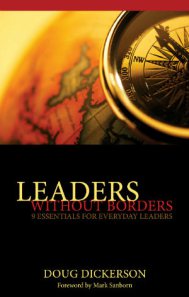
Leaders  Without Borders: 9 Essentials for Everyday Leaders – Whether you are the CEO of your business or serve elsewhere in the organizational structure, the boundaries of your leadership are limitless if you are devoted to developing your personal leadership skills. Leaders Without Borders will help you embrace the challenge of personal leadership in order to expand your influence. In order to reach your potential as a leader, you will also be inspired to not only embrace your passion but to identify it. Finding your one thing – your passion- as a leader- is life-transforming. Leaders Without Borders will provide answers to help you in the discovery process of understanding what your passion is.

Mark Sanborn, noted leadership speaker and bestselling author of The Fred Factor writes, “I rarely like easy answers because they’re unrealistic. I do, however, like books that challenge a leader’s thinking and provide him or her with new insights that prompt action. This book by Doug Dickerson is that kind of book.” The nine essentials from the book are: passion, priorities, optimism, teamwork, attitude, authenticity, authenticity, loyalty, kindness and legacy.

glw1

Great Leaders Wanted! In this second book Doug will answer the questions you have about leadership, building a great team, and achieving your best at your job, for your business, and in your community. The world wants leaders. It needs leaders. That could be you. Explore your full potential and become the leader that you want to be- and that your company, business, and community need you to be!

Writing in the foreword, Don Hutson, CEO of U.S. Learning writes, “In Great Leaders Wanted!, Doug Dickerson provides 56 short but potent chapters of wisdom and reflection that will help all of us regardless of where we may be in life’s journey or our current position in our leadership hierarchy…wherever you are on the leadership spectrum, Doug Dickerson’s book has something to offer you.”


Leadership Minute: Are You Contagious?

confidence

Hang around successful leaders long enough and you will find one common thread among them—confidence! Confidence is the difference maker that separates the average leader from the great leader. What is your confidence level? Are you instilling confidence in others? Your ability to inspire confidence in others is one of the privileges of your leadership. But you can’t instill what you don’t possess. Becoming a contagious leader does not happen by accident. You have to work at it. How? Confidence is built in part by maintaining a personal growth plan that would include a regular reading program and having a good mentor/coach. Before you can impart into others you have to invest in yourself. You will become a contagious leader when you are a confident leader. The world needs confident leaders. Are you contagious?

Facing Down Your Fears

fear

In order to succeed, your desire for success should be greater than your fear of failure. – Bill Cosby

A story is told of two explorers who were on a jungle safari when suddenly a ferocious lion jumped in front of them. “Keep calm” the first explorer whispered. “Remember what we read in that book on wild animals? If you stand perfectly still and look the lion in the eye, he will turn and run.” “Sure,” replied his companion, “You’ve read the book, and I’ve read the book. But has the lion read the book?”

Most leaders I know are familiar with fear. Not that they live in a constant state of fear or paranoia, but it is a part of the leadership experience that defines them. Fear will either motivate you or it will dishearten you. How you choose to react to the fears you face will determine its effect on you.

Your success as a leader will come when you embrace your fears and turn them into positives. Do you know what your fears are? Are you willing to confront them? Until you honestly confront them you will never overcome them. So what are the most common forms of fear for leaders? Let’s look at two and their surprising connections.

Two Common Fears:

Fear of failure

Every business person, entrepreneur, athlete, leader, etc. has a desire to be successful. Regardless of how that success is measured the desires are still the same. But a fear of failure is the most commonly shared fear that prevents those dreams from being fulfilled. If left unchallenged it will always hold you back.

Often the fear of failure is a pride issue. The rationale is rooted in what others will say or think if you try something and fail. Certainly other considerations are at stake such as financial, etc. but fear of failure will ground you every time.

Fear of rejection

Besides a fear of failure the fear of rejection is an all too common fear that many struggle with. When the humiliation of rejection is a more powerful deterrent than the potential for success then fear has won. So what happens? People hold back. They sit out. They allow fear to dictate their decisions.

Like your attitude, fear is a neutral emotion that is turned into something good or bad depending on how you respond. Healthy attitudes and fears can serve you well if you use them properly. So what is the connection?

Two Common Connections:

While countless examples could illustrate the point let’s look at two. These people embody what can happen when we allow our fears to motivate us rather than discourage us.

A famous “failure”

He first went into politics at the age of 23. He ran for a seat in the Illinois General Assembly. He lost. He later ran a General Store. It failed. But today, not too many people look back upon those events and use them to label the 16th President of the United Sates as a failure. Abraham Lincoln is recognized as one of our most beloved presidents in history. He experienced failure, but he was not a failure. And he did not allow those failures to define him.

A famous “reject”

He dropped out of high school and applied to attend three film schools but was unsuccessful due to his C grade average. But if you have been entertained by such movies as E.T., Jurassic Park, Schindler’s List, Saving Private Ryan, and many more, then you’d agree with me and the critics that Steven Spielberg is one of the greatest film directors of all time. Spielberg was rejected, but he was not a reject. He didn’t allow his setbacks to hold him back.

The connection between fear and success comes down to this: every successful movie director, politician, athlete, entrepreneur, etc. have all faced their fears and have overcome them. Your success as leader will not be characterized by an absence of fear but by what you did with it.

Denis Waitley said, “Failure should be our teacher, not our undertaker. Failure is delay, not defeat. It is a temporary detour, not a dead end. Failure is something we can avoid only by saying nothing, doing nothing, and being nothing.”

Do you have fears? Welcome to the club. It’s time to roll up your sleeves, dig deep, and stare them down. Don’t allow your fears to hold you back, turn them into stepping stones to take you to the places you want to go.


© 2014 Doug Dickerson


I welcome your feedback:

1. What fear do you struggle with the most?

2. What steps can you take to change the way you look at fear?
 

Leadership Minute: Lead Yourself

Lead-Yourself

You can have no dominion greater or less than that over yourself – Leonardo da Vinci

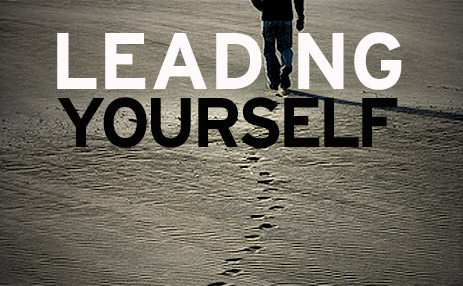
It’s the first rule of leadership that yields to no one. If you wish to lead others you first must lead yourself. After all, the hardest person you will ever lead is not the jerk down the hall that drives you nuts it’s most likely the one in the mirror. Pay attention to the people that get on your nerves. What irritates you the most about them could be your struggle as well. You see, it’s easy and convenient for us to point out the flaws and weaknesses in others but overlook that same weakness in ourselves- or worse yet, justify them. An authentic leader will develop his or her disciplines, be held to a higher standard, be held accountable, and lead by example. Before leading others, lead yourself.

Five Questions Every Leader Must Answer About Change

change1

Change the changeable, accept the unchangeable, and remove yourself from the unacceptable. – Denis Waitley

The story is told of Karl Benz, who in 1866 drove his first automobile through the streets of Munich, Germany. He named his car the Mercedes Benz, after his daughter Mercedes. The machine angered the citizens, because it was noisy and scared the children and horses.

Pressured by the citizens, the local officials immediately established a speed limit for “horseless carriages” of 3.5 miles per hour in the city limits and 7 miles per hour outside the city limits. Benz knew he could never develop a market for his car and compete against horses if he had to creep along at those speeds, so he invited the mayor of the town for a ride.

The mayor accepted. Benz then arranged for a milkman to park his horse and wagon on a certain street, and, as Benz and the mayor drove by, to whip up his horse and pass them—and as he did so to give the German equivalent of the Bronx cheer. The plan worked. He mayor was furious and demanded that Benz overtake the milk wagon. Benz apologized but said that because of the ridiculous speed law he was not permitted to go any faster. Very soon after that the law was changed.

We all know that change can be hard to implement. One of the most challenging things you will do as a leader is to lead others through changes. It’s been widely written about and will continue to be a hot-button topic for leaders for years to come. Many oppose change because it leads them out of their comfort zones and because it’s something new. Others oppose change because of perceived risks. We know that life is full of risks and can never be fully eliminated. Sometimes you have to walk by faith. If you want to grow you have to change.

But I’d like to explore the other side of the coin with you. What about those times when change is not for the best? How do you know if it’s the right thing to do or not? Here are five questions to help guide you through the decision-making process.

Does the change compromise your core values?

Your core values are a reflection of who you are and every decision your organization makes flows out of these values. If the change you are considering in any ways compromises your values then change would not be advisable.  If on the other hand they support and strengthen those values then proceed.

Does the change compromise your integrity?

At the end of the day your core values and integrity are the two most essential things you have that drive your business and the way in which you do it. If the proposed change you are considering compromises your integrity then the answer is a no-brainer. Don’t do it.

Does the change add value or subtract value?

Your success has been tied in large part to the value and service you have provided to others. If this change idea you have is going to subtract value in any way to your employees or to those you serve then perhaps it’s not the best change decision. Is there not a better way to move forward?

Does the change pass the smell test?

What is the underlying motivation for making this proposed change? Is it primarily a political one? Has it been hastily presented? These can be and usually are red flags that should not be overlooked. If it does not pass the smell test then chances are then the change idea is not a good idea.

Does the change inspire and call forth the best from your team?

Not all change is welcomed nor is it easy to execute. But you will know it is right when the enthusiasm of the buy-in far exceeds the negativity of the change. When your team has been inspired, challenged, and embraces this change then you know you have made a good decision. If the opposite is true then you may want to pivot and consider other options.

It was George Bernard Shaw who said, “Progress is impossible without change, and those who cannot change their minds cannot change anything.” Welcome change, embrace change, and desire change. But at the end of the day, make sure it’s the right change.

What do you say?


© 2014 Doug Dickerson

* This is a “Best Of” column that was originally posted in 2013. I will be out of the country April 6-11 on a trip to Costa Rica. The “Leadership Minute” columns will return when I get back! 


I invite your feedback!

1. What is your greatest struggle with change?

2. What are two or three action steps you can take today to foster positive changes in your life?


Leadership Minute: Guard Your Thoughts

positive

Our life always expresses the result of our dominant thoughts. – Soren Kierkegaard

Your thoughts as a leader are important. What you allow to enter and dominate your thought processes greatly influences the direction your life will take. Guarding your thoughts and dwelling on the positive can be challenging when so many things around you can be negative. Being able to rise above the negative is not a matter of avoiding life around you as you know it; it’s about guarding your thoughts and heart and not being corrupted by it. Just as others choose to be negative so too must you choose to be positive. Set the course of your life by things that inspire, uplift, encourage, and motivate. You will be a better leader for it.

Leadership Minute: Where Is Your Attitude Taking You?

attitude

Attitude is a little thing that makes a big difference.- Winston Churchill

Have you ever stopped to consider why your attitude is so important? As a leader you set the tone for others around you. In short, workplace attitudes are mirrored by you. What does your attitude say about the direction of where your organization is headed? Organizational attitudes are the sum of the personal attitudes of those that work in it. But the attitudes of leaders are especially important. To be sure, we all have bad days and there are times when we are tempted to have a bad attitude. But be mindful that your team is watching and reacting accordingly. Move your organization forward with the right mindset. Is your attitude taking you in a positive direction or a negative one?