Why Every Leader Must Value Failure

Credit: Google Images

When achievers fail, they see it as a momentary event, not a lifelong epidemic. – John Maxwell

In 2014’s Oscar-winning film Birdman, Michael Keaton plays a washed-out actor trying to start his life again after a series of failed roles. But his efforts are haunted by the voice of the Birdman, the superhero role that had made him famous in his youth. The voice in his head tells him a story about his life- a story about failure and missed chances. 

It taunts him with memories of what he was and what he could have been, but now isn’t. The continuing question running through the film is simple: Will he listen to that voice of a failure, or will he dare to believe that he can flourish again?

The story of the movie is one that plays out in the mind and imaginations of many leaders today. 

You may relate to the character played by Michael Keaton and wonder if you have squandered too many opportunities in the past and doubt if or if you will ever flourish again.

In order to answer those lingering doubts and questions you may have, I believe it all hinges on your reaction to and outlook on failure. In other words, do you see the value in failure? Do you see the growth opportunities that come to you only because you did fail that otherwise, you may have missed out on? I want to explore two specific ways why valuing failure is important to you as a leader. 

Value failure for what you learn

Tom Watson, Sr. is the man who founded IBM. Once, many years ago, he had a top junior executive who had spent $12 million of the company’s money on a venture that failed.

The executive put his resignation on Watson’s desk and said, “I’m sure you want my resignation.” Watson roared back, “No, I don’t want your resignation. I’ve just spent $12 million educating you. It’s about time you get to work.” 

It’s been said that experience is a great teacher. So is failure. But most of us don’t like experiencing failures. I get it. But when you see failure as part of the stepping stones towards success your outlook will change. Failures and setbacks are part of your journey so the question becomes what will you learn when they happen.

One of the most valuable things you learn from your failures and mistakes is what you learn about yourself. When you know your strengths and weaknesses it helps you move forward in a smarter and more productive manner. 

John Wooden said, “It’s what you learn after you know it all that counts,” and to that end, never despise learning and know that as long as you have a pulse, you have an opportunity to grow and learn.

Value failure for your personal growth

In his book, The 15 Invaluable Laws of Growth, John Maxwell states, “The greatest limitations people experience on their lives are usually the ones they impose upon themselves.” That statement is packed with so much truth and wisdom.

Let me ask you today – what limitations have you placed on your own personal growth and development that as a result is holding you back? What lies have you bought into that make you feel inferior?

Every leader I know has made mistakes and has experienced failure at some point in time. I know that I have made my fair share of mistakes and know what failure feels like. But here’s the truth you need to be reminded of: you experience failures – you are not a failure. You make mistakes – you are not a mistake. 

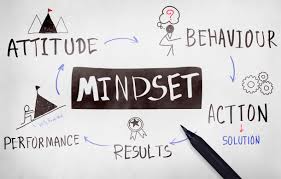
The attitude you embrace and the mindset you establish fundamentally determine how failure will shape your leadership. When you welcome failure as your teacher it will help you grow and get better. But when you turn inward and see yourself as a failure then it will hold you back and defeat you.

Final Thoughts

Failure and learning go hand in hand. As leaders, it comes with the territory and is part of the journey. While we don’t intentionally or purposefully set out to fail we do know that it’s all a part of our humanity that we embrace. Especially as leaders. Welcome it. Learn from it. Grow from it.


©2022 Doug Dickerson
Attitude Checkup: Three Questions You Need To Answer Now

Credit: Google Images

Ability is what you are capable of doing. Motivation determines what you do. Attitude determines how well you do it. – Lou Holtz

I read a story about a girl named Naaz. One day, she looked in the mirror and found that she had only three strands of hair left on her head!

She said to herself, “I think I will braid my hair today!” So she did and went out and had a great fun-filled day.

The next day she woke up, looked in the mirror, and found just two hair on her head!

She thought to herself, “Well, I think today I will part my hair down the middle”. So she did and had a wonderful day.

The next day, she woke up and noticed that she had only one hair left. She said, “Well, today I will put my hair in a ponytail.” So she did and had a jolly good day.

The next day she woke up, looked in the mirror, and noticed she had no hair on her head. “Hurray!” She exclaimed and said, “I don’t have to fix my hair today.” And went with a big smile on her face.

The moral of the story? – Be happy with what you have. Each one of us is fighting some battle. Life isn’t about waiting for the storm to pass. It’s about learning to dance in the rain.

I like the story about Naaz. It’s a simple reminder of something that at times can be lost on us – the importance of choosing the right attitude.

As a leader, your attitude is extremely important. It needs to be. Think of your attitude as the thermostat by which all other attitudes are set. Would you consider that a good thing or bad? 

In Business News Daily, Jennifer Post writes, “Psychologists generally agree that our brains are hardwired to put more of our focus and energy on bad news. Maybe it’s because we are surrounded by it, now more than ever in the age of instant news and videos of tragedies being uploaded seconds after they happen.” Sound familiar? This is why your attitude matters.


So let’s take a few moments and have an attitude check-up. Here are three questions worth asking yourself right now.

What are you thankful for?

When you are intentional about what you are thankful for, it will change your perspective and attitude. It’s all too easy to dwell on negative things and complain about what we don’t have or don’t like. When your focus is on what you are thankful for it can be a game-changer.


Even when Naaz had lost all of her hair, she had something to be thankful for. Chances are, you do too. 

Question #1 is the mindset question. Your mindset and attitude are uniquely connected. Guard them both.

What are you dreaming about?

When you have a dream in your heart that inspires you it will have a positive effect on you. You cannot move in the direction of your dreams and ultimately achieve them if you harbor a negative attitude. Click To Tweet A dream bigger than yourself will require an equally positive attitude to get you there. 

What dream do you have right now that requires the best attitude from you to achieve it? Never allow a negative attitude to take away your dream.

Question #2 is the passion question. How far you go with your dream is in large part determined by your attitude. Guard them both.

How are you serving others?

When your focus is on serving others and giving back you will find it hard to entertain a negative attitude. When you take the focus off of yourself and put it on others it will change your perspective. As a leader, you have to remember that it’s not about you. When you learn that, it changes everything.

In what ways can you serve others in your organization or community? Your attitude will shift for the better when you learn the secret of selfless leadership. 

Question #3 is the purpose question. When you know and understand your purpose your attitude will naturally follow.

Final Thoughts

When you align your attitude with your mindset, your passion, and your purpose you will open a whole new realm in your leadership. How’s your checkup looking?


©2022 Doug Dickerson


Click here to listen to The Cardinal Point Leadership Podcast

What the Wright’s Teach Us About Leadership

Credit: Google Images

You can’t blow an uncertain trumpet – Theodore Hesburgh

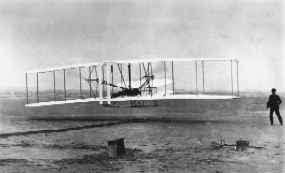
In A Savior for all Seasons, William Barker shares a story of a bishop from the East Coast who paid a visit to a small, midwestern religious college around the beginning of the twentieth century. He stayed at the home of the college president, who also served as the college’s professor of physics and chemistry.

After dinner, the bishop mentioned that he thought just about everything in nature had been discovered and that all inventions had been conceived.

The college president politely disagreed and said he felt there would be many more discoveries. When the bishop challenged the president to name just one such invention, the president replied he was certain that within fifty years, men would fly.

“Nonsense!” replied the bishop. “Only angels are intended to fly.” 

The bishop’s name was Milton. Milton Wright. And he had two boys at home- Orville and Wilbur- who would prove to have greater vision than their father. 

Emerson said, “People only see what they are prepared to see.” And this will always be one of your challenges in leadership. The progress you make as a leader is connected to your ability to overcome negative influences and voices around you and from within. Here are a few lessons from the Wright’s that can guide you on your leadership journey.

You will never move beyond the limitations you create in your mind

As long as Milton Wright had the mindset that all inventions and creations had been made, his potential was limited to that. He was not prepared to see beyond it. And as such, his ability to see into the future was restricted.

Be careful in your leadership not to make steel traps in your mindset that will prevent you from seeing all of the unlimited possibilities before you. As Thomas Edison said, “Hell there are no rules here, we are trying to accomplish something.” Don’t allow a negative mindset to get in the way of progress.

If you want to fly, you will have to leave some people behind

The restrictive thinking of Milton Wright didn’t prevent his sons from doing what he only thought angels should do. They made history despite him. And this is the mindset of all successful leaders. It’s a law of leadership that you must learn. Not everyone will or should take the journey with you. It Click To Tweet

Andy Stanley said, “Vision is a mental picture of what could be, fueled by a passion that it should be.” And this is the driving force behind leaders of accomplishment. Success will come to you on your terms when you spread your wings, apply yourself, and possess a willingness to leave some people behind who don’t share your dreams and vision for a brighter future. 

The future belongs to those who dare to dream

Things always seem impossible until someone does it. I would like to think that Milton Wright looked back on what he said on that trip and had a change of heart after what his sons accomplished. 

Orville Wright said, “If birds can glide for long periods of time, then…why can’t I?”. And that is precisely the mindset that caused him and his brother to make aviation history. And history is full of similar stories of individuals who dared to ask the questions, who dared to take the risks, and who dared to dream of a better tomorrow and found a way to make it happen.

Final Thoughts

If there’s ever been a time for strong leaders who have a dream and vision to rise it’s now. Be willing to dream and see what others don’t. Be willing to leave the skeptics behind you, and dare to dream and act for a better tomorrow. 

Are you ready to fly?


©2021 Doug Dickerson


How Change Impacts Your Leadership (Part One)

Credit: Google Images

Change before you have to. – Jack Welch

How well do you embrace change? Is it in your nature to be an early adapter to change or are you one of the last to get on the change wagon? 

It’s been said that the only constant in life is change. And while that much is true, some find it more difficult to embrace than others. To be sure, not all change is bad, and not every change is worth embracing. Somewhere in between is the tension that is real for many.

One of the most infamous changes in business history occurred back in 1985. Pundits referred to it as the “marketing blunder of the century”, and the backlash was more like a customer rebellion.

The formula for Coke had not been tampered with for 99-years. But in 1985, they changed it, and “new Coke” was released. Coke customers were not impressed. The new formula was a bust. Customers stock-piled the original Coke in their basements, the customer service hotline which normally received 400 calls a day was now receiving more than 1,500. The message Coke customers delivered was simple – the old formula has worked for

Coke Ad from 1985.
Credit: Google Images

99 years, why change it?

It took just 79 days for Coke to reverse their “marketing blunder” and revert to their original formula. It was a painful lesson at the time for Coke, and one from which every leader today can learn from.

Leading at the speed of change can be challenging. How you manage it, lead it, and how you compel others to change is important. But first and foremost, it’s an inside job. If you are not willing to change, then you may be the obstacle to progress your organization needs. 

In this two-part series, I will explore six obstacles to change that hold leaders back. In this post, let’s take a look at the first three.

Comfort zones

One of the chief reasons why we resist change as individuals and in our organizational structures is that we get settled in comfort zones. It’s an autopilot mindset that we are way too comfortable with. It’s the proverbial ‘new Coke’ formula mindset – it’s been the same and has worked for 99-years, why change it? 

In our comfort zones, we tend to protect the status quo and become guardians of the past. If you are a leader stuck in your comfort zone you are a leader who needs to embrace change.

Habits 

Most of us are creatures of habit. And just like our comfort zones, we tend to stick close to the familiar. At times, embracing change may require relinquishing old habits for the sake of growth. But old habits can be blindspots. So long as you don’t see how your habits stand in the way of progress we will never be compelled to change.

Your leadership in many ways is an extension of the habits you’ve developed over time. Ask yourself if those habits that served you well in years gone by are still useful today? What habits need to change for the sake of change? 

Attitude

Oftentimes, it’s not change itself that’s problematic, it’s our attitude towards change that’s the issue. The reason in part, I believe, is that we go straight to negative thoughts about change. We think it’s going to be something bad. We fear the unknown so we hunker down determined to preserve the way things are. We like the formula just the way it is.

If you want to be a change agent within your organization, you have to model the attitude you hope to see in others. Change is challenging enough as it is without your negative attitude to deal with. 

Final Thoughts

In Part 2, I will close out How Change Impacts Your Leadership. Until then, I challenge you to look at areas of your leadership where you tend to resist change and how different things would look if you didn’t.


©2021 Doug Dickerson

Developing Leadership Grit (Part 4) Tenacity or Tension

Grit – noun

Firmness of character; indomitable spirit; pluck

  • Dictionary.com

Tenacious people don’t rely on luck, fate, or destiny for their success. And when conditions become difficult, they keep working. – John Maxwell

Pablo Casals was considered the greatest cellist to ever live. When he was 95 years old he was asked why he continued to practice 6 hours a day. He replied, “Because I think I’m making progress.” 

Be it an accomplished cellist like Casals or any other person who mastered his or her craft, it requires a higher standard of grit to go there. 

Baseball great Ted Williams was known as a “natural hitter”. Once when he was asked about this natural ability, he responded, “There is no such thing as a natural-born hitter. I became a good hitter because I paid the price of constant practice, constant practice.” And herein lies the difference between those excel in their craft and those who remain stagnant and get left behind. It’s tenacity. It’s grit.

One way this grit can be explained comes from the ten thousand hour rule from Malcolm Gladwell. He spelled it out in his book Outliers. The jest of the rule is this: it takes ten thousand hours of intense practice to achieve mastery of complex skills and materials.

While some have attempted to debunk Gladwell’s ten thousand hour rule, the underlying application is that the secret to success in any endeavor is an unparalleled degree of tenacity to achieve it. Grit is the common denominator.

In this fourth and final installment of developing leadership grit, allow me to recap the leadership grit principles presented thus far:

Leadership Grit Principle # 1Give up or Grow – Your leadership will have moments of testing. And ultimately it will be your indomitable spirit and grit that will get you through the tests of leadership that you will face.

Leadership Grit Principle # 2 Resilience or Retreat – Through grit, we develop and grow as leaders. When we join forces with others, we share the load. Your journey is not meant to be traveled alone.

Leadership Grit Principle # 3 – Ingenuity or Insignificance – Grit survives and thrives with ingenuity. We must play the long game and be open to change and new ways of doing things.

And now, the final principle in this series. 

Leadership Grit Principe # 4 – Tenacity or Tension

In the end, you will either set your course as a leader with tenacity or you will live in the tension of unrealized potential. 

Thomas Edison said, “Many of life’s failures are people who did not realize how close they were to success when they gave up.” And this is often the source of tension and frustration with many leaders. They start strong but they don’t finish. The task is left undone. The dream never materializes. And this happened not because they lacked intelligence, talent, or necessary skills. It happened because they lacked grit. 

Developing grit goes hand in hand with finding your passion. People who are passionate about their work and life’s calling tend to be grittier. They know the cost and are more willing to pay the price for their success. Let’s face it – it’s hard to be tenacious about things we don’t care about. 

Final Thoughts

Ultimately, grit is the difference-maker between those who thrive and those who get by. Grit will take you further than intelligence alone. Grit is a game-changing secret weapon that will take your leadership to a new level. 

It’s time to get gritty.


©2021 Doug Dickerson

Resource:

To learn more about the power of grit, I would encourage you to order and read this book by Angela Duckworth.

Click here to order your copy on Amazon

Three Attitude Adjustments to Make Before Christmas

Credit: Google Images

An attitude of positive expectation is the mark of the superior personality – Brian Tracy

In A Charlie Brown Christmas, Charlie Brown was having trouble getting into the Christmas spirit so Linus said, “Charlie Brown, you’re the only person I know who can take a wonderful season like Christmas and turn it into a problem.” Ouch!

Have you ever known a person who, like Charlie Brown, can take a festive event like Christmas and turn it upside down simply because of their attitude? I have and they are no fun to be around. 

But the truth of the matter is this: 2020 has been a year like no other. And while most are not going to be sad to see this year come to a close end, it’s important to remember that in many ways, our attitudes can make us or break us. 

As we head down the stretch to close out this year, now might be a good time for an attitude inventory and make some adjustments where necessary. Here are three questions to reflect upon.

Am I  thankful?

Despite the challenges that came your way in 2020,  nothing will reflect on your attitude more than knowing and remembering what you are thankful for right now. During a pandemic, it’s easy to focus on the negative and find things to be upset about. I get it. But during the season we are now in, perhaps it’s time for some perspective that is greater than this snapshot in time. 

Charles Dickens aptly put it this way, “Reflect upon your present blessings- of which every man has many- not on your past misfortunes, of which all men have some.” I believe this is a good reminder for us all. Be thankful.

Am I serving?

I have found over the years that the surest way to get my mind off of my troubles is by serving others. In leadership this one of the greatest lessons you will learn – it’s not about you. If you find your attitude waning this holiday season, let me encourage you to look outside yourself and renew your sense of purpose by serving those in need. 

Martin Luther King, Jr. put it this way,” Life’s most persistent and urgent question is: What are you doing for others?”.  The day your focus is on others more than it is on you is the day your attitude begins to shift for the better. Serve others.

Am I hopeful?

One of the underlying foundations of a positive attitude is hope. Hope sees beyond the present circumstances and holds to a greater sense of purpose and meaning that might temporarily be eluding you. Let me encourage you to press on anyway. Allow me to encourage you to believe that despite what your present circumstances look like to remember that your faith is not based upon what you see but on what God sees. Click To TweetIf there’s ever been a time for hopeful leaders it’s now. 

In his book Unshakeable Hope, Max Lucado writes, “The question is not, will God keep his promises, but, will we build our lives upon them?” And this is what will cause your attitude to be strong in the good times and the bad, Never lose hope.

Final Thoughts

Here’s what we know – life happens-the good, the bad, and the ugly. While we can’t always control everything that comes our way, we can control our attitude. When our focus is on being thankful, serving others, and being hopeful it can help keep our attitude healthy and strong.


©2020 Doug Dickerson

The Cardinal Point Leadership Podcast is coming in January 2021! The Cardinal Point Leadership Podcast is for leaders young and old. My desire is simple – to cut through the clutter and deliver leadership content that is relevant, practical, and useful. Here we will talk about leadership development, employee engagement, servant leadership, and much more.

How Your Attitude Helps Shape Your Company Culture

Credit: Google Images

Everything can be taken from a man but one thing: the last of human freedoms- to choose one’s attitude in any given set of circumstances, to choose one’s own way. – Viktor E. Frankl

I read a story about a young man named John who received a parrot as a gift. The parrot had a bad attitude and an even worse vocabulary. Every word out of the bird’s mouth was rude, obnoxious and laced with profanity.

John tried and tried to change the bird’s attitude by consistently saying only polite words, playing soft music and anything else he could think of to “clean up” the bird’s vocabulary.

Finally, John was fed up and he yelled at the parrot. The parrot yelled back. John shook the parrot and the parrot got angrier and even ruder.

John, in desperation, threw up his hands, grabbed the bird and put him in the freezer. For a few minutes, the parrot squawked and kicked and screamed. Then suddenly it was totally quiet. Not a peep was heard for over a minute. Fearing that he’d hurt the parrot, John quickly opened the door to the freezer.

The parrot calmly stepped out onto John’s outstretched arms and said “I believe I may have offended you with my rude language and actions. I’m sincerely remorseful for my inappropriate transgressions and I fully intend to do everything I can to correct my rude and unforgivable behavior.”

John was stunned at the change in the bird’s attitude. As he was about to ask the parrot what had made such a dramatic change in his behavior, the bird continued, “May I ask what the turkey did?”

Like John, you may be surrounded by people with bad attitudes and you are desperate about what to do.

Did you know that according to an article in Inc., science says that your bad attitude can cost you $3,600 a year? The link was made between cynicism and income and how cynical people make less money. 

How about you? Are you allowing a bad attitude and cynicism to generate negative consequences in your life?

The attitude you have contributes to the overall company culture where you work. The same goes for your colleagues. Based upon your attitude and the attitude of those around you, is this concerning? Click To Tweet

Your attitude is important. Here are a few reasons why.

People are watching

Wherever you are within your organizational structure you carry within you a certain amount of influence. This translates into your leadership capacity. So how you handle stress, adversity, challenges, the unexpected, etc. all contribute to an attitude that’s on display. Your attitude by default and whether you like it or not is shaping the culture around you because other people see it.

Credit: Google Images

People are listening

One of the most important things you learn as a leader is how to choose your words carefully. It’s not always easy especially when that special someone at the office has got on your last nerve. I get it. But the way you contribute with your words ought to be a reflection of how you want to add value as a leader. Are your words lifting? Helpful? Encouraging? Know this - your attitude as reflected in your words matters because people are listening. Are you helping your culture or hurting it? Click To Tweet

People are reacting

As a leader in your organization, not only are people watching and listening to your attitude, but they are reacting to it. If your attitude alone was the attitude thermostat that the rest of your organization was set to, what kind of workplace would it be? You may not think that your attitude alone makes that much difference. But what if your attitude was taken and multiplied by 30 employees, 50 employees, or 100, would it matter then? Would you stay and work in that environment?

Final Thoughts

“The greatest day in your life and mine”, says John Maxwell, “is when we take total responsibility for our attitudes. That’s the day we truly grow up.”  How about you? It’s time for an attitude check to help shape your company culture in a positive way.


©2020 Doug Dickerson

How Adversity Shapes You As A Leader

Credit: Google Images

One who gains strength by overcoming obstacles possesses the only strength which can overcome adversity. – Albert Schweitzer

In 1799, Conrad Reed discovered a seventeen-pound rock while fishing in Little Meadow Creek. Not knowing what it was made of, his family used it as a doorstop for three years. In 1802, his father, John Reed, took it to a jeweler who identified it as a lump of gold worth about $3,600. That lump of gold, which was used as a doorstop for three years in North Carolina, is one of the biggest gold nuggets ever found east of the Rockies. Until its composition was determined, its value was unknown.

Hang around in leadership and sooner, rather than later, you will come to learn about adversity. As in life, it comes with the territory. 

Your composition as a leader will be tested and what lies underneath will reveal the type of leader you are. Adversity over time will mold you into the leader you become. Click To Tweet

Albert Einstein said, “Adversity introduces a man to himself.” The same is true in leadership. Readily, some would say they could do without the introduction to oneself through adversity. But, nonetheless, adversity has a way of rearing its ugly head. So, now what?

I would like for you to focus on the following three questions as you going through times of adversity as a leader. It’s as you think through these responses you can begin to navigate your way through the adversity that comes to all of us.

Is my adversity defeating or refining me?

Leaders are not immune to adversity. We all face it. But we don’t all respond to it the same way. Your response to and attitude toward adversity will strengthen you or defeat you based upon your reaction to it. Click To Tweet

If the adversity you face is defeating you – by this I mean, disrupting your rhythm as a leader, your judgment and decision making, the way in which you treat others and your temperament, then you need to take a step back and evaluate your response to it. Recognize your reactions and make adjustments accordingly. Be willing to acknowledge it and ask for help. But don’t let it defeat you.

Is my adversity serving me or hurting me?

For some leaders, adversity is like gas on a fire. For others, it’s a death nail. One thing is for sure, going through times of adversity will test your mettle. Adversity will control you or you will control it. 

About a month before Edison released the phonograph his lab was destroyed by fire. He lost everything. To add insult to injury, his building was underinsured. By most any account, it was a disaster. How would he recover and what would his response be? After the fire, it’s reported that Edison said, “Thank goodness all of our mistakes were burned up. Now we can start fresh again.” His response shows us that adversity can serve us well if our attitude is right.

Is my adversity promoting me or holding me back?

In a perfect world as leaders, we wouldn’t face adversity. But that’s just not our reality. In the end, it’s our response to adversity that will promote us or hold us back. Our promotions will come as we choose the right attitudes, keep our hearts right, and not lose sight of the big picture. Click To Tweet

Final Thoughts

 “Every adversity, every failure, every heartache,” said Napoleon Hill, “carries with it the seed of an equal or greater benefit.” And this is the truth I hope you will discover as a leader. In what was once only considered a rock worthy of only being a doorstop, turned out to be the largest lump of gold east of the Rockies. 

Your composition as a leader will be tested. Your adversity is like the refining process. The next time it comes your way embrace it. Soon your true worth will be seen for what it is.

©2020 Doug Dickerson

Thriving Leadership in a Calloused World

Credit: Google Images

If you live in a graveyard too long you stop crying when someone dies. – Anon.

In addition to Mt. Rushmore, one of Gutzon Borglum’s great works as a sculptor is the head of Lincoln in the Capitol at Washington. He cut it from a large, square block of stone in his studio. One day, when the face of Lincoln was just becoming recognizable out of the stone, a young girl was visiting the studio with her parents. She looked at the half-done face of Lincoln, her eyes registering wonder and astonishment. She stared at the piece for a moment then ran to the sculptor. “Is that Abraham Lincoln?” she asked. “Yes.” “Well,” said the little girl, “how in the world did you know he was inside there?”

The question posed by that young girl is an appropriate one for the likes of sculptor Gutzon Borglum. His work is rightfully critiqued by the product he produces.

What about you? How would an outsider look upon your leadership and what observations would they make? What inward image do you project? The truth is: what’s on the inside will come out. It always does.

I’m at the age where it could be very easy to be cynical or calloused in my thinking. And quite honestly, some days it’s a challenge.  Hang around in leadership long enough and you can get to the place where you have seen it all, heard it all, and there’s just not much that shocks you anymore. Can you relate?

Studies have shown that those in their first year in a new job are among the happiest in the organization. Contrast that with more tenured employees and you will find vastly different attitudes and opinions.

So how do you retain a healthy perspective as a leader and not become so calloused that you are no longer effective? It’s a challenge we all struggle with. Here are a few tips for your consideration.

Watch your attitude

Your attitude will make you or break you. It always has and it always will. You can come to a place over time that you feel no one is listening, no one wants to improve or change, and that there’s just no reason to be optimistic. Can you relate? This way of thinking can cause your attitude to sour and your leadership to be ineffective.

If you are going to thrive as a leader you must watch your attitude and remember that you are not responsible for other people’s attitudes and actions. You are only accountable for one. Yours. Guard your attitude at all costs. Click To Tweet

Be intentional about your inner circle

In as much as a bad attitude can be disastrous for you as a leader, so too can an inner circle filled with the wrong people.  I absolutely believe that you need diversity in your circle. You need people who will inspire you, challenge you, question you, and bring out the best in you. It’s the sign of a smart and thriving leader. We all need people around us – younger and older – who see the world differently from us. But you don’t need the wrong people.

As a leader, you don’t need people with bad attitudes who bring drama; who are unwilling to change, are afraid to take risks, who protect the status quo, and who are afraid to speak the truth.If you want to thrive as a leader then you must be intentional and selective about your inner circle. Click To Tweet

Hold yourself accountable

We live in a world where cynicism and divisions run deep. As leaders, it can be easy to get sucked into all the negativity that surrounds us on a daily basis. We need trusted friends and advisors around us who can hold us accountable for wrong attitudes, actions, words, and behaviors. Click To Tweet The truth is, we all have blind spots and we need the help. I know I do.

Leadership is a marathon, not a 100-yard dash. So on your journey, keep your attitude strong, be intentional about your inner circle, and hold yourself accountable. You will be a better leader for it and your influence as a leader will be worth emulating.


©2019 Doug Dickerson

Hope For Discouraged Leaders

Credit: Google Images

If you are alive and breathing, you can still become everything God has created you to be. – Joel Osteen

In 1858 the Illinois legislature- using an obscure statute- sent Stephen A. Douglas to the U.S. Senate instead of Abraham Lincoln, although Lincoln had won the popular vote. When a sympathetic friend asked Lincoln how he felt, he said, “Like the boy who stubbed his toe: I am too big to cry and too badly hurt to laugh.”

If you hang around in leadership long enough you will know what discouragement feels like.  I’m not trying to depress you but simply stating the obvious. Behind the glittering image and friendly smiles are leaders who face incredible pressures and shoulder responsibilities that can be daunting. Unfortunately, many leaders feel trapped with no one to talk with or vent to due to the “glittering image” that they feel compelled to present to the public.

Let’s be honest. Times of discouragement will come. How you react to it will make all the difference going forward. As a leader, you are not immune from troubles, in fact, you may have more. So how do you keep a proper perspective and come through it on the other side a better leader? Here are three reminders that you need to consider.

You are not alone

Life happens to all of us. It’s not always pretty. As a leader, you know this to be true. Disappointments come – you didn’t land that new client, a colleague betrayed you, sales are sluggish – you get the picture.

Here is what you need to know: your disappointment today is preparing you for great opportunities tomorrow. But there’s a catch. It all hinges on your attitude. While bad things can happen to good people; good people turn bad things into great opportunities. Click To Tweet

At a young age, Walt Disney easily could have been discouraged and given up. He was fired by the editor of a newspaper for “lacking ideas”. He could have taken his rejection and thrown in the towel. But if anything he used that experience to motivate him to greater things – and the rest, as they say, is history.

When times of disappoint and discouragement come, remember this truth – you are not alone.

You are stronger than you think

One truth I’ve learned over the years is this: you can be defined by life’s moments or you can define life’s moments.  So how do you define life’s moments?  You do so by choosing faith over fear, forgiveness over resentment, and by embracing God’s view of your life over man’s view. You don’t always have control over what comes your way but you can choose your path going forward. Click To Tweet

Thomas Edison experienced one of those defining moments in his career. His lab caught fire and was destroyed. All of his work went up in flames. To add insult to injury, his building was under-insured. It was a devastating and defining moment. How would he respond?

“There is great value in disaster,” said Edison, “all our mistakes are burned up. Thank God we can start anew.” Edison did not choose the fire, but he did choose to define the moment.

Here is the truth to remember: We don’t like adversity and disappointments because we mistakenly believe that we can’t handle it. But I submit that you are stronger than you think and you can overcome any obstacle that comes your way. Are you ready to define your moment?

You are not defined by your past you are prepared by it

Every experience that you go through is preparation for what’s next.  Along the way, you have gained valuable experience. Some of it has come easy while at other times you wish you could have a do-over. It’s all part of the learning curve. I’ve been there countless times and I dare say you have as well.

But if you want to move forward as a leader you have to learn to let go of the past – especially the bad and cut yourself some slack. What’s important is that you have learned your lessons, have peace in your heart and are stronger as a result.

Discouragement sets in when you see yourself through the lens of failure rather than through the lens of grace. Click To Tweet

Here is the truth you need to remember: you are not the sum of your fears or your mistakes.  Your past is your boot camp and it has prepared you for such a time as this.

Times of discouragement will come. But the good news is- it will pass. Stay strong and be encouraged. You are not alone, you are strong, and you are prepared!


© 2019 Doug Dickerson