
7 Habits of Teachable Leaders

Credit: Google Images

What I believe is that all clear-minded people should remain two things throughout their lifetimes: Curious and teachable. – Roger Ebert

An article in Pew Research revealed about a quarter of American adults (24%) haven’t read a book in whole or in part in the past year, whether in print, electronic or audio form. Think it’s just the younger generation not reading? Not so fast. The survey revealed that older adults are a bit more likely than their younger counterparts not to read a book. The survey revealed that some 28% of adults ages 50 and older haven’t read a book in the past year.

As an avid reader and author of books, I find the results of this survey both disappointing and revealing. Do these statistics surprise you?

As a leader, the one thing that will give you a distinct advantage both personally and professionally is that you are teachable. Your personal growth and development are non-negotiable if you are a leader who desires to succeed.

It’s important to keep in mind that your growth and development is the result of intentional behaviors that you embrace. You have to be disciplined. So what are some of the habits of teachable leaders that must be embraced? Here are seven for your consideration.

Teachable leaders are readers

You can come up with every excuse in the book (pardon the pun), but teachable leaders are readers. There are just too many options now available not to. From traditional prints books, audio, or on your device, there’s no shortage of access or books, blogs, and magazines to choose from. If you are not teachable and reading then how can you effectively lead the people who are? Click To Tweet (See my current reading list below)

Teachable leaders are listeners

It’s part of a leaders responsibility to talk, engage, articulate vision, etc. which requires being out front and being the voice that brings clarity to the mission. But what’s equally as important if not more so, is being a good listener. How else are you going to know what’s on the hearts and minds of your people other than by listening to them? When you cultivate the art of listening, you demonstrate a teachable attitude. Talk less, listen more.

Teachable leaders are humble

The older I get the more I’ve come to realize just how much I don’t know. It’s humbling. Over the years, I’ve come across people who think that they are “experts” on everything. No matter what the subject, they seemed to know it all. Teachable leaders, on the other hand, are wise enough to know their limitations and are willing to surround themselves with those who complement them and make them better. A teachable leader has the self-awareness to know that they don’t possess all the answers and are humble enough to keep learning and growing.

Teachable leaders ask a lot of questions

For the teachable leader, this is where genuine humility pays off. Teachable leaders ask a lot of questions because they want to keep growing. The advantage teachable leaders have over others is the ability to set aside pride and humble themselves and ask the questions others won’t. Click To Tweet It’s in the asking of questions – not in your silence- that growth takes place.

Teachable leaders have positive attitudes

Nothing will get in the way of the learning process more than a bad attitude. Henry Ford was right when he said, “Whether you think you can or think you can’t, you’re right.” As a leader, your attitude will be your greatest asset or the greatest liability that holds you back. You choose it and you own it. Teachable leaders will succeed or fail, by and large, with their attitude.

Teachable leaders seek wise counsel

In as much as teachable leaders are readers, they also understand that they need people speaking truth into their lives. A teachable leader seeks out the counsel of people who can give them guidance and insights from their experiences. As leaders, we all need people in our lives who can inspire us, challenge us, and hold us accountable. Click To Tweet

Teachable leaders are lifelong students

Class is always in session for the teachable leader. Once you discover the joy of a teachable spirit then you will never stop growing.

These seven habits can put your leadership journey on a whole new path of fulfillment. Embrace these habits and watch your influence grow.

Are you a teachable leader?

©2019 Doug Dickerson


Here’s what I am currently reading:

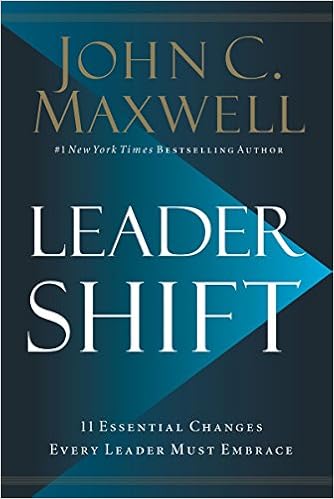
Leader Shift: The Eleven Essential Changes Every Leader Must Embrace by John Maxwell
D


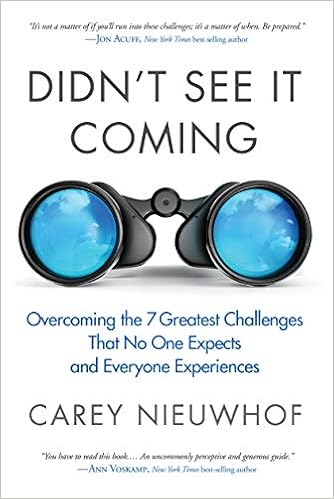
Didn’t See It Coming: Overcoming The 7 Greatest Challenges That No One Expects And Everyone Experiences by Carey Nieuwhof
Getting Comfortable With Failure

Photo Credit: Google Images

I have not failed. I have found 10,000 ways that won’t work. – Thomas Edison

As a leader, chances are, you’ve had a run-in or two with failure. If not, be patient. I say that not to be pessimistic or to discourage you. I say that to challenge and prepare you for great adventures that lie before you.

Failure. What’s the first thing that comes to mind when you hear that word? Unfortunately, some people make the mistake of applying false labels to people who fail. They see them as failures rather than a success in progress.

In his book, Chase The Lion, author Mark Batterson gives an inspiring description of what it means to fail. He writes:

The cure for the fear of failure isn’t success. The cure for the fear of failure

is failure in small enough doses that we build up an

immunity to it.

God is in the business of helping us overcome our fears, but

He often does it by bringing us face to face with our worst fears.

He graciously brings us back to the place of failure, and then, He

not only helps us pick up the broken pieces but He also puts them

back together again.

That description, especially as it applies to the fear of failure, is an important lesson every leader must learn. As a leader, you will have to face down your failures, and confront them if you want to grow to the next level.

Regardless of where you are in your leadership journey, and wherever that path leads you- be it in business, sales, technology, management, customer service, etc. you must find your cure for failure and build up your immunity to defeat it. Here are a few ways to do it.

Develop a resilient attitude

Developing a resilient attitude is hard work. But most of that battle is won when we change our attitudes.

It reminds me the story of the two shoe salesmen years ago who left for the Caribbean  islands from Chicago. Upon arrival, they discovered that no one wore shoes. One salesman phoned back to the home office and notified them that he was returning to Chicago, “no one here wears shoes,” he said. The other man phoned back to the home office with excitement, “Send more shoes, no one here wears them!” Both men saw the same thing. One through the lens of a negative attitude, the other through a positive one.

The difference between your success and failure will often be determined by your attitude. Develop resilience in this area and you will develop an immunity to failure.

Develop the right perspective

While attitude has to do with how you see yourself in your present circumstances, your perspective is how you see yourself through it. It’s all about thinking long.

Look back on your own history for a moment. Think back to a time when you were going through a challenging or difficult time. Chances are your attitude at the time may not reflect your perspective on it now. The difference is time and distance. It’s much easier to look back at a difficult time you’ve come through than it is to see light at the end of the tunnel when going through it.

Never allow your present fears or failures to cloud your perspective. You will come through your difficult times and with the right perspective you can see them for what they were–stepping stones to your success.

Develop resilient courage

The formula for courage looks like this: A (Attitude) + P (Perspective) = C (Courage). Your ability to face down your fears and recover from failure takes courage. What will set you apart from your colleagues and give you the advantage over your competitors is courage.

“We don’t develop courage by being happy everyday,” writes Barbara De Angelis, “ We develop it by surviving difficult times and challenging adversity”. And this is the place on your leadership journey you must arrive at. It’s when you survive difficult times that you grow strong as a leader.

Resilient courage is developed over time. It’s a process. None of us like failure and we all wrestle with our fears. But failure doesn’t have to fatal or forever. It’s simply a marker on our road to success. Don’t give up!


© 2017 Doug Dickerson


Favorite quotes on failure:

Success is not final, failure is not fatal, it is the courage to continue that counts. – Winston Churchill

Failure will never overtake me if my determination to succeed is strong enough.- Og Mandino

Failure is simply the opportunity to begin again, this time more intelligently. – Henry Ford

I can accept failure, everyone fails at something. But I can’t accept not trying. – Michael Jordan

Failures, repeated failures, are finger posts on the road to achievement. One fails toward success. – C.S. Lewis


What’s Wrong With (Always) Being Right?

Photo Credit: Google Images

Doing the right thing isn’t always easy-in fact, sometimes, it’s real hard- but just remember that doing the right thing is always right. – David Cottrell

In my many years in leadership, some of the most annoying people I come across are those whom, no matter the circumstance, are always right. They always have a ready excuse, an ‘out’ when things go wrong, it’s never their fault. They are always right. Chances are you’ve met one or two of these people along the way yourself.

Then you have the ‘know it all’ – that one person who’s the in-house ‘expert’ about everything. They would choose an ‘I told you so’ moment over ever admitting they were wrong about anything- even if it adversely affected the organization. (If this type person exists in your organization they are toxic, and you must deal with them).

Here’s the rub- people hate being wrong. I get it. We like to be at our best, do our best, but at the end of the day, we are mere mortals. We screw up. And we don’t know everything. So how do you guard yourself against ever developing this kind of an attitude? Here’s some food for thought.

Acknowledge your limitations

You bring a certain depth of skill and knowledge to your workplace. It’s great that you are highly trained in your area of expertise and contribute to the good of the team. You do your best to add value to your organization.

But a dose of reality is necessary if you desire to be an effective leader. While your expertise can be strong in one area, chances are you are not an ‘expert’ in every area. That’s why you have to listen, collaborate, and tap into the skills of your colleagues and defer to them. A lack of self-awareness on your part doesn’t change what others know and what you fail to admit. You don’t know everything so quit acting like it.

Focus on doing right, not always being right

When you make the shift from always ‘being’ right to ‘doing’ right, it will significantly change your leadership. It will change the way you look at things – and it will actually be a liberating force in your life. The self-imposed pressure of always being right frees you up to do right. It’s a game changer in many regards.

Let’s be real – it’s when you focus on doing right that you will experience growth in your leadership. It’s a mark of maturity. With nothing to prove and no compulsion to always be right, you can now focus on more important things like being a servant leader instead of protecting your ego.

Be humble and teachable

Personal growth and development will rarely happen within the ‘know it all’ or ‘always right’ bubble or mindset. There’s no room for it. Not because there’s nothing more to learn, but because this person believes that he or she is already there. It’s a dangerous mindset to have as a leader.

In Proverbs 19:20, the writer says, “Listen to advice and accept instruction, that you may gain wisdom in the future”. For the sake of your own personal development, and those whom you lead, be teachable and walk humbly. None of us have arrived and there’s a lot of people depending on us to realize it.


© 2017 Doug Dickerson

Sign up at the top right side of my web page to follow my blog via email.

Follow on Twitter at https://twitter.com/DougDickersonsc

Like on Facebook at https://www.facebook.com/cardinalpointleadership/


Are You Really a Team Player?


Photo Credit: Google Images

A team is not a group of people who work together. A team is a group of people who trust each other. – Simon Sinek

For many of us, the idea of being part of a team is something we’ve identified with from an early age. Many of us were introduced to the concept of being on a team from our Little League days, or choosing teams with our neighborhood friends for an afternoon of backyard football, or whom we wanted to play with at recess.

While our current understanding of teams and teamwork may not mirror those early days,  it’s not a concept that is lost on us now. We all want to be on the winning team and we all want teammates that will give us that competitive advantage. And we can still play favorites.

As leaders, how we model teamwork is important. Unlike the backyard football game, the stakes are higher and more is riding on the outcome. What kind of a team player are you? Here are a few questions to ponder. After some honest reflection, decide for yourself if you are really a team player or an imposter.

Does my attitude benefit my team or undermine it?

Teams that succeed do so with players who have a positive attitude. There’s just really no other way around it. Is your attitude one that lifts your team or tears it down? Is your attitude a reliable one that others can look to and emulate and from it gain the confidence and courage they need in a moment of doubt or uncertainty? Or on the other hand, do you entertain those with a bad attitude by lending them a sympathetic ear? Remember, what you tolerate you promote, and this is especially true as it relates to attitudes.

Am I looking out for my own interest, or what is best for the team?

This is an age-old problem for many teams. If you are only looking out for your own interests and your own agenda, and not that of the team, can you really say that you are a team player? Babe Ruth was right when he said, “The way a team plays as a whole determines its success. You may have the greatest bunch of individual stars in the world, but if they don’t play together, the club won’t be worth a dime.” If you are promoting your own interests over the team, it’s likely you really aren’t a team player.

Do I celebrate the successes and accomplishments of my teammates?

One of the hallmarks of a successful team is realized when fellow team members can celebrate the achievements and successes of one of its peers. At the end of the day they understand that when he or she wins, the team wins. If you are blinded by petty jealousy or insecurities you are really not a team player.

Am I open to new ideas and change or am I a hindrance to it?

Teams that succeed are growth-minded and are always looking for ways to improve. They realize that they can’t rest on yesterday’s win, and they must be open to new ideas. If you are always resisting change and your mantra is “we’ve never done it this way before,” then chances are you are really not a team player you’re simply standing in the way of those trying to move forward.

Am I intentional and consistent about adding value to my team?

A team player is not one out to protect his or her own agenda or playing politics, and not saying one thing in public while undermining and scheming behind the scenes in private. Are you looking for ways to add value and lift others? Are you willing to put others ahead of yourself for the good of the team?  If so, chances are, you are a team player.


Are you really a team player?

© 2017 Doug Dickerson

Six Leadership Lessons from Winston Churchill

Photo Credit: Google Images

The greatest lesson in life is to know that even fools are right sometimes –Winston Churchill

As a student of leadership, I have much respect for Winston Churchill. As a student of history, I have an even greater appreciation for his leadership skills in a most turbulent time in world history. His strength and resolve during World War II gave the British people hope in their darkest hours. His courage and sense of purpose were the driving force that ultimately led the Allies to victory.

Step back in time with me and let Churchill’s own words teach us some time-tested leadership lessons that are applicable today. Here are six of my favorites.

Success is not final, failure is not fatal: it is the courage to continue that counts.

If you are going to last as a leader you have to let this truth resonate down deep. Every leader experiences failure. But failure does not define you- it shapes you. A failure is merely an event that happens on the road to success. What matters is not that you failed or even tasted the joy of success, but that you had the courage to continue.

We make a living by what we get, but we make a life by what we give.

This is such a valuable lesson to learn as a leader. Many have made the mistake of buying into the old notion that the one with the most toys wins. But true leadership is not about what you get but rather about what you give. The world will be a little better than you found it when you come to discover the joy of giving.

You have enemies? Good. That means you’ve stood up for something, sometime in your life.

Churchill was greatly admired but he also had plenty of enemies. While the consequences may not be as significant as what Churchill faced, you too will have your share of critics. But regardless of the challenges that you face and the enemies who would seek to harm you; hold true to your principles and hold true to your convictions. Stand up for what is right and do good by all men.

Attitude is a little thing that makes a big difference.

In the face of overwhelming odds and at times great calamity Churchill held on to what I would label his trump card. It’s what would give him the courage to move forward in the darkest hours of the war and is what would give his countrymen hope. Succinctly and truthfully put – Churchill’s attitude was a life saver. Never underestimate the power of a positive attitude. As a leader is will make you or break you.

I am an optimist. It does not seem too much use being anything else.

As a leader, you choose your attitude and you choose your state of mind. If there was ever a leader who could have chosen a different path and projected a totally different outlook it was Churchill. With the relentless bombing raids on London; the tremendous loss of life coupled with all of the sufferings that took place, Churchill could have fallen victim to despair. But his optimism would one day lead to victory. I don’t know the challenges you face today but I do know this much – being optimistic is a choice that will put you on the right path.

Lady Astor: “Winston, if I were your wife I’d put poison in your coffee.” Winston Churchill: “Nancy, if I were your husband I’d drink it.”

Humor was one of Churchill’s endearing qualities. His quick wit and sense of humor were a reflection of the total man who took his work seriously but knew the importance of enjoying a light moment. His humor was as much an integral part of his leadership style as any other trait. Your life in leadership will be marked by important decisions and things that will define your legacy. Churchill reminds us that having a sense of humor makes it all bearable. So remember this important principle in your leadership – it’s okay to smile, laugh; especially at yourself, and enjoy the journey.


© 2017 Doug Dickerson

  • This week’s column is courtesy of the vault. It was originally published in 2015.


It’s Your Time to Soar

Photo Credit: Google Images

Eagles don’t flock, you have to find them one at a time. – Ross Perot

“While walking through the forest one day, a man found a young eagle who had fallen out of its nest. He took it home and put it in his barnyard where it soon learned to eat and behave like the chickens.

One day a naturalist passed by the farm and asked why it was that the king of all birds should be confined to live in a barnyard with the chickens. The farmer replied that since he had given it chicken feed and trained it to be a chicken, it had never learned to fly. Since it now behaved as the chickens, it was no longer an eagle.

“Still it has the heart of an eagle,” replied the naturalist, “and can surely be taught to fly.” He lifted the eagle toward the sky and said, “You belong to the sky and not to the earth. Stretch forth your wings and fly.” The eagle, however, was confused. He did not know who he was, and seeing the chickens eating their feed, he jumped down to be with them again.

The naturalists took the bird to the roof of the house and urged him again, saying, “You are an eagle. Stretch forth your wings and fly.” but the eagle was afraid of his unknown world and jumped down once more for the chicken feed.

Finally, the naturalist took the eagle out of the barnyard to a high mountain. There he held the king of the birds high above him and encouraged him again, saying, “You are an eagle, you belong to the sky. Stretch forth your wings and fly.” The eagle looked around, back towards the barnyard and up to the sky. Then the naturalist lifted him straight towards the sun and it happened that eagle began to tremble. Slowly he stretched his wings, and with a triumphant cry, soared away into the heavens. ” (Source)

In leadership, as in life, you will have competing voices that will cause you to walk with the chickens or soar with the eagles. Here are a  few truths worth remembering.

Not everyone who picks you up will lift you up

The man who found the young eagle might have meant well in bringing the young eagle to his barn. But over time, his good deed turned the majestic bird, full of so much potential, into a common barnyard chicken.

If you want to soar as a leader you must break free from the good intentions of people who do not bring out the best in you.

Your worth is not defined by those holding you back

As the young eagle grew its identity was shaped by the company that it kept. Instead of realizing its full potential to soar the heavens, it was grounded with the chickens. The eagle was being labeled as something it wasn’t. His future was being cast. And the man could not be more wrong.

If you want to soar as a leader you must never let the people who are holding you back to define your worth. When you have the heart of an eagle, don’t allow the mindset of a chicken hold you back.

You can only soar like an eagle when you start acting like one

Over time, the young eagle was persuaded by the naturalist that he was more than a chicken as led to believe. It was when the eagle embraced everything that was great about him that he took his rightful place soaring to the heavens.

If you want to soar as a leader you will have to shake off the labels of your critics and stop hanging out with the chickens. Surround yourself with those who bring out the best in you.

Those who believe in you the most will insist that you fly

The naturalist saw the eagle for the grand and majestic bird that it was. He knew that as long as it was confined to the barnyard it would never live up to its potential. He saw the eagles’ potential and he didn’t give up until it flew.

If you want to soar as a leader you will need people in your life who believe in you, people who will call out the best in you, and people who will never rest until you fly.

This is your time to soar!


© 2017 Doug Dickerson

The Headwinds of Leadership

Photo Credit: Google Images

When everything seems to be going against you, remember the airplane takes off against the wind, not with it. – Henry Ford

I came across a humorous story about a captain and three sailors who were left on a sinking ship. The captain spoke first, “Men, this business about a captain going down with the ship is nonsense. There’s a three-man life raft on board and I’m going to be on it. To see who will come with me, I will ask you each one question. The one who can’t answer it will stay behind.”

The captain asked the first question: “What unsinkable ship went down when it hit an iceberg?” The first sailor answered, “The Titanic, sir.” On to the next question, the captain asked, “How many people perished?” The second sailor said, “One thousand five hundred and seventeen, sir.” “Now for the third question,” the captain turned to sailor number three. “What were their names?”

There are times in leadership that you might identify with the captain- asking all the questions. Some days you might feel like the third sailor in the story- up against impossible odds- facing those inevitable headwinds of leadership.

If you hang around in leadership long enough you will encounter headwinds- challenges to your leadership that may at times cause you to second guess yourself. Don’t worry, most all of us have been there at one time or another.

Instead of making the focus here about specific headwinds that we face- and we could make a long list of adversities, I’d rather focus on our responses to them because it’s in our responses that we earn our leadership stripes.(I wrote here about specific threats leaders face). Here are three self-evaluations worth considering when you face the headwinds in your leadership.

What does my response say about my values?

When facing your headwinds in leadership how you respond makes all the difference. What’s foremost on your mind when going through a struggle? Is your reputation? Is it your pride? Could it be you are trying to protect your own interests? As much as I hate to admit it, I can look back at times early on in my leadership when I was out to protect my own image and it was detrimental in many ways.

When uppermost in your response to adversity is the protection of your values over your ego then what you go through won’t be a waste of time. Your values- your core beliefs, will be what sustains you long after the storm has passed.

What does my response say about my attitude?

I’ve yet to meet a leader who enjoys the headwinds of adversity and challenges. But make no mistake – we all go through it. We may not choose the adversity, but we do choose our response. So what is the tipping point between a headwind that stops us or one that causes us to take flight like the airplane? In a word- attitude.

Your attitude will lift you up or tear you down. It will inspire those around you or it will be a source of discouragement. It’s your lifeline when the headwinds are strong, and it’s the the predictor of how you will respond when the chips are down. (I wrote here about hope for discouraged leaders). It won’t always be easy to have a good attitude. Life happens and circumstances can wear you down, but developing a strong attitude will carry you further than you could go otherwise.

What does my response say about my future?

You are never more than one response away from a headwind of adversity that is going to shape the future of your leadership. Be it the wrong decision about your ego over your values, or a bad attitude that does more harm than good in your organizational structure- attitudes are contagious after all- your response to headwinds is a game changer.

It’s in the daily decisions of your leadership and the headwinds you face that your future is being decided. Be clear about your values and be mindful of your attitude because it’s in these things that your future is being shaped.

Your adversity will last but for a while but you will carry with you the consequence of your response for a long time. Choose wisely.

© 2017 Doug Dickerson

Four Leadership Questions You Need to Answer

Photo Credit: Google Images

What people think of as the moment of discovery is really the discovery of the question. – Jonas Salk

A friend once asked Isidor I. Rabi, a Nobel prize winner in science, how he became a scientist. Rabi replied that every day after school his mother would talk to him about his school day. She wasn’t so much interested in what he had learned that day, but always inquired, “Did you ask a good question today?” “Asking good questions,” Rabi said, “made me become a scientist.”

One of the lost arts in leadership is asking good questions. It’s a lost art mostly because we are so busy trying to be the answer man/woman that we miss the magical moments of discovery that are right in front of us.

While it’s fine to give answers and provide guidance to those whom you lead, it’s incumbent upon us to never lose our sense of wonderment and curiosity as leaders. A good leader will always listen to his or her people, but a smart leader will ask the right questions.

Part of your growth and development is found in the questions you ask about your own leadership. It’s in your moments of reflection that you can see how far you’ve come, where we are today, and where we are headed tomorrow. Here are four questions for your consideration.

Do I know my ‘why’?

This is perhaps the single greatest question that pertains to your life and your leadership. In his book Intentional Living, John Maxwell writes, “The sooner you know your why, the sooner you can shift your focus from yourself to others.” It’s a wonderful day when you discover your why and come to the realization that it’s not about you.

Am I intentional about my growth?

It’s way too easy to get caught up in the moments of the day tending to so many responsibilities of being the leader that you fail to develop as a leader. Developing as a leader is only achieved by being intentional about your growth. What books are you reading? What about a mentor or coach? If you are not growing as a leader you are in decline as a  leader.

Am I leading by example?

One of the pitfalls of leadership is trying to lead by decree rather than by example. Your value as a leader is demonstrated not so much by what you say but by what you do. Those you lead are looking to you not for lofty words but for a solid example. Be sure what you are modeling is worth imitating.

Is my attitude/heart in the right place?

In Proverbs 4:23 the writer said, “Above all else, guard your heart, for everything you do flows from it.” It’s important not to let the stress and responsibilities of leadership take a negative toll on you mentally, physically, emotionally, or spiritually. A negative mindset or attitude can ruin your effectiveness as a leader. Not only that, but it can cause unwanted issues in your organization. Make this a priority-guard your heart.

In order to grow as a leader you must answer these questions and more. What questions are you asking?

© 2017 Doug Dickerson


Developing a Leadership Mindset

Photo Credit: Google Images

“You can change your mindset” – Carol S. Dweck – Mindset, The New Psychology of Success

In her highly acclaimed and recommended book Mindset , Carol S. Dweck lays out four foundational statements to gauge whether you have a fixed-mindset or a growth mindset.

Here are the statements ( Answer T  or F to each one):

  1. Your intelligence is something very basic about you that you can’t change very much.
  2. You can learn new things, but you can’t really change how intelligent you are,
  3. No matter how much intelligence you have, you can always change it quite a bit.
  4. You can always substantially change how intelligent you are.

Statements 1 and 2 are fixed-mindset statements. Statements 3 and 4 reflect the growth mindset. “Which did you agree with more? You can be a mixture, but most people lean toward one or the other,” states Dweck.

Over the years I have come to know that leaders have a mindset that sets them up for success or failure even before that leadership journey begins. 

The mindset you embrace sets the tone for your leadership style, success, and the influence you will have. What mindsets or characteristics will hold you back? Which ones will cause you to succeed? Here are a few.

The mindset of your attitude

In leadership, your attitude is your best friend or worst enemy. It’s one of the most contagious characteristics of your leadership style. It will cause people to rally around you and your vision or it will turn them away. The attitude mindset of the leader will be the benchmark for the rest of the organization. You can’t expect the attitude of your people to be good if the one you showcase is bad. Eventually, you will have to change your attitude or your people will change their address. (I wrote about attitude in the workplace here).

What kind of attitude are you projecting? Do you only focus on the negative? Do you only see what your people are doing wrong as opposed to what they do well? How does your attitude inspire, encourage, and motivate your colleagues? Is your attitude worthy of emulating?

The mindset of your perceptions

One of the basic foundational leadership lessons I learned many years ago from John Maxwell was in how he sees other people. Maxwell said he always looked at people and saw a “10”. It was his way of helping others get in touch with their potential and set them up for growth and success. Were all of the people he labeled as a  “10” truly a 10? Of course not. But the perception he put into play was one that emphasized unlimited growth and possibility in the people he believed in–even when they may have only been a 4, 5, or a 6 in reality.

What are the perceptions of the people you lead? Do you instill confidence in your people that reflects a 10 even though they may only be a 5? If known by your people would your perceptions give them a reason to be optimistic or discouraged? What changes do you need to make in your perceptions of other people or personal changes that would cause you to be a better leader in general?

The mindset of your personal growth and development

Every successful leader I know has one thing in common- they never stop growing.The older I get the more I realize how much I don’t know which is humbling. (I wrote about the things I wish I had known years ago about leadership here). You can have a fixed-growth mindset that Dweck writes about or you can have a growth mindset that will make all the difference in the world to your leadership. The mindset you choose, feed, and nurture is the one that will win out at the end of the day.

What are you doing on a daily basis that contributes to a growth mindset? As a whole, does your organization have a fixed-mindset or a growth mindset? What fixed-growth mindsets do you struggle with the most? What changes do you need to make to develop a growth mindset?

Developing a growth centered leadership mindset is the beginning of a leadership journey that begins by believing it is possible.


© 2017 Doug Dickerson

  • I am booking leadership training events for 2017. See the tab at the top of the page for more information.


Value- Added Leadership

Photo Credit: Google Images

Few things increase the credibility of leaders more than adding value to the people around them. – John Maxwell

American artist James Whistler, who was never known to be bashful about his talent, was once advised that a shipment of blank canvases he had ordered had been lost in the mail. When asked if the canvases were of any great value, Whistler remarked, “not yet, not yet.”

Value, like beauty, is in the eye of the beholder. While it’s not too hard to spot beauty when we see it, the search for value might be a bit more challenging.

I came across an article in Inc. magazine (http://on.inc.com/2bZaq1X) by John Brandon in which he reveals the results of one survey that should grab the attention of every leader who has anything to do with his or her employees. Citing a survey by O.C. Tanner that surveyed 2,363 office workers it “ found that, for those who feel appreciated, a whopping 89% feel satisfied in their jobs. That number drops to only 51% for those who said they don’t feel appreciated.

In the same control group, 85% of the “appreciated” employees also said they were satisfied with life while 61% of the under-appreciated employees were not happy with life in general. The data creates a stark contrast in other areas as well, revealing that those who feel appreciated tend to be less stressed, have a better sense of belonging, and feel like they have better control over their life.”

In theory we know that employee engagement is a good thing. We intuitively know that we should be engaged and taking a proactive posture towards building relationships that make a difference. As a leader, the value that you add to your organization is like one of those blank canvases. The value is yet to be determined.  So what can you do as a leader to make a difference and create a masterpiece? Here are four practical ways.

Add value with your words

You can add value to those in your sphere of influence simply by the words you speak. Be generous with praise, be passionate with vision, be patient in confrontation. But understand that the word you use set the tone for the way in which your employees react and how together you move forward as a team. When they feel valued they will perform like it.

Add value with you actions

In as much as your team likes to hear from you, what carries the day is not your words but your deeds. Talk is just that – talk. Value is added when you back it up with actions that moves the team in the right direction. If you want to see morale soar in your organization be a leader that backs up the talk with action.

Add value with your attitude

Your attitude is the thermostat for the morale of your organization. It’s most unrealistic for you to expect strong morale from those you lead if your attitude stinks.  Can you blame them? You add value to those you lead with a strong attitude that knows how to celebrate accomplishments, is steady in times of testing, and sets the bar high with a winning attitude.

Add value with your culture

The findings in the above mentioned survey found that the quality of life not only at work but outside of it was much improved simply because the employees felt appreciated. What one, two, or three actions could you do today that would add value to those you lead? It’s not about righting the ship overnight, but it is about taking steps today that can begin to change the culture of your organization. And you don’t have to fly off to some fancy conference to learn or do this.

Adding value to those you lead should be utmost in your mind, your heart, and the focal point of the decisions you make. Are you a value-added leader?


©2016 Doug Dickerson