In a Well With a Bull Moose: A Lesson in Why We Need Each Other

Credit: AP News

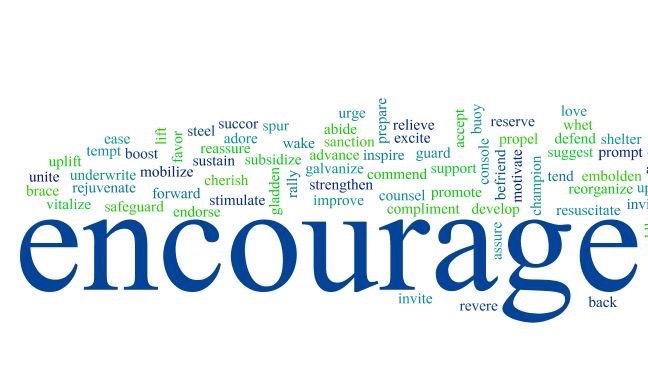
How do you identify someone who needs encouragement? That person is breathing. – S. Truett Cathy

The other week, a bull moose somehow managed to fall into an abandoned well in a forested area of Maine. A team worked for about five hours to free the animal, as initially the landowners thought it may have been a turkey or some other type animal. Upon further inspection, it turned out to be much larger.

The land owners were not even aware of the abandoned well until the discovery of the bull moose. With the animal in distress, they summoned the Maine Department of Inland Fisheries and Wildlife, which sent a biologist to assist the family in the rescue.

Using an excavator provided by the family, the animal was freed from the well, much to the relief of everyone. The family stated that the well has now been capped, preventing any more animals or humans from falling into it. As for the bull moose? Once it was free, it took off running and perhaps had a bruised ego. 

If you hang around in leadership long enough, it’s not too far-fetched to know that sometimes we can end up in situations like the bull moose, or we know someone who is. And when those times come, what is a leader to do? 

Consider these statistics:

  • 56% of leaders experienced burnout in 2024, an increase from 52% in 2023, according to a report by Staffing Industry Analysts
  • 41% of senior leaders are stressed, and 36% are exhausted, per a 2022 Deloitte report
  • 42% of senior leaders attribute the top cause of their stress to their own self-imposed pressure
  • In a Spring Health study, 41% of employees expressed having little confidence in their leaders’ ability to support mental health, leading to a ‘leadership gap”.

Here are some practical considerations and reminders to keep in mind when you find yourself feeling trapped in the proverbial leadership well, along with some steps you can take for yourself or for those around you.

No one is immune to falling into the well

You know as well as I do that no one is immune to falling into the proverbial well from time to time. I have been there many times myself. Seasoned leaders and new ones alike today find themselves challenged like never before, and stress can be a constant friend. The well is a simple reminder that we are on a shared journey.

You are not alone

One of the greatest lies you can believe as a leader is that you are all alone. You may feel like you are stuck or have fallen into a well, feeling alone and unseen. Your struggle may be hard, you may feel overwhelmed, and you may even feel like giving up. But take heart, you are seen, your voice is heard, and you are not alone. You will emerge from this stronger and better equipped than before.

Everyone needs encouragement

We need each other. And everyone needs encouragement. I am thankful for the times when I was in the well, that I had friends who were there to lift me up and out. And I am grateful and humbled by the times I have been there for others in similar situations. 

I am reminded of the words of Stephen Covey, who said, “Through years of study, teaching, and working with people all over the world, from all walks of life, I have determined that leadership is communicating to people their worth and potential in a way that is so clear that they come to see it in themselves.” 

This is one of the clearest mandates for how we ought to communicate with the people and leaders around us. By our words and actions, people should know that we, too, are familiar with life in the well, that they are not alone, they are seen and not judged, and we have their backs.

The late Robin Williams once said, “Everyone is fighting a battle you know nothing about. Be kind. Always”. This is our commission as leaders.

©2025 Doug Dickerson

Turning Disappointments Into Celebrations

Credit: Google Images
Annual Pencil Sharpening Celebration

Anytime you suffer a setback or disappointment, put your head down and plow ahead. – Les Brown

In case you missed it, more than a thousand people in Minneapolis recently attended what has become an annual celebration – the sharpening of a giant number 2 pencil. Yes, a pencil.

The 20–foot–tall pencil was sculpted out of a giant oak tree that was damaged by a storm a few years ago. Neighbors and friends mourned the damage of the beloved tree. Yet, the owners of the tree had a plan. According to the story, the owners saw it not so much as a loss, but as a chance to give the tree new life.

The sharpening ceremony on the front lawn has evolved into a community-wide event that draws hundreds and is filled with music and pageantry. Some people come dressed as pencils and erasers.

In the wake of the storm, the owners knew they wanted to create a sculpture out of their tree. Given the shape and circumference of the log, they conceived the idea of an oversized pencil.

When asked why they chose a pencil, the owner replied, “Everybody uses a pencil. You see it in school, you see it in people’s work, or drawings, everything. So, it’s just accessible to everybody.” They also stated that they wanted to do something that would bring the community together.

The owners said, “We tell a story about the dull tip, and we’re gonna get sharp. There’s renewal. We can write a love letter, a thank you note, we can write a math problem, a to-do list. And that’s a chance for renewal, that promise, people really seem to buy into and understand”. 

Now, each year they sharpen the pencil. It’s a community celebration, and its inspiration came out of something that was initially very disappointing.

Life has a way of throwing us curveballs. Things happen in life that we didn’t see coming, and we feel the sting of disappointment. And while we can’t choose what we go through in life, we can decide how to respond to it.

When John and Amy Higgins lost that tree, they were disappointed. But out of that disappointment came a joyous celebration that now draws people by the hundreds. It all comes down to your choice.

John and Amy chose not to make it about them or their grief, but instead, they saw an opportunity to do something more meaningful. 

Here are a few lessons we can learn from John and Amy about turning disappointments into celebrations.

Your attitude is a game-changer.

John and Amy could have simply mourned the loss of the tree and moved on with their lives. But instead, they chose to do something positive that would have far-reaching outcomes.

This is emblematic of individuals seeking the greater good and those with a positive attitude. And this is what will set you apart in life when bad things happen to good people. John and Amy chose a positive attitude, and now many come annually to celebrate something good that came out of a loss.

Additional Resource: Attitude Checkup: Three Questions You Need to Answer Now

Credit: Google Images Celebration at the pencil sharpening.

Your focus sets your course.

John and Amy didn’t make the loss of the tree about them. They decided on a plan to create a giant number 2 pencil, and it evolved into an annual community celebration.

When disappointments come your way, as they surely will, your focus will determine where and how it will end. As you guard your attitude and chart the course, good things can come from the things that brought you pain.

Additional Resource: It’s a Matter of Focus

You can choose pity or a party.

John and Amy could have chosen a pity party. But as it turns out, they chose a party. From the log of a fallen tree now stands a 20-foot number 2 pencil that serves as a reminder that good can come from adversity, and sometimes we need a good sharpening to be more productive.

I encourage you today to reflect on your attitude, think carefully about what you choose to focus on, and opt for the party over the pity. 


©2025  Doug Dickerson

Seeing The Best in Others

Credit: Google Images

She had a way of seeing the beauty in others, even, and perhaps most especially, when that person couldn’t see it in themselves. – J. K. Rowling

I read the story of a young boy who worked in a factory, but he had an intense desire to be a singer. When he turned ten years old, he took his first voice lesson which procured a less than encouraging remark from his teacher, “You can’t sing. You haven’t any voice at all. Your voice sounds like a wind in the shutters.”

His mother, however, believed that he could learn to sing. She was very poor, but she hugged him and said, “My boy, I’m going to make every sacrifice to pay for your voice lessons.”

Her encouragement and sacrifice for her son proved to be invaluable. He became known as one of the world’s greatest singers. His name is Enrico Caruso. 

I like this story because it represents such an important leadership quality that is needed today. On a personal level, we know that we will never rise above the way in which we see ourselves. But contrast this in how you view others. Do you make it a practice to see the best or are you only finding fault?

When I was a young boy in grade school, I struggled as a student. I was diagnosed with dyslexia which made learning a challenge on many levels. The diagnosis was helpful in getting to the root causes for my academic struggles and receiving the help I needed.

One person responsible for that help was Mrs. Strong- my 4th-grade teacher. She instilled a confidence in me that was lacking along with an inferiority complex to match. But it was her perseverance in working with me that began a process of helping me to change my mindset which subsequently helped me academically. The changes didn’t happen overnight, but the seeds were planted that brought me to where I am today.

Seeing the best in your people is an important first step in adding value to them. Your people will never be moved or helped by your silent observations. So what can you do as a leader not just to see the best in others but to help move them from where they are today to a place of greater meaning and purpose in the future? Here are a few suggestions. 

Build relationships

You can only see the best in others up close. When you build relationships with your people you will be more prone to see the best and finer qualities in them. It’s also through that relationship that you can identify areas that need improvement. But because you first built a relationship, you now have the credibility to see both and add value.

Build trust

The relationships that you have with your people will be different from person to person. But when it comes to calling out the best in your people it must be based on trust. Seeing the best in others is just the beginning  Helping people grow to new levels begins when they trust you because trust is the currency of relationships Click To Tweet. Don’t ever underestimate the importance of trust. It’s the best way forward.

Build with patience

Seeing the best in others and calling it out is invaluable to your people. It’s a morale booster and confidence builder that’s always appreciated. However, you must think long-term and pack your patience as you help your people grow. Seeing the best qualities in your people doesn’t mean those qualities are polished or perfected - it simply means you recognize them. Click To Tweet As a leader, your job is akin to seeing the diamond in the rough. Now that you’ve found it, you can begin to refine it. Be patient with the process.

Build for the right reasons

Growing and developing leaders around you-seeing the best in them, should never be done with selfish motives or intentions. If your angle in seeing the best in your people and developing them is for your own benefit down the road, then perhaps you should reassess your motives. Seeing and wanting the best for your people should first and foremost be about making them a better leader. The residual effects that come ought to be secondary to helping that person reach his or her full potential.

Are you seeing the best in others?


©2021 Doug Dickerson

Listen to Doug’s podcast at https://anchor.fm/cardinalpointleadership 


Three Truths About Encouragement in Leadership

Credit: Google Images

How do you know someone needs encouragement? They are breathing. – S. Truett Cathy

A young boy, on an errand for his mother, had just bought a dozen eggs. Walking out of the store, he tripped and dropped the sack. All the eggs broke, and the sidewalk was a mess. The boy tried not to cry.

A few people gathered to see if he was okay and to tell him how sorry they were. In the midst of the words of pity, one man handed the boy a quarter. 

Then he turned to the group and said, “I care twenty-five cents worth. How much do the rest of you care?”. 

In many ways, encouragement is the lifeblood of leadership. So long as you are around a person who’s breathing they need encouragement.

While it may not be hard to imagine what your organizational culture would be like without encouragement taking place, imagine what the possibilities would be like if it were? The challenge in leadership as it relates to encouragement is to be as generous as possible.

Encouragement is the lifeblood of any organization. Here are a few reasons why you need to pass it along.

Encouragement can be a game-changer

A word of encouragement given at the right time can make the difference between success and failure for the person receiving it. And in some cases, it’s not so much the uplifting word spoken that made the difference, but the timing of it that turned things around.A word of encouragement given at the right time can make the difference between success and failure for the person receiving it. Click To Tweet

It’s been said that everyone is facing struggles we know nothing about. You never know how your word of encouragement can give a person that extra dose of confidence to continue on and not give up. Never underestimate the power of a kind word.

Encouragement is a unifier

Just as gossip and office politics tends to divide, encouragement sets the bar at a higher level. Encouragement tends to bring people together in a way that destructive words never will. Your organization will grow stronger and healthier when words of encouragement are at the center of your conversations.

If you are looking for ways to bring your people together, look first at the way in which you communicate with your people. Click To TweetBringing your people together begins with words of encouragement. So long as your people know you have their backs it makes every other conversation better.

Encouragement builds relationships

One of the benefits of encouragement is that it builds bonds between you and your people. It’s easy to come together over words of encouragement, but the relationships that emerge from it are where you can really make improvements. This is where you can take your people to a higher level and out of their comfort zones.

Developing relationships takes time and commitment. It begins with the power of your words. Encouragement for the sake of encouragement is always good. But at some point, you want to take your people to a higher level. Encouragement sets the table to do so.

Final Thoughts

If there’s ever been a time for encouragement in the workplace it’s now. Many of your colleagues and friends are hungry for an encouraging word of support. Be the voice of hope. Be the voice of understanding. Be the voice of encouragement that others need. 

Who have you encouraged today?


©2020 Doug Dickerson

Why Encouragement Matters in Leadership

Credit: Google Images

If you are a leader, you should never forget that everyone needs encouragement. – John Maxwell

As a young boy, he worked in a factory but had an intense desire to be a singer. When he turned ten years old, he took his first voice lesson which procured a less than encouraging remark from his teacher, “You can’t sing. You haven’t any voice at all. Your voice sounds like a wind in the shutters.”

His mother, however, believed that he could learn to sing. She was very poor, but she hugged and said, “My boy, I’m going to make every sacrifice to pay for your voice lessons.” 

Her encouragement and sacrifice for her son proved to be invaluable. He became known as one of the world’s greatest singers. His name is Enrico Caruso. 

I’m always inspired by stories like this. To think that the turning point for a world-renowned singer was the encouragement from one person who believed in him when others passed him over.

Think about your own story. Who was it that inspired and challenged you to be your best and pushed you to go further than you thought possible? 

I’m thankful for teachers who helped me reclaim the confidence I need to succeed in school due to my struggle with dyslexia. Without their understanding and their encouragement to me to push through and overcome my learning challenges, I wouldn’t be where I am today.

Encouragement is the secret sauce for all successful leaders. And all leaders who want to add value to those around them but are not quite sure where to start - well, this is it. Click To Tweet There are many benefits to encouraging those around you, but here are three that stand out.

Encouragement pays immediate dividends

In any given moment, a word of encouragement is the boost a friend or colleague needs. Without your knowledge, encouragement can be a game-changer for someone who may have felt like giving up and throwing in the towel. 

Never underestimate the power of encouragement at the moment in which it was given. It may not seem like all that much to you at the time, but it could make all the difference in the world to the one who just received it.

Encouragement creates margins

Have you ever had those times when you just felt stuck? You were in that funk and it was like your head was in a cloud. I know I have. Many times. When I look back, I can see where it was a word of encouragement snapped me out of it. It caused me to look at my circumstances from a different perspective and try another way.

Encouragement is not meant to be an isolated emotional boost of support. Encouragement stirs you to look at your circumstances differently and find new paths to better solutions. Click To TweetYour word of encouragement may be all it takes for someone else to find new margins they need.

Encouragement creates a boomerang effect

There’s an old saying, “What goes around, come around,” and that is especially true with encouragement. Every leader worth his or her salt is an encouragement to those around them. It’s in a leader’s DNA. 

While it’s never about what you get in return, every word of encouragement you give as a leader has a boomerang effect and comes back around in positive ways in your own life. Be generous with encouragement. People around you need it now more than ever. Click To Tweet

Final Thoughts

By our words and actions, we are either building or destroying. As a leader, let me admonish you to see the best in others, believe the best in others, and speak words of encouragement to those around you. When you do, everyone benefits.


©2020 Doug Dickerson

Take The High Road: 20 Quotes to Reflect On

Credit: Google Images

So now faith, hope, and love abide, these three; but the greatest of these is love – I Corinthians 13:13 (ESV)

Without question, we live in tumultuous times. The news headlines we see today are enough to discourage anyone as we see what is happening in our society.

In the midst of all the divides us, I wanted to devote space this week to remember what’s more important in times like this–taking the high road. There’s enough division out there to go around. We need to unite. Let’s be reminded that what we’d like to see in others first begins in us. Click To Tweet

I’ve chosen 20 quotes for reflection. Take them to heart and pass them along.

“If you don’t like something change it. If you can’t change it, change your attitude.” – Maya Angelou

“Nothing gives one person so much advantage over another as to remain always cool and unruffled under all circumstances.” – Thomas Jefferson

“Your beliefs don’t make you a better person. Your behavior does.” – Toby Mac

“Darkness cannot drive out darkness; only love can do that. Hate cannot drive out hate; only love can do that.” - Dr. Martin Luther King, Jr. Click To Tweet

“The high road is always respected. Honesty and integrity are always rewarded.” – Scott Hamilton

“Spread love everywhere you go. Let no one ever come to you without leaving happier.” – Mother Teresa

“Unless someone like you cares a whole awful lot, nothing is going to get better, It’s not.” – Dr. Seuss

“Kindness is the language which the deaf can hear and the blind can see.” – Mark Twain

“Wherever there is a human being, there is an opportunity for a kindness.” – Seneca

“If you want others to be happy, practice compassion. If you want to be happy, practice compassion.” – Dalai Lama

“Everyone you meet is fighting a battle you know nothing about. Be kind. Always.” – Brad Meltzer

“We are not here to curse the darkness, but to light the candle that can guide us thru that darkness to a safe and sane future.” – John F. Kennedy

“In the long run, the sharpest weapon of all is a kind and gentle spirit.” – Anne Frank

“No one can make you feel inferior without your consent.” – Eleanor Roosevelt

“I’m going to take the high road because the low road is too crowded.” – Mia Farrow

“Make sure you see people through the eyes of love, not the eyes of judgment.” – Joel Osteen

“Teach me to feel another’s woe, to hide the fault I see, that mercy I to others show, that mercy show to me.” – Alexander Pope

“As a leader, the first person I need to lead is me. The first person I should try to change is me.” - John Maxwell Click To Tweet

“Have a heart that never hardens, and a temper that never tires, and a touch that never hurts.” – Charles Dickens

“Therefore encourage one another and build one another up…” – I Thessalonians 5:11 (ESV)

Bonus: “What unites us, is much greater than what divides us.” – Pope John XXIII


©2018 Doug Dickerson

Comebacks: Inspiration From Tiger Woods

Courtesy: Google Images

The real glory is being knocked to your knees and then coming back. That’s real glory. That’s the essence of it. – Vince Lombardi

The golf world had one of its most magical moments in recent years when Tiger Woods won the Tour Championship at East Lake Golf Club in Atlanta, Georgia on September 24. He led the tournament from start to finish and it marked his first win in five years.

Tiger’s stroll up the 18th fairway to the green is nothing short of“instant classic” status. It was in a word – stunning.

Tiger’s comeback has been a long time in the making. You know his story and you are aware of the headlines, no need to rehash it all here. His public fall from grace was just as iconic as his comeback. His was a messy humanity on display for the world to see. Add to that four back surgeries and his comeback defied the odds of many who thought it was not possible.

We live in times when creating and building up our heroes only to tear them down is done for the sport. It’s a time in which the voices of redemption and grace are drowned out by the screams of the mob.

“What you see and what you hear,” wrote C.S. Lewis, “depends a great deal on where you are standing. It also depends on what sort of person you are.” Maybe this is the introspection we need in times like these.

Maybe Tiger’s triumphant walk up the 18th fairway in some small way gave inspiration to those facing their own setbacks and defeats and gave encouragement to never give up. Maybe in him they caught a glimpse of themselves as they wish to be – knocked down, battered, broken, but back. Could this be you?

As you read this you may be dealing with your own set of struggles and private battles and you may be wondering if the struggle is worth it. Here are a few simple takeaways from Tiger’s return. It could be a blueprint for yours.

Never give up

Tiger’s winless drought lasted five years. While four back surgeries kept him sidelined and not playing at a level he was accustomed to, he found his way back. Not by listening to the voices of those who said he’d never return, but by listening to his heart and never giving up. Your comeback begins with your mindset. Click To TweetIt begins by determining that your present location is not your final stop.

Fight through the pain

Even by his own admission, Tiger thought he would not return to golf. Back in 2015, he said, “There’s really nothing I can look forward to, nothing I can build toward.” The pain Tiger endured on his way back was at times unbearable and debilitating. But he pressed on through the pain. Your comeback may be painful as well, but nothing worth fighting will always come easy. You may be experiencing growing pains right now, but find your strength for today and fight through the pain one day at a time.

Tighten your circle

As C.S. Lewis said, you have to know what you see and what you hear. When making your comeback, you must tighten your circle and be mindful of the voices you are listening to. Woods acknowledged this saying, “You know, the people who are close to me saw the struggles and what I was going through, and some of the players I’m pretty close to, they’ve really helped me throughout this process and the last few years”. On your comeback journey, you have to know who’s in your corner and who’s not.

Making a comeback will require more than what has been addressed here. These are just starting points. But you must never give up, you will have to fight through the pain, and you will need to tighten your circle. Not everyone who speaks into your life belongs in your life. Click To TweetBe open, be receptive, but by all means be wise. Your comeback depends on it.

©2018 Doug Dickerson

A Message To Broken Leaders

Credit: Google Images

“He heals the brokenhearted and binds up their wounds” – Psalm 147:3

A quick Google search netted 279 million hits. No, it wasn’t a search for the newest leadership success story or the latest self-help book that’s been released. This search was perhaps a little more ominous. The search category was simply “broken leaders”.

Broken leaders. It’s not the most pleasant of topics we like to hear and read about. We side-step it, and avoid discussing it, and squirm maybe just a little when the topic is addressed. I mean, after all, we have an image to uphold and a reputation to protect.

Let’s be clear – leadership is hard. John Maxwell, a leadership mentor to many of us summed it up once by saying, “Sometimes leadership sucks”. It’s hard and it’s messy, and not for the faint of heart. Or is it?

As a leader, and in the solitude of this moment in which you are now reading, you might be acknowledging for the first time that you are a broken leader. You’re tired, you’re hurt, you’re discouraged. Behind the public smiles are private disappointments, battle scars, and the lost ambition to try another day. If that’s the case, please keep reading.

The truth is, every leader I know–myself included, have come face to face with our own own brokenness. And it’s in these times that we must be brought back to simple truths that can put it all in perspective. So, to all the broken leaders reading this right now, please remember the following. 

You are not alone

The struggles you face are the struggles we all face. On your leadership journey, you do not walk alone. The road to success is a journey of the broken- people who struggle and yet every day are trying to make a difference and add value. We strive together, we serve together, and we walk this road by sharing the load. Regardless of your circumstances today, you need to remember that you are not alone. Click To TweetThe brokenness you feel and the burden you carry is shared by many.

You are stronger than you think

I can’t begin to count the number of times when I thought I could not go on as a leader because of a setback, a failure, or discouragement, etc. But by God’s grace, I can look back and see that in my times of brokenness that hope was not lost but rather it was found in One stronger than me. If you are feeling broken as a leader and you think that you can’t go any further, take a moment and look back at how far you’ve come. Click To Tweet You are stronger than you think.

Your worth is not defined by your worst

Now might be a good time to cut yourself some slack. I don’t know about you, but sometimes the darkest moments in my leadership journey were not ones brought to bear by others – but by the man in the mirror. Over the years, I’ve come to learn that not every fear is fatal and not every mistake is final. But the attitude we chose decides the outcome. Simply put – we’ve all blown it. We’ve made mistakes. We’ve experienced setbacks of our own creation. Your worth is not defined by your worst, forgive yourself and move on. Click To Tweet

Your brokenness can be your blessing

Growing pains are not pleasant. And the feeling of brokenness you have right now as a leader may, in reality, be your growing pains. This season in your life – the brokenness and pain – is serving a greater purpose and is preparing you for your next level in leadership.

“Many of life’s failures, “ said Thomas Edison, “are people who did not realize how close they were to success when they gave up”. In your brokenness, you will be tempted to quit and abandon your dream. I’d like to challenge and inspire you today to not see your brokenness as the end of your leadership journey, but rather to see it as the blessing it has the potential to be in your life.

It’s out of your brokenness – your fears, your frustrations, your setbacks, and scars that you will be able to reach back and pull up the struggling leader behind you. Your brokenness may be God’s way of helping you let go of the pieces in your life that don’t belong. Click To Tweet

©2018 Doug Dickerson

Leadership In a Word: Encouragement

Provided by the author.

Our chief want is someone who will inspire us to be what we know we could be. – Ralph Waldo Emerson

A word about encouragement

In a Gallup article entitled “Seven Things Great Employers Do (That Others Don’t)”,  the author’s introduction speaks to the rise in the number of employees who are actively disengaged in their work, and identifies companies who are bucking the trend.

One of the ways in which companies are doing it is by ensuring that the basic encouragement requirements are being met before expecting an inspiring mission to matter. They state:

When employees know what is expected of them, have what they need to do their jobs, are good fits for their roles, and feel their managers have their backs, they will commit to almost anything the company is trying to accomplish. Conversely, if these basic needs are not met, even the most exalted mission may not engage them. People simply don’t connect with proclamations of mission or values — no matter how inspiring these might sound in the head office.

Is it possible in our leadership circles that we have exalted our mission and vision statements to such a high level that those tasked with fulfilling it can’t do so because the basic need of encouragement has not been met?

We’ve all come to know in some small way what encouragement looks like. It’s a kind word, a slap on the back, being recognized and thanked for a job well done. These things are import and they matter. But why? Here are a few reasons.

Encouragement matters because your people matter.

As the authors of the article stated, “People simply don’t connect with proclamations of mission statements or values.” Simply put – people connect people. And if you want your people to be connected to your mission or vision you must first connect with the ones who will bring it to life.

John Maxwell was right when he said, “Leaders touch a heart before they ask for a hand”. If you fail to do this, what else really matters?

Encouragement matters because it focuses on the relationship

There is a difference between praise and encouragement. “Encouragement can be given at any time, to anyone, in any situation. It is an observation, an acknowledgment, a statement that focuses on effort, etc.,” says educational consultant Vicki Hoefle. It’s a leadership principle that acknowledges the hard work of your people and speaks to the challenges that your team faces, and is an acknowledgment that you see and recognize, and appreciate it.

When you focus on encouragement you are building the most important thing in the life of your organization – relationship.

Encouragement matters because results matter

When your people know that you have their backs, and they’ve been empowered and equipped to do their jobs, they will come through for you. As a leader, you must back up your words of encouragement with action.

Make no mistake, your people need to hear your words of encouragement. They appreciate it more than you realize. But the mission and vision mean little to them or you if it doesn’t come to life. And at the end of the day, the results of your business or organization matters.

Encouragement quotes

“Don’t let the muggles get you down”. – J.K. Rowling

“Be kind, for everyone you meet is fighting a hard battle.” – Multiple attributions

“Therefore encourage one another and build each other up, just as in fact you are doing.” – I Thessalonians 5:11

“When you encourage others, you in the process are encouraged because you’re making a commitment and difference in that person’s life. Encouragement really does make a difference.” – Zig Ziglar

“Hardships often prepare ordinary people for an extraordinary destiny.” – C.S. Lewis

A final word

In a world filled with much negativity, strive to be a leader that is an encourager. See the best. Believe the best. Give your best. Be a model of what true encouragement is all about. Raise the bar and raise the people around you.

©2018 Doug Dickerson

*Note: Leadership In A Word is my writing theme for 2018. Each week the focus will be on a word that impacts you as a leader. My style is new but my message and commitment to delivering fresh leadership insight to you are the same. It’s my sincere desire to help you grow as a leader and to partner with you in reaching your full potential.

Leadership In a Word: Disappointment

Credit: Google Images

Sometimes when you get disappointment it makes you stronger. – David Rudisha

A word about disappointment

In 1858 the Illinois legislature–using an obscure statute–sent Stephen A. Douglas to the U.S. Senate instead of Abraham Lincoln, although Lincoln had won the popular vote. When a sympathetic friend asked Lincoln how he felt, he said, “Like the boy who stubbed his toe: I am too big to cry and too badly hurt to laugh.”

Lincoln’s reaction is a good reminder that we all at times can feel the sting of disappointment. In leadership, it’s much the same. We have those times when we feel let down or disappointed when things don’t turn out the way we planned. In short, life happens.

When disappointments come your way as a leader, here are three truths you need to remember.

Disappointments are inevitable

That statement is not meant to discourage you but rather to motivate you. No leader is immune from times of disappointment. It comes with the territory. So here is what you need to know – you are not the sum of your disappointments, setbacks, or failures. They are not your roadblocks, they are your stepping stones. The inevitability of disappointments coupled with the right attitude and outlook will set you up for the inevitability of your success. Don’t give up!

Disappointments are proportional to your risks

Simply put, the more risks you take, the more disappointments you will experience. Thomas Edison knew about this first hand. He suffered many setbacks and losses. It was his attitude in the face of those disappointments that set him apart. Edison once said, “I have not failed. I’ve just found 10,000 ways that won’t work”. It was his positive attitude that caused him to succeed even in the face of adversity. Don’t allow the size of the risk or disappointment keep you from chasing after your dreams.

Disappointments are opportunities to regroup

The outcome of every disappointment is not meant to be fatal. Sometimes there is a greater purpose to the disappointment – something beyond what you see at the moment. Don’t allow your present negative feelings to cloud your thinking or how you can make your situation better going forward. Let the disappointment be your teacher, and move forward with the wisdom you’ve gained.

Disappointment quotes

“We must accept finite disappointment, but never lose infinite hope.” – Dr. Martin Luther King, Jr.

“The size of your success is measured by the strength of your desire; the size of your dream; and how you handle disappointment along the way.” – Robert Kiyosaki

“If we will be quiet and ready enough, we shall find compensation in every disappointment.” – Thoreau

“Anytime you suffer a setback or disappointment, put your head down and plow ahead.” – Les Brown

A final word

Thomas Edison also said, “Many of life’s failures are people who did not realize how close they were to success when they gave up.” Disappointments will come your way as a leader, but don’t be discouraged or sidetracked. See the big picture and know that your disappointments are only momentary.

©2018 Doug Dickerson