“Yesterday all my troubles seemed so far away. Now it looks as though they’re here to stay. Oh, I believe in yesterday.”- “Yesterday”, by Paul McCartney and John Lennon
In Guidepost Magazine, Luciano Pavarotti relates a story from when he was a boy and his father introduced him to the wonders of song. He recounts:
“He urged me to work very hard to develop my voice. Arrigo Pola, a professional tenor in my hometown of Modena, Italy, took me as a pupil. I also enrolled in a teachers college. On graduating, I asked my father, ‘Shall I be a teacher or a singer?’ “‘Luciano,’ my father replied, ‘if you try to sit on two chairs, you will fall between them. For life, you must choose one chair.’ “I chose one. It took seven years of study and frustration before I made my first professional appearance. It took another seven to reach the Metropolitan Opera. And now I think whether it’s laying bricks, writing a book–whatever we choose–we should give ourselves to it. Commitment, that’s the key. Choose one chair.”
At some point, every leader has that moment of awakening when one chair wins over another. The process of getting there will vary from person to person, but that day will ultimately come.
Your growth and development as a leader is a fluid process. Foundational character principles that guide you on your journey will not change, but for the sake of future growth and development as a leader, you must be open to change and new ideas.
As leaders, we also know that the only constant is change. What worked for you in years past may not be sufficient today. If you are content to just “phone it in” and coast as a leader on how it was done in years gone by then you may like have lost your edge. So what is a leader to do? Here are three basic questions you need to answer. Reaching your destiny as a leader may very well depend on it.
Is yesterday’s passion enough?
Passion is the fuel of your leadership. With it, the sky’s the limit in terms of your potential and destiny. It’s what keeps you up late at night and gets you up early in the morning. It’s the “why” that gives your life meaning and purpose.
Zig Ziglar said, “Your attitude, not your aptitude, will determine your altitude.” And that is the secret to achieving your leadership destiny. Leaders who have stood the test of time understand the importance of a positive attitude. Every leader has also dealt with the challenges-both internally and externally, of right thinking. Your attitude will cause you to reach your destiny as a leader or it will prevent it. Be sure it’s a good one.
While values are timeless your methods must be current and relevant to today’s world. Are you still open to new ideas? Do you still have the attitude of a student who is humble enough to learn? Don’t forfeit the destiny that could be yours because of limited thinking. Stay current, be relevant, and keep growing.
When Pavarotti chose his one chair it changed the course of his life. It was that singular decision that put his destiny in motion. In like fashion you must choose your one chair and make sure that you have the right levels of passion, attitude, and mindset to take you to the top.
The single biggest problem in communication is the illusion that it has taken place. – George Bernard Shaw
Not long ago, I went to see the doctor with chest pains. A few weeks before, I was down with the flu and couldn’t seem to shake the effects of a lingering and nagging cough. Thinking the cough was to blame for my chest pains, I went to the doctor in hopes of getting some relief.
Chest x rays came back clear but with a concerned look on her face, the doctor told me that my EKG came back abnormal. “Have you ever had a heart attack in the past?”, she asked with a stern face. “Not that I am aware of I shot back.” “Well, according to the EKG, it says you have, and your heart skips a lot.”
With a referral in hand, I was left to my imagination as to when I may have ever had a heart attack in my past and was I in danger of having another before I could see the heart doctor? Needless to say, it was a long week of waiting coupled with many unanswered questions.
The visit to the heart doctor put my concerns (and my imagination) to rest. Not only did a new and more sophisticated EKG reveal no sign of a previous heart attack, it actually showed a heart that is in pretty good shape. As it turns out, the doctor explained, my first EKG was read by a computer, not a human. The doctor simply read to me what the computer said.
This experience served as a reminder to me of the importance of the human equation in leadership. Whenever leaders are content to settle for what’s seen on the surface we can miss important things that make a big difference. Here are a few good lessons for leaders going forward.
Even the most well-intentioned leader can read situations wrong now and then. But a smart leader will surround him/herself with other leaders who have more knowledge in some situations that can be valuable. When in doubt, defer to others who can help you make more accurate assessments and decisions. This cuts down on unnecessary tensions and helps you avoid costly mistakes. Always give your people the benefit of the doubt and the benefit of your maturity.
Relationships make the difference
While both doctors who attended to me were concerned, only one took the time-plenty of time, to talk to me, ask questions, gather history, and thoroughly explain things to me that made sense and put me at ease.
The human equation in leadership is as important as ever, if not more so. For all of our advancements in technology and communication, there’s just no substitute for building relationships the old fashioned way. It matters that much.
False reads happen to all of us. Second opinions strengthen us. Relationships empower us. Don’t ever underestimate the power of the human equation.
The greatest among you shall be your servant. – Matthew 23:11 ESV
A few years back, a story was recounted in Today in the Word of how during the American Revolution, a man in civilian clothes rode past a group of soldiers repairing a small defensive barrier. Their leader was shouting instructions, but making no attempt to help them. Asked why by the rider, he retorted with great dignity, “Sir, I am a corporal!”
The stranger apologized, dismounted, and proceeded to help the exhausted soldiers. The job done, he turned to the corporal and said, “Mr. Corporal, next time you have a job like this and not enough men to do it, go to your commander-in-chief, and I will come and help you again.” It was none other than George Washington.
Learning the ropes in leadership can be painful. Just like in the above story. And it’s especially hard when attempting to lead others. You can lead by decree or you can lead by example.
There are a few leadership lessons that stand the test of time. They’re simple but yet serve as necessary reminders.
Not everyone with a title is a leader
Having a title means you have a position of authority within the organization. Most likely it conveys that you have some type of leadership potential or qualities. It doesn’t necessarily make you a leader. There’s a big difference between people respecting you because of your title and people respecting you because of your leadership. Understand the difference between the two and strive for the latter.
True leaders let their actions speak louder than their words
Washington didn’t pull rank with the corporal. He simply got off his horse and helped the men finish the job. He led by example and the sweat of his brow.
Perhaps by now, many of you have seen the photo of Bill Gates standing in line at a Dick’s Drive-In in Seattle.
Credit: Paul Rich
The picture captivated millions around the world. Here’s the leader of Microsoft- the second richest man in the world, and he is quietly and patiently waits his turn in line. No special privileges, no airs about him, just being a regular guy waiting to order a burger and giving a powerful lesson in leadership all at the same time.
So often, the greatest impact you can make as a leader is not when you are being loud and obnoxious or when you are pulling rank, but with quiet strength, you are willing to get off your high horse and lead by example.
Laughter and tears are both responses to frustration and exhaustion. I myself prefer to laugh since there is less cleaning up to do afterward. – Kurt Vonnegut
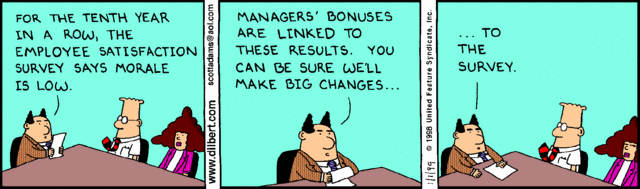
I read a report in Lighthouse about a survey of 1,000 American employees conducted by Michelle McQuaid. The survey revealed that 65% of respondents would take a new boss over a pay raise.
The same article cited another survey that found that 75% of employees consider their direct manager the worst part of their job. Ouch!
Are you surprised by this?
Many factors contribute to the attitudes and behaviors that exist in the workplace. While every workplace is unique, I believe there are some common characteristics of leaders who, for better or worse, contribute to the culture of the organizations that they lead.
If you are a leader on any level in your organization, you need to pay attention to my list of seven things you do as a leader that your team can’t stand. It’s not an exhaustive list, but these are the more common ones. And to be fair, the script will be flipped in next week’s space, so stay tuned.
Let’s be clear—loyalty is a two-way street. Your people need to know that you not only believe in them but also have their backs when the chips are down and the stakes are high. They need to know that you are a leader who is willing to go to the mat for them. You can do this by taking a little bit more of the blame and a little bit less of the credit.
Your team can’t stand being thrown under the bus.
You don’t call out bad behaviors
If you turn a blind eye or a deaf ear to toxic behaviors and attitudes, then—simply put—you are demoralizing your team. And you can rest assured that the good ones, whom you can’t afford to lose, are probably already looking to make their exit. And why not? If you are not calling out bad behaviors, then why should your team place their confidence in you as a leader? What you tolerate, you promote.
Your ability to adapt as a leader gives you a competitive edge professionally. The same is true personally. But if you are a leader stuck in your ways and unable to adapt to your changing environment, you are taking away your competitive edge. Your team can’t move forward and remain relevant if you are the last one on board. Click To Tweet In other words, the train will leave with or without you. Don’t give away your competitive edge because you are stuck in a mindset and way of doing things that only served you well twenty years ago.
Your team can’t stand waiting for you.
You don’t realize that everything rises and falls on leadership
This point is attributed to John Maxwell, who coined the phrase. But as you read through my list, you will see that at the heart of every issue that gives your team grief, at the core, is a leadership deficiency that drives it. While this is problematic, there is a silver lining to be found. You can right the ship and make corrections. But you must put yourself on a leadership track that will help you. To lead your people, you must first know how to lead yourself.
Your team can’t stand you not being a strong leader.
You don’t have to be the boss or leader that your team can’t stand. Are you ready to rise to the leadership challenge?
The most fruitful and natural exercise for our minds is, in my opinion, conversation. – Michel de Montaigne, The Essay: A Selection
As I was being escorted to a table in a restaurant not long ago, I passed by a family seated at a long table. There must have been five or six gathered around. What struck me as I passed by was not that they were all together or that they were laughing and talking and otherwise engaged with one another. Sadly, it was an all too familiar sight.
Every person at the table had their smartphone device in their hand and was using it. No conversations were taking place. It was just a group of people sitting together, but very far removed from one another.
According to Google, a survey by Pew Research Center revealed that many people find phone usage during dinner obnoxious. Of those people surveyed, 88 percent think it is okay to use a phone during dinner and 82 percent thinks that using a phone in social settings can hurt conversations.
I realize that we are addicted to our devices. I am clear-eyed in my understanding that it’s just a part of the fabric of our culture for better or worse.
Be it because of our electronic devices or any other distractions that come along, we are increasingly losing the art of meaningful conversation. It takes a toll on relationships, and yes, it can take a toll on your leadership if you are not careful.
Writing in his book, Didn’t See It Coming, bestselling author, Carey Nieuwhof devotes a chapter as to why so many us feel alone and to the demise of genuine conversation. He writes about what many have come to know. He writes:
“Sadly, conversations seem to be developing into an exchange of monologues among people who don’t seem terribly interested in one another. People today appear to be talking at one another more than they’re talking with one another. Next time you’re in a conversation with someone, wait to see how often you get asked a question.”
What about you? What’s been your experience with this issue?
From a leadership point of view, I believe having meaningful conversations is one of the key ingredients to developing effective leadership skills. Here’s why I think it so important and why we must return to them.
Meaningful conversations put you squarely in the moment
Meaningful conversations teach you to slow down and listen
Leaders are busy people. Too busy at times. But when you engage in meaningful conversation it’s sharpening this all-important leadership skill. Too often our thoughts are elsewhere and we are not really tuned in when talking with our people. Meaningful conversations are not rushed. They’re thoughtful. It may try your patience or seem inconsequential to you, but it can make all the difference to the one you are conversing with. Slow down and listen.
Meaningful conversations enhance trust
Nothing can build trust like meaningful conversations. They accomplish more than the tech devices that supposedly making communicating easier. Trust is the glue that binds your organization together and gives your leadership the credibility its due. Don’t allow your busy schedule or other demands rob you of this most essential leadership ingredient. Initiate meaningful conversations. Have meaningful conversations. Build trust.
Meaningful conversations are all about relationships
Humility is not thinking less of yourself, it is thinking of yourself less. – C.S. Lewis
Pride and arrogance. It’s been the Achilles-heel for leaders it seems for as long as anyone can remember. There’s a fine line and big difference between a leader who instills pride among his or her people and in doing so lifts morale across the board throughout the organization.
But then there’s the leader who is simply arrogant and prideful in that they are haughty, think they know it all, look down on others, ignores input, is condescending, and are basically just jerks. Chances are, you already have a visual image of this person in mind, don’t you?
Yet one of the most endearing qualities of leadership is found in the person who genuinely walks in humility.
But what sets this leader apart? How can you spot them? What are their characteristics? Here are four that are obvious.
They ask a lot of questions
Humble leaders are not afraid to ask questions. It’s a leadership hack that is lost on many aspiring leaders due to pride. The proud and arrogant leader had rather make you think they know it all by not asking a question. The humble leader had rather ask questions and be sure of it.
In his book, Good Leaders Ask Great Questions, John Maxwell writes, “Any leader who asks the right questions of the right people has the potential to discover and develop great ideas”. And this is true of you.
In an age when so many are only looking out for themselves, the humble leader knows how to put others first.
Putting others first is all about putting the needs of the team ahead of your own. It’s not just about making decisions within your organization that best fits your needs, but is about empowering all people across the board. The humble leader is willing to make sacrifices others won’t. It’s done out of service and duty to a cause, purpose, and mission greater than self.
They bring people together
This characteristic of a humble leader is worth highlighting because this leader understands that they alone are not the source of all knowledge.
The one with the title talks- a lot. The humble leader is prone to speaking less and listening more.
Stephen Covey said, “It takes humility to seek feedback. It takes wisdom to understand it, analyze it and appropriately act on it.” And this is what humble leaders desire to do. Humble leaders are like sponges- learning all they can.
Humble leaders are like a breath of fresh air. They are confident in who they are, what they know, and the skills they have. But they are not so arrogant that they are afraid to ask questions, put others first, bring people together, and speak less (or as Simon Sinek suggests – speak last) and listen more. In this day and time, we could use some humble leaders.
So now faith, hope, and love abide, these three; but the greatest of these is love – I Corinthians 13:13 (ESV)
Without question, we live in tumultuous times. The news headlines we see today are enough to discourage anyone as we see what is happening in our society.
When leaders of organizations articulate and live their values, they drive them throughout the organization, and they become a way of being. – Howard Behar
Tune in to any talk in leadership circles today and you will hear all about living up to your potential. We instill it in our children from the day they start school and suit up for Little League. We remind them again at graduation and send them off to the real world full of promise and the hope that they will live up to the potential and hopes we placed in them.
But what happens when the realities of the real world sink in and living up to one’s potential becomes a dead end chase? Is there a way forward? Is living up to one’s potential still attainable?
Gallup research reported on in Inc. magazine says that “70% of employees aren’t working to their full potential. Adding insult to injury, 52% of those are just sleepwalking through their day.” The article states, “When a company raises employee engagement levels across every business unit through great management of people, it leads to higher profitability, productivity, and lower turnover.”
This sounds reasonable enough at first glance so where is the disconnect? Let’s take a closer look. “And therein lies the problem.” the article continues, “ to remedy the 70% crisis you first have to find those managers. Gallup reports that companies fail to choose the right management talent for the job a staggering 82 percent of the time.”
When companies fail to find the right managers 82 percent of the time, and when 70 percent of employees aren’t working to their full potential, then perhaps it’s time to rethink our approach as to what management potential looks like. Here are a few ideas for consideration.
Potential must be measured against values, not skills
Potential and leadership development go hand in hand
Without question, companies want to hire highly qualified managers who can add value to the organization. No company purposefully sets out to hire the wrong managers. But along the way, companies are missing the mark. The good news is that it can be fixed. A great starting place is in leadership development.
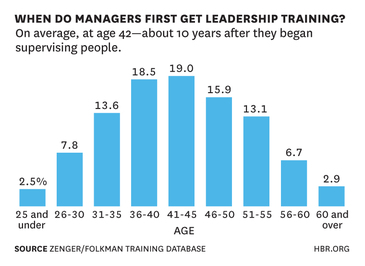
Some time ago, Jack Zenger writing in The Harvard Business Review shed light on the fact that we wait too long to train our leaders. His research points out that the average age of managers who receive leadership training is 42, but the average of supervisors in these firms is 33. Zinger states, “It follows then, that if they’re not entering leadership training programs until they’re 42, they are getting no leadership training at all as supervisors. And they’re operating within the company untrained, on average, for over a decade.”
And this is the disconnect between someone not living up to their potential and someone with it. Leadership makes the difference.
Your potential and capacity is not defined by others
The premise of the Inc. article states the reason people are not living up to their potential is that companies are promoting the wrong people to management. While the argument has some merit, I believe that the premise lacks clarity.
When your potential is grounded in your values, in leadership development, and individual responsibility, you can certainly reach all of your potentials. It will make a world of difference for you and to the organization you serve.
Yesterday, all my troubles seemed so far away, Now it looks as though they’re here to stay oh I believe in yesterday – John Lennon
A word about yesterday
In his book, No Limits, John Maxwell presents a most thought-provoking question that is worth some consideration. He asks: “When was the last time you said goodbye to something that was special that no longer works today?”. It is a truly intriguing question.
Perhaps in our more nostalgic moments, we look back with some degree of fondness and recall a particular time in our leadership journey that was important to us. Maybe it was a particular success or big win that propelled you to where you are today.
But if we are not careful, we can get stuck in a place, time, and mindset that no longer serves us or the people around us very well. We become stagnant and are looking backward to the “good old days” rather to the future. Sound familiar?
Maxwell continues by asking, “Are you willing to let go of some things you love? If not, you’re going to have a hard time being creative and becoming any better than you are today”. Now, that truly is thought-provoking indeed.
Obviously, reading this caused me to think about my own practices, routines, and my mindset. Have I been guilty of this? Am I guilty of this? In what ways is this mindset hurting me?
My reflections led me to these conclusions. Perhaps you will relate. Perhaps you could add to the list. But here are just a few of my observations.
Yesterday’s creativity will not sustain me
Creativity is the life-blood in leadership. The creativity I had thirty years ago when I was first starting my leadership journey may have served me well then, but it has no bearing on the creativity I need to succeed today. The landscape today is much different.
Leadership Checkup: Are you availing yourself of every opportunity to grow and learn new things?
Yesterday’s structure will not carry me
Leadership and management styles have drastically changed over the past few decades. The flow charts of top-down, bottom-up have mostly been replaced by more lateral lines with collaboration as the approach of choice by many.
Richard Branson observed: “People often remark to me that it’s great how Virgin thinks outside the box. They are genuinely surprised when I tell them, “Actually we don’t! We just never let the box get built in the first place.’”
Leadership Checkup: Are you relying on yesterday’s structures to guide you today or are you finding new approaches to new problems?
Yesterday’s attitude will not equip me
The attitude, faith, and mindset I needed all those years ago may have been sufficient at the time, but no longer. Not because I have arrived, but because my goals, dreams, and aspirations of today demand it. Going to a higher level of achievement requires an exchange. And it will be required in your leadership as well. The exchange will be to give up some things from the past that you loved in order to have the growth and success you desire today.
Leadership Checkup: What attitudes and mindsets of the past do you need to let go? Are you still surrounded with people whose mindsets are holding you back?
Quotes about yesterday
“It’s no use going back to yesterday, I was a different person then”. – Lewis Carroll
“What worked yesterday doesn’t always work today”. – Elizabeth Gilbert
“…But this one thing I do: Forgetting what is behind and straining toward what is ahead”. – Philippians 4:13
“You can’t have a better tomorrow if you’re thinking about yesterday”. – Charles Kettering
“Yesterday was not your defining moment. The calendar moved forward; why not you?”. – Steve Maraboli
A final word
We gain wisdom, understanding, and perspective from our past, for better or for worse, our past shapes us. While it’s certainly appropriate to reflect on the good things in our past, we must live in the moment and be forward in our thinking. It’s also time to let go of the past with all of its mistakes and failures and seize the moment that a new day brings. The challenge in leadership is to never stop growing, learning, adapting, and applying all that we can.
The greatest legacy one can pass on to one’s children and grandchildren is not money or other material things accumulated in one’s life, but rather a legacy of character and faith. – Billy Graham
A word about legacy
The world was saddened to hear the recent news of the passing of Rev. Billy Graham. His life and ministry were one of selfless service to the world.
If you were to look back on the landscape of history the past one hundred years or so and point to leaders who have made a lasting impact for good upon the world, Billy Graham would most certainly be on the short list of those people.
In a world filled with so much division and strife, his passing is a reminder to us of a better way.
Ours is a culture that in many ways has forgotten what selfless service, love, grace, and forgiveness is about. The opening sentence in Rick Warren’s ThePurpose Driven Life crystallizes the point that must be made, “It’s not about you.” Yet, too often our lives and actions say otherwise.
The legacy of Billy Graham is not one of just numerical measurements. Yet, a report I read said he conducted 417 crusades around the world. The impact of those crusades will only be known in eternity.
The legacy of Billy Graham will be marked by a life lived in obedience to God’s calling and his selfless service to others. His life modeled servant leadership. It was a life well lived.
What about you? Your life and legacy as a leader may not rise to the scope and reach of Billy Graham, but your service matters.
It matters to the people you serve in your community.
It matters to the children you foster in your home.
It matters to the people you serve in your local soup kitchen.
It matters to the colleague you work alongside who needs your encouragement.
It matters not so much in the big things we do but in the small.
How you will be remembered tomorrow is created by the random acts of kindness that you do today. Your legacy is a choice. Today matters.
Legacy quotes
“God has given us two hands – one to receive with and the other to give with. We are not cisterns made for hoarding; we are channels made for sharing.” – Billy Graham
“Carve your name on hearts, not tombstones. A legacy is etched into the minds of others and the stories they share about you.” – Shannon L. Alder
“If you would not be forgotten as soon as you are dead, either write something worth reading or do something worth writing.” – Benjamin Franklin
“The great use of life is to spend it for something that will outlast it.” – William James
A final word
I am thankful that I can say I was able to attend a Billy Graham crusade in my lifetime. His life and legacy will always be remembered. He set the bar high as it relates to living a life of service to others. I am glad he did. The world is a better place for it.