Time To Let It Go

letitgo

I don’t care what they’re going to say. Let the storm rage on, the cold never bothered me anyway. – Lyrics from Disney’s’ movie, Frozen.

Call me slow, but 229 million people beat me to the YouTube viewing of Let it Go, the enormously popular song from the Disney movie, Frozen.  For the record, I haven’t seen the movie, but I have paid attention to the media buzz that the song has generated. It’s huge.

While people from many sectors have embraced the song for a wide range of reasons, the underlying tone resonates. There comes a time when you just to have to do what the song says and let it go. But let’s now make the leap and see how this philosophy plays out in the adult world and what the implications are in your place of work.

Last year, Forbes columnist Mike Myatt wrote about the “10 Reasons Why Your Top Talent Will Leave You”. He explains that for all the talk about leadership many companies do not have a process for retaining and developing talent. Myatt says, “As with most things in the corporate world, there is too much process built upon theory and not nearly enough practice built on experience.” His observation is both astute and troubling.

His research regarding organizational culture was also very revealing. His survey of employees made for some interesting revelations: 30 percent believe they’ll be working someplace else inside of 12 months, more than 40 percent don’t respect the person they report to, more than 50 percent say they have different values than their employer, and more than 60 percent don’t feel their career goals are aligned with the plans their employers have for them. “So for all those employees who have everything under control, you better start re-evaluating,” says Myatt.

If these revelations and those similar to it are going to be corrected then there must be shifts made in leadership styles and implementation. The shifts will vary in need and scope as each company’s needs prescribe. But here are a few general ideas.

Create a shared vision.

If you want your people to have skin in the game then give them a reason for the buy-in. When your people are involved in creating the vision for their company then they will also feel they are creating a vision for their future. It’s hard to embrace what you don’t create. Roles and responsibilities of each person in the organization may vary but not their commitment if you include them. Disseminating a vision is “I” driven; creating the vision is “We” driven. Which one would you more readily embrace?

Build your culture on purpose.

The best companies build their culture on purpose. Look no further than the workplace cultures of companies like Zappos and Google to figure out why. The culture of your organization is the environment, the tone if you will, whereby your business plan can flourish and grow along with the people who work in it. It has less to do with the perks (although included) and more to do with an atmosphere that in every way, with every person, foster the opportunities to grow and prosper. Your company culture is too important to leave to chance. Build your culture on purpose and you will succeed on purpose. To do anything less is to leave money on the table of your competitors.

Open channels of communication.

Nothing frustrates employees more than the feeling, perception, or reality of communication that is lacking. What a leader perceives as communication can be received as something far different by employees. While that disconnect can be harmful it is preventable. When a leader understands that communication has less to do with the what, (although important) and more to do with the why and the big picture, it can generate goodwill. When a leader is among his or her people it lends itself to the best practice of communication which is through relationship.

It’s to time create buy-in through shared vision, build your culture on purpose to implement your vision, and open channels of communication through relationship. It’s time to let go of anything and everything that would hold you back.

What do you say?


© 2014 Doug Dickerson

I welcome your feedback:

1. What are some leadership shifts do you feel need to be made in your organization?

2. What leadership skills do you need to enhance to help create that change?

3. Which of the three ideas did you most identify with? Why?

4. What advice would you give leaders in organizations today that you believe would be most beneficial in creating a stronger company culture?

Leadership Minute: Hang in There

perseverance

Perseverance, secret of all triumphs. – Victor Hugo

Perseverance is not one of the more glamorous leadership traits. In fact; it can be downright brutal. As leaders we are taught to take Frost’ advice and journey down the road less traveled. But what happens when the road less traveled is traveled less and less by those who are supposed to be leading the way? While perseverance may not be pretty it is a necessity. We need leaders today who have a stick-with-it attitude. We need leaders who are not afraid to put it all on the line and stay the course. The power of perseverance will see you through the good times and bad, but in the end you will be rewarded with a level of success others only dream about. Today you might be tempted to throw in the towel and give up. Don’t. Your leadership can go to a new level but only as you persevere.

Leadership Minute: Lead With Confidence

confidence
There’s a line that separates having confidence and being conceited. I don’t cross that line, but I have a lot of confidence in myself. –
Paul Pierce

Confidence is a needed leadership characteristics but is one that is easily misunderstood by others. Confidence is what sets you apart in that you are sure of yourself- your abilities, your purpose, and your qualifications to lead. It’s not an arrogance that causes you to believe that you are better than anyone else, but it’s what gives you the enthusiasm to lead. Conceit, by definition, is having a high opinion of oneself that may not be justified. So, how do you find the right balance? I believe the answer is found when you walk in confidence and in humility. Leadership is not a right, it’s a privilege. When you lead with humility and confidence you are acknowledging that this is only temporary. Lead with confidence but remember- it’s not about you.

Leadership Minute: Your Task at Hand

dream

Do not pray for tasks equal to your powers. Pray for powers equal to your tasks. – Phillips Brooks

What is your BHAD (Big Hairy Audacious Dream)? You see I am convinced that many a leader settles for that which they know they can achieve. And while that may be good and noble it’s not big. It’s not audacious. It’s not far-reaching enough and does not necessitate much prayer. I’d like to challenge you today to have such a BHAD that is scares you to pray like you have never prayed before. Reverse your prayers for strength to do what you can do and pray for strength and wisdom to do what you know you can’t do by yourself and without divine intervention. Increase the size of your dream. Dare to pray big prayers and dare to do great things.

Leadership Minute: Change from Within

change

When we are no longer able to change a situation- we are challenged to change ourselves. – Victor Frankl

One of the hardest things for a leader to come to terms with is his or her inability to facilitate change the way they would desire. Leaders are people of action and sometimes that action involves change. But change can be hard to come by. It may be a simple matter of bad timing. It could be something more complicated. After all, not everyone likes change. So when the change you seek to create does not happen then you are left with only one of two options. You can accept it and move on or change yourself. Changing ourselves can be a challenging proposition. It can be hard to look inward and focus on what we need to do. But if change is what you desire look within.

Six Ways to Rise Above Your Critics

critics2

To escape criticism- do nothing, say nothing, be nothing. – Elbert Hubbard

A story is told of Winston Churchill and his extraordinary integrity in the face of opposition. During his last year in office, he attended an official ceremony. Several rows behind him two gentlemen began whispering. “That’s Winston Churchill. They say he is getting senile. They say he should step aside and leave the running of the nation to more dynamic and capable men.” When the ceremony was over, Churchill turned to the men and said, “Gentlemen, they also say he is deaf.”

Critics. Every leader has them and every leader will. How you respond to critics is an important component of your leadership development. It’s all too easy to get defensive when critics rub us the wrong way or misunderstand us. But can you appreciate a critic when he or she is right? Rising above your critics takes courage. Here are six ways to do it.

Keep a positive attitude.

“Your attitude, not your aptitude, will determine your altitude,” is a famous Zig Ziglar quote. How high and how far you go as a leader will be determined by your attitude. Nothing will give you a bad attitude any quicker than a wrong reaction to a critic. Basic things you will want to know regarding a critic are the source, the accuracy, the ramifications, and your reaction – if there even needs to be one. Regardless, stay positive and focused on the big picture.

Stay true to your values.

Don’t allow your critics to throw you off of your game. Stay grounded and connected to the values that have guided you to where you are. Values do not change but are guideposts when your circumstances do. The values and principles that brought you to where you are will keep you there so handle your critics with that in mind.

Speak no evil.

Seriously? Yes. Engaging in mud-slinging with your critics only hurts you in the long run. Unless what they have spoken or done is libelous then don’t waste your time in a verbal battle. Be content in knowing that the truth is on your side. There is no greater satisfaction than in knowing that you can look yourself in the mirror and lay your head down at night with a peace that comes from knowing you did the right thing regardless of how others behaved.

Don’t retaliate.

There will be times when you will want (and those close to you) to retaliate against critics. There is something about human nature that wants to fight back and get revenge and settle the score. I get it. But again, the end result will never be good for you. As hard as it may be there are times when you just have to let it go. Don’t worry if you lose a battle today, you are going to win the war if you keep your heart right.

Give them more ammo.

Most of the critics you will encounter are simply those who have some kind of vendetta or jealousy directed toward you. As opposed to stooping down to their level why not give them more ammo? As you do the right thing by continuing to work hard, and by exhibiting good leadership, you will only become more successful. Nothing will annoy your critics more than your continued success.

Don’t lose your sense of humor.

One of the most important leadership skills you can develop is a sense of humor. Churchill exhibited it towards the men who spoke ill of him. Bill Cosby said, “Through humor, you can soften some of the worst blows that life delivers. And once you find laughter, no matter how painful your situation might be, you can survive it.” Your critics will stir up a wide range of emotions and reactions that you will want to run with. But when you can learn to laugh – at them, and at yourself, half the battle is won.

What do you say?


© 2014 Doug Dickerson

I welcome Your Feedback:

1. Of the six ways to handle critics which one stood out the most for you?

2. What would you add to the list?

3. In your experiences what has been the best way you’ve dealt with critics?

Leadership Minute: Are You Contributing?

give

Life is not about accumulation, it is about contribution – Stephen Covey

Great leaders understand this. Many leaders starting out make the mistake of thinking that the end game is about what you accumulate; wealth, power, position, etc. But your significance as a leader is not defined by those characteristics. How are you contributing? This is the essential and greater question of your leadership. It’s not about what you are gathering but rather in what you are giving. And once you settle the issue of how you can contribute and add value to those around you then the other less important things will take care of themselves. Focus on ways in which you can be more generous and add value to others. After all, you are not going to take anything with you. It’s what you leave behind that matters most.

Leadership Minute: Show Respect

respect

Respect for ourselves guides our morals; respect for others guides our manners. – Laurence Sterne

One of the most noble leadership skills you can have and develop is that of respect. Respect for yourself establishes your guiding principles and sets the course for your leadership style. On that count, respect is very important. Once established internally you then begin to lead externally from those values. A great leader is a respectful leader. Clearly you will not like everyone, nor will you always approve of other people’s actions, but respect for them sets the framework for how you deal with them. Respect establishes your credibility as a leader and is the origin of your manners. Your leadership style will make you or break you. When respect is your guiding light you can’t go wrong.

Leadership Minute: Prepare by Learning

learn

Prepare for the unknown by studying how others in the past coped with the unforeseeable and the unpredictable. – General George S. Patton

As a leader you will frequently walk in the unknown and unforeseeable. While it may be scary at times you can navigate those periods with the skill and wisdom you have gathered in times of preparation. Many a great leader before you have been tested with things they didn’t anticipate. How they handled times of adversity can be sources of inspiration for you. What challenges are you facing today? As you learn from their examples you can apply those lessons to your current situation. Preparation is the key to your success. Walk with confidence knowing that the lessons you have learned have equipped you for the challenges before you.

The Selfie Generation: A Call to the Renewal of Servant Leadership

servantl1

A leader is best when people barely know he exists, when his work is done, his aim fulfilled, they will say: we did it ourselves. – Lao Tzu

In 0.2 seconds after typing the word “selfies” into the Google search engine more than 17 million results turned up. To say that we live in a narcissist generation is obviously an understatement.

For those of you who have been visiting another planet and are not up to speed on what a selfie is let me introduce you to the phenomenon. Selfies, as defined by the Urban Dictionary are, “pictures taken of oneself while holding the camera at arm’s length.” In recent months it has become the trendy thing to do and mimic since the likes of Ellen and other celebrities have turned it more into a fun fad.

While on the surface there is nothing wrong with selfies (yes, I have taken one or two myself) there is a broader or deeper prevailing issue I’d like to explore as it relates to leadership styles. To be clear, in this writing my reference to selfies is a depiction of self-indulged leaders and not about the practice as defined in the Urban Dictionary. My concern is that with the rise of the selfie generation we are in danger of losing sight of the meaning and relevance of servant leadership.

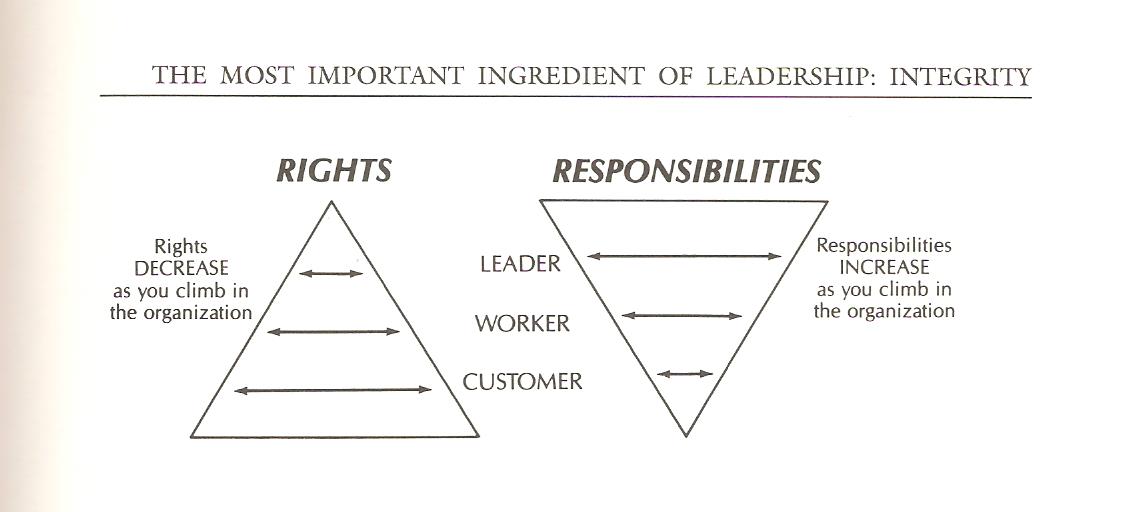
A leadership pyramid I studied some years back by John Maxwell showed that the higher one climbs as a leader the more rights he or she surrenders. In its place is more responsibility. My concern is how less rights and more responsibility fits the narrative of a selfie culture. How do servant leaders emerge from this mindset? How do selfie leaders measure up against servant leaders? Here are but a few examples.

Selfie leaders choose style whereas servant leaders choose substance.

For the selfie type of leader it’s all about their image. Decisions are made and based upon not what’s best for the organization or team but how it makes him or her look. It’s a leadership trap to be sure. Everyone wants to be liked and to be popular, but servant leaders gave up that right a long time ago. Servant leaders will stand for and with those who choose substance over image. In the end it’s about honoring their principles over their popularity. The servant leader sets the example with his integrity.

Selfie leaders are more concerned about receiving while servant leaders care more about giving.

Nothing will more clearly define and set the two apart more readily than this. The selfie  leader is all about what’s in it for him while the servant leader is about giving. It’s all in the math. The selfie subtracts (takes) while the servant leader adds (gives). It’s a reflection of the heart and priorities. The servant leader sets the example not by what he takes but by what he sacrifices and gives.

Maxwellchart 001

Chart is courtesy of: Developing the Leader Within You, by John Maxwell.

Selfie leaders care more about their position while servant leaders care more about their people.

There is no substitute for the human equation in leadership. Positions come and go, but at the end of the day the servant leader who cares less about his title and more about his people is the one who will survive. Selfie leaders can’t help themselves. Eventually it all comes back around to them. Selfie leaders will do whatever it takes to protect that which matters least (position or title) while using the people who matter the most. It’s a sad trap many aspiring leaders fail to see. The servant leader sets the example by modeling humility.

Max de Pree said, “The first responsibility of a leader is to define reality. The last is to say thank you. In between, the leader is a servant.” I believe this leadership philosophy is needed today and is a blueprint for the future. Servant leadership is not about being a weak leader but rather a strong and convincing one. The ultimate measure of a leader’s power is not found in the authority that he or she is willing to grab hold of but in what they are willing to lay down.  It’s not determined by demanding more rights but in assuming more responsibility.

I believe now more than ever in the power of servant leadership. What do you say?


© 2014 Doug Dickerson


I welcome your feedback:

1. What do you believe are the biggest barriers to servant leadership today?

2. Are the selfie leaders as described here more the norm or the exception in your opinion?

3. What tangible things can you do to help build a servant leadership mentality?