
When Your Team Locks Horns

Credit: Doug Dickerson

Respect for ourselves guides our morals, respect for others guides our manners. – Laurence Sterne

Last year, I set out in the pre-dawn hours to photograph some elk in the mountains of East Tennessee. It was fascinating to watch the elk slowly make their way to this meadow and begin grazing. It was a perfect morning to be there, and the elk were plentiful.

One fascinating thing to watch with the elk is when they lock antlers. I have seen this on occasion before, but in the morning fog at sunrise, it was picture-perfect. This is not an uncommon thing to see during mating season, as they are fighting to establish dominance and breeding rights.

As you picture what this morning might have looked like in person, think in real time about the daily culture you experience in your workplace.

There will be times when the people on your team clash over ideas, opinions, and decisions about the direction things should go. If this is your experience, then good for you. You want engaged and thinking people working it out.

One of the most important things for you as a leader to understand is the difference between conflict and accountability. “Conflict is about issues and ideas,” says Patrick Lencioni, “while accountability is about performance and behavior.” As a leader, when you understand this difference, you can lead your team more effectively towards your shared goals and mission.

Along the way, there are a few things that are important to understand for your team’s sake. Allow me to share a few of them with you.

The cost of winning

A leader can readily understand the cost of losing and its immediate impact. That’s an easy one for the most part. But how many leaders understand the cost of winning? This happens when personal wins become more important than team wins. The team pays the price when personal victories become more important than shared success.

On the other hand, when trust is at the forefront of all decisions, constructive conflict and debate can occur within that environment to reach shared goals. One must not confuse personal victories for the sake of ego with shared wins for the team.

Leadership Tip: Leaders and team members need to check their ego at the door if they want to stay healthy.

The cost of holding back

Most leaders can identify unhealthy debate and conflict. And most just want peace and everyone to get along. I get it. They see it as bad for morale and as contributing to an unhealthy culture. But is it?

What if you were to change your perspective and understand that it’s when your team stops pushing back that you should be concerned? Your organization will rarely stall for lack of talent or ideas, but will stall when those talents and ideas are suppressed by those who do not understand the value of healthy debate. 

Leadership Tip: Your team can’t get better if they aren’t given permission to lock horns with each other with integrity and respect.

The cost of accountability 

A misconception for leaders on your team is that their personal wins are good for the team. In some cases, it may be true, but attaining victories at all costs for the sake of a personal win can be damaging. Healthy workplace cultures don’t eliminate disagreement; they encourage it through honest conversations and mutual respect.

“Building a cohesive leadership team is the first critical step that an organization must take if it is to have the best chance at success,” said Lencioni. He is right, and it begins with accountability. 

Leadership Tip: Leaders must get comfortable with what at first seems uncomfortable. It’s the pathway to your success.


©2026 Doug Dickerson
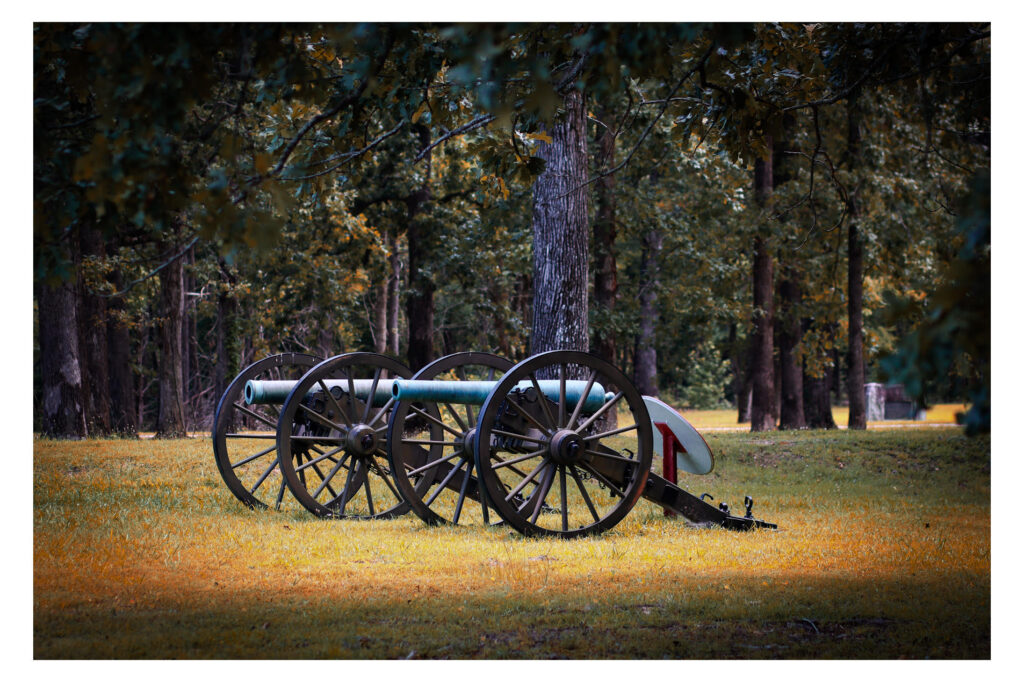
What the Battle of Shiloh Teaches About Leadership


Canons at Shiloh, Credit: Doug Dickerson

Battles are won in the hearts of men. – Vince Lombardi

I was back in my home state of Tennessee recently and spent an afternoon at Shiloh National Military Park. I have been there numerous times, but it has been many years since my last visit. As a history buff, I found it fun to be back and walk the grounds of this significant Civil War battle.

The Battle of Shiloh took place on April 6-7, 1862, and, due to the high casualties, it is considered a turning point in the war. Among the most significant losses in the war was that of Confederate General Albert Johnston, who died from a gunshot wound to the knee. During the battle, nearly twenty-four thousand soldiers from both sides lost their lives. 

The South’s defeat at Shiloh ended the Confederacy’s hopes of blocking the Union advance into Mississippi and ended the Confederates military initiative in the West. With the death of General Johnston, morale plummeted.

The Battle of Shiloh demonstrated courage, decision-making, communication, resilience, and the cost of leadership failures. That hot afternoon reminded me of a few leadership lessons worth sharing.

Never mistake quiet for safety

The Union army camped around Pittsburg Landing, believing Confederate forces were too far away to attack. They relaxed their vigilance and were caught completely by surprise.

Leadership Lesson: Success can create complacency. Good leaders never confuse a lack of current problems with the absence of future threats. Good leaders will ask, “What are we missing?”, stay prepared, and continually evaluate risks. 

Leadership isn’t built during a crisis; it is revealed

The Confederate attack initially overwhelmed the Union forces because many Union camps weren’t prepared for an assault. 

Your advantage as a leader lies in your preparation before pressure arrives. So as a leader, you need to ask yourself: Am I preparing my team for problems before they occur? Are we practicing difficult conversations before we need them? Once the pressure comes, you will either be prepared or you will face certain setbacks. 

One decision can change everything

General Johnston was considered the Confederacy’s finest general. He suffered a gunshot wound behind his right knee and bled out and died.

His death dramatically altered the Confederates’ momentum and was a turning point in the war. 

His death is a reminder that in leadership organizations are often only one decision- or one leader- away from a completely different outcome. This is a reminder of the importance of developing leaders and why leadership development at all levels in your organization is not optional. Neither is succession planning. Are you raising up and training leaders, or are you just hoping for the best? Remember, you are only one decision away from an event that can change everything.

Communication wins or loses momentum

In the 164 years since the Battle of Shiloh, modern communication has advanced dramatically, yet many still struggle with poor communication. 

At Shiloh, commanders struggled with delayed reports, confusion, and incomplete information. Without modern communication equipment, many leaders fought almost blindly.

The issue here isn’t about having more information. It is about making sure the right information reaches the right people at the right time.

A good leader recognizes the value and importance of communication and how it drives momentum. 

“The single biggest problem in communication,” said George Bernard Shaw, “is the illusion that it has taken place”. A good leader knows this and prioritizes strong communication skills to advance momentum.

Leadership lessons are all around us, and the Battle of Shiloh reminds us of what can happen when we lose sight of the basics.


©2026 Doug Dickerson

Leadership Lessons From The ‘Alae’ Ula

The ‘Alae’ Ula Courtesy: Doug Dickerson

To acquire knowledge, one must study; but to acquire wisdom, one must observe. – Marilyn vos Savant

I have been asked over the years how I manage to come up with so many examples and illustrations in my leadership posts. It’s a fair question, considering I’ve been doing this weekly or near weekly for around 20 years. “How do you come up with fresh content?” is the common question. 

The answer, at least to me, is fairly simple. I observe and listen. I’ve combined these two skills into hundreds of articles and examples to show how leadership lessons integrate into our lives, often from the most unexpected places.

A few weeks ago, I was in Hawaii. We were hiking to Waimea Falls on Oahu. This is a beautiful place, and one thing in particular that caught my eye was a sign that read “Slow ‘Alae’Ula Crossing”. This is an endangered bird species found only in Hawaii. 

That sign was all I needed, as the birder and the photographer in me had a collision of epic proportions. Now, I am not only interested in seeing one; I have made it a quest to find one. Luckily, for me, I did just that. I was able to fire off numerous photos of this waterbird and now have them for posterity.

The simple act of capturing the pictures of “Alae” Ula was one of great satisfaction and a little perseverance. My group was about ready to leave, but made allowances for my search. From this, come a few leadership insights that can be helpful in your leadership. Here are a few for your consideration.

Value what others miss

The ‘Alae’ Ula is often overlooked simply because of its environment. Since it lives in marshes and wetlands, people can easily pass by without even noticing it, or, if they do, they may think it’s no different from any other bird, not realizing how rare and special it is.

Good leaders are always on the lookout for the value in others, those who may be overlooked or passed over. The greatest asset in your organization may be the quiet contributor who isn’t seeking all the attention but lies low in the marshes and brings great value to all they do. Don’t overlook them. 

The difference between extinction and survivability requires adaptability

Despite many ecological and environmental changes, the “Alae’ Ula has survived. Its population is down to around 700, but local programs are endeavoring to help this bird survive. Because of these proactive steps, one can hope that the “Alae’ Ula will survive and thrive in the years ahead.

In leadership, organizations that endure are not necessarily the strongest but the most adaptable. A key strength in your leadership is understanding timing and knowing when to make the moves you need to make.

Healthy cultures matter

Just as the fate of the ‘Alae’ Ula depends on healthy ecosystems, so too does the health of your organization. As a leader, you have to be proactive in creating and stewarding it. The fate of the bird is tied to the health of the wetlands around it. When the ecosystem thrives, the bird has a greater chance of survival. 

In leadership, the same holds true with the people you lead. They will always perform better in a healthy culture. When they do, they thrive and reach their potential, and so does the team. Protect your culture.

Seeing the ‘Alae’ Ula was a thrill for me. But it was also a teachable moment in that, as leaders, we must notice those not clamoring for the spotlight, be intentional about adaptability, and protect our culture. 


©2026 Doug Dickerson

Leadership Lessons From Diamond Head

Doug at the top of Diamond Head

It’s not the mountain that we conquer, but ourselves. – Sir Edmund Hillary

I was recently on vacation on the island of Oahu in Hawaii. It was a splendid vacation and exceeded every expectation. As one who enjoys the outdoors, Hawaii is a paradise. In addition to exploring a cave, hiking to numerous waterfalls, and lighthouses, I also made the notorious climb to the top of Diamond Head.

In my younger years, this would not have been one of the harder climbs that I have taken. But at my age now, it was more of a challenge than I expected. On top of that, I was fighting a bad head cold and congestion. Our reservation time for the hike was in the middle of the afternoon, so, with the heat added to the mix, I had my work cut out for me.

For those unfamiliar with the Diamond Head hike, you make your climb on a paved trail that eventually turns into switchbacks on the ascent to the top. The final section is a steep set of stairs that takes you to the summit.

A few times on the climb, I was offered the sympathetic “It’s OK if you want to go back down and not do it,” knowing that my breathing was difficult at times. But I was determined to finish the climb and reach the summit. I certainly didn’t set any record for the best time getting there, but I did. And it was worth it!

The climb to the top of Diamond Head reminded me of a few important leadership lessons that I benefited from. Perhaps they will speak to you as well. 

Great views come after great challenges

The views from the peak of Diamond Head are breathtaking. The view was worth every step, every stop, every pause to catch my breath, and every opportunity given to turn back.

In life and in leadership, here’s what I know: significant impact and making a difference come not by taking the easy path, but by taking the hard ones. 

Some decisions you make are hard, some conversations are difficult, and at times your perseverance will be tested. It comes with the territory. But you will never experience the reward of the summit view if you give up. It’s when you embrace the challenge that you get the reward of the view from the top.

Getting to the top will be hard

I chose to hike to the top of Diamond Head not because it was hard but because of what I knew awaited me when I got there.

I could have been discouraged by little kids outpacing me, the heat, or the fact that the climb exposed the uncomfortable truth that I am no longer in the athletic shape of my youth. 

In leadership, distractions are a constant companion. We have to prioritize our day, make important decisions, and not get distracted from keeping our eye on the mission before us. In other words, the struggle is real. And sometimes the obstacles and struggles appear larger than they truly are. 

As I made the climb, I had to keep reminding myself that it would all be worth it when I reached the top. I had to tune out the distractions around me and the physical discomfort inside me and press on. Once I was at the top and enjoying the view, the struggles were out of mind.

We are better together

At the summit, the view is spectacular. But another part worth noting is the encouragement hikers gave each other along the way, and the celebrations with families and friends, taking pictures together at the top. 

Leadership is not about reaching the top alone. Successful leaders help and encourage one another, and go out of their way to create a culture where everyone reaches the top. Click To TweetIt’s not a competition, it’s a shared journey where leaders want to see everyone win.

It’s been said that a true leader measures success not by how high they climb, but by how many people they bring with them. 

Diamond Head reminded me that leadership is, in many ways, a climb; it can be hard and steep, and not everyone will want to make it with you. But when you persevere, you will enjoy a view unlike any other.


©2026 Doug Dickerson

Understanding Your Legacy

Credit: Google Images

Legacy is not what you accomplish. Legacy is what others accomplish because of you. – Mark Batterson

For the longest time, I often associated legacy with something I build and how I’d like to be remembered once I’m gone. My thought process was somehow connected to my actions, compounded over time, and hopefully, all the good things outweighed the negative.

Perhaps you have similar feelings about what it means to leave a legacy. It can be connected to being a good family person, leaving a nice inheritance, raising good children, etc. All of these and more are typical things we consider worthy of a memorable legacy.

When I consider the impact of legacies, I look to both my grandfathers. Both were survivors of the Great Depression and began their lives in humble circumstances. Both were hard workers and overcame a lot of adversity. Both were accomplished in their respective occupations – one a top executive in a fabric company, the other a minister. Both influenced me in various ways, and I think about them often.

One of the key rules of leadership that must be understood is that it’s not about you. It’s about others and serving others. If you think it’s about you or your title, you are not a leader – yet. And herein lies the dilemma about understanding what legacy building is all about. As a leader, if you want to build a legacy that matters, here are a few things you must consider.

Legacy is not reputation building; it’s people building

As a leader in the education space for more than three decades, there’s nothing more rewarding for me than those moments when students return to thank me for the impact I had on their lives in the brief time I had them. Or when former students walk their child through the doors of the same school, and those legacy moments become generational.

You and I can spend our lives building our reputations and hope that someone will remember us, or we can pour our lives into people, empowering them to accomplish more than we ever could.

“If you love and serve people,” said Emerson, “you cannot, by hiding or stratagem, escape the remuneration.” As you invest in others, serve them, and develop the leader within them, your legacy will be secure. Not in brick and mortar but in hearts and lives that will outlive you.

Legacy is not about your success; it’s about succession

A traditional understanding of leaving a legacy in many circles is measured by certain standards of success- wealth creation, etc. But a true and lasting legacy is about succession. 

What others accomplish because of you is the result of your leadership. In other words, how did you empower others? What investments in human capital did you make to equip and add value to those in your sphere of influence? Were other people your priority? Did you concede the spotlight by putting others in it?

“A legacy lives on in people, not things,” says John Maxwell, “Too often leaders put their energy into organizations, buildings, systems, or other lifeless objects. But only people live on after we are gone.” 

As you take a moment to reflect on your legacy, consider the high calling of leadership and what is important to you. Think about how you are building others and a leadership legacy that endures in them. 

How will your legacy be defined?

©2026 Doug Dickerson

Time For Change

“If you don’t like something, change it. If you can’t change it, change your attitude.” – Maya Angelou

How well do you embrace change? Research conducted by Pritchett finds that some 20% of people are change-friendly. They are willing to embrace change and are typically those who will drive it in their organizations. Another 50% are fence-sitters. They assume a neutral position, figuring out which way to lean. The remaining 30% are the resisters. They are antagonistic toward change and deliberately try to make it fail.

Even good change has been hard to come by over time. In many ways, we are settlers. We settle for what is, would not be burdened by learning something new, and would prefer to keep antiquated systems even when new ones would be more beneficial.

Take electricity, for example. I read that when electricity was first introduced in buildings and homes, people feared it. There were no safe circuits available. When electric lights were introduced to the White House in 1891, President Harrison feared electrocution and even avoided touching them.

A newspaper entry from 1900 reads, “Do we really need it when gas lights work just fine, and horses are easier than cars?” 

As we enter 2026, we stand on the brink of many changes. Some are known, but many are not. Over the years, here is what I have learned about change.

Your attitude toward change is more important than the change

The only constant is change. We can control some changes, but can’t control most of them. However, we always have control over our attitude toward it.

When it comes to change, your attitude will help you navigate it, and how you navigate it will determine your success and peace of mind. Be careful about the choices you make.

You can be a change agent or a change spoiler.

As a leader, you are uniquely positioned to be a change agent for good. To that end, the world needs you. But you can’t be a change agent for good from the sidelines. Granted, not every idea for change is good, but not every idea for change needs to be resisted.

Your role as a leader is to be engaged, have the wisdom to discern right from wrong, and be the voice of reason.

Your personal growth is attached to your ability to change

John Maxwell said, “Change is inevitable; growth is optional.” And this is the secret sauce of your success. Change is going to happen with or without you. Your growth is optional.

Maxwell also said, “People change when they hurt enough that they have to change, learn enough that they want to change, receive enough that they can change.” 

So, in what ways do you want to change in 2026? What are you willing to do to embrace change? What will you do to grow in 2026 and become the person God desires you to be? Ready or not, 2026 is here, and it’s time for a change.

Listen For The Magic

Credit: Google Images

When something exceeds your ability to understand how it works, it sort of becomes magical. – Jonathan Ive

Not long ago, I was walking into a store and, from a distance, I heard the very familiar sound of a bell ringing. There was no mistaking this sound. It’s one that I have heard many times before. It brought a smile to my face as it does each Christmas season. 

That familiar sound of the Salvation Army bell ringer is one that I was introduced to as a teenager many years ago. My father taught my siblings and me the importance of remembering others during seasons like this, and for several consecutive years, had us working as bell ringers during the Christmas season. 

It was an important lesson he wanted to impart to us about doing something tangible to help and serve others. It was an early introduction to framing my leadership later in life.

Not only did my father have us ringing bells for the Salvation Army out in the frigid temperatures several Christmas seasons in a row, but he also led by example. He was out there with us. He did this not because we needed the money, but because others did. 

The busyness of the season produces many casualties, least among them the ability to pause and reflect on the things that truly matter. The magic of Christmas gets lost in the stress over our Amazon packages arriving on time, company parties we’d rather skip, seeing relatives who drive us crazy, and fretting over whether you’ll get that latest “trending” toy that you will have at a yard sale next year. Sound familiar?

But amid all the noise, chaos, and stress comes an invitation to listen for the magic. But where do you find it? Here are a few ways it happens:

  • The magic happens when you listen for the faint sound of the bells.
  • The magic happens when you see the wonder of Christmas through a child’s eyes.
  • The magic comes when you deliver cookies at the local nursing home.
  • The magic happens when you provide a meal for an elderly neighbor.
  • The magic comes when you volunteer at your local food pantry.
  • The magic happens when you realize that the Christmas season doesn’t have to be perfect; you only need to be present.

Many years have passed since those bell-ringing days with the Salvation Army. It draws me back to where I learned some of life’s most important lessons. Those lessons didn’t come from a book or a lecture, but from a bell and a red kettle. 

As you navigate your way through the final days and hours of the Christmas season, I trust that it will be a magical time for you. I hope you will discover or rediscover the magic it offers.


©2025 Doug Dickerson 

What I Heard is Not What She Said

Credit: Google Images

There is a difference between listening and waiting for your turn to speak. – Simon Sinek

Years ago, when our firstborn daughter was just a few months old, my wife called me at work one day to ask if I would stop by the store on my way home to pick up some rice cereal for our daughter’s bottle.

Our pediatrician had suggested this to my wife, and I was more than happy as a proud new father to help out. After all, how hard could it be to pick up some rice cereal?

When I arrived at the grocery store, I dutifully made my way to the cereal aisle. After a few minutes of comparing brands and prices, I settled on a choice I thought would not only please my wife but, more importantly, our new daughter. 

The only problem was that not only did I not pick out the right cereal, but I was not even on the right aisle in the store. When I arrived home with Popeye’s Puffed Rice cereal, not Gerber’s Rice cereal, she was less than pleased that I had made such a bone-headed mistake. 

The cereal that I was supposed to buy!

While my heart was in the right place, the choice was not. She put the cereal up in the pantry as a visual reminder for me going forward, that when I was sent to the store for something, I should be sure to understand what I was going for and how important it is that I listen to her. 

I can’t say that over the years I have always returned from the store with exactly what she wanted, and at times I tried to explain that I had no idea how certain items just happened to “fall into the cart” and end up bringing them home. 

I’ve learned that there is, at times, a vast difference between what she said, what I heard, and the outcome. When it comes to listening, connecting the dots doesn’t always come easy in marriage, in your leadership, in your workplace, or in how you lead the people around you.

In leadership, listening is your relational equity. It’s what will separate you from those who just want to talk and be heard. 

John Maxwell framed it this way when he said, “ Earn the right to be heard by listening to others. Seek to understand a situation before making judgments about it.” And this is such a powerful thought. Most leaders are working hard to earn the right to speak when they should be working hard to earn the right to be heard by listening. 

Because it’s an essential tool in your leadership arsenal, here are a few of my suggestions for listening. See how these resonate with you.

Lean in and make eye contact

When in conversation with those you lead, make a point of leaning in and making eye contact. This intentional act signals that nothing is more important to you in that moment than what that person has to say. You can learn more about your people — and learn more from them—when you lean in and listen. 

There is a time and place for you to speak to your people. But you are earning the right to be heard when you listen. Click To Tweet

Practice mirroring and clarifying questions

When in conversation with another person, not only should you practice the art of leaning in, but, when appropriate, also mirror and ask clarifying questions. 

By mirroring what the other person has said, you demonstrate that you are fully engaged and truly listening. By asking clarifying questions, you are preventing potential misunderstandings. These two simple practices can dramatically remove potential pitfalls between what was said and what was heard. 

By practicing these two simple techniques, you can improve your listening skills and reduce misunderstandings that lead to unnecessary conflict. It will improve workplace culture, and it will keep you off the cereal aisle.


©2025 Doug Dickerson

Be Present in The Moment

Credit: Google Images

If you’re going through something, just know that you’re gonna come out on the other side. You’re going through it-you’re not stuck there forever. – Tina Knowles

I read somewhere that in the early days of the Alaska Highway, tractor-trailer trucks would make deep ruts in the gravel as they carried construction equipment to boomtowns up north.

Someone posted this sign at the beginning of the road: “Choose Your Rut Carefully, You’ll Be In It For The Next 200 Miles.”  Talk about your ominous warning!

It’s not an uncommon experience at times as a leader to find yourself in a place where you feel stuck. Being in that season as a leader can be awkward. You know that you’re there, but you’re not quite sure why, and what’s worse, you’re not quite sure what to do about it. 

R. Narayana Murthy said, “Growth is painful. Change is painful. But nothing is as painful as staying stuck where you do not belong.” And this is an essential part of understanding why you are stuck and how to turn it around.

So what does being stuck look like? For each leader, it’s different. Perhaps you’ve reached a plateau and you feel you have gone as far as you can in your current position. For another, it might have the characteristics of discouragement or frustration. Perhaps you feel overwhelmed with no relief in sight, with no direction on how to move forward. Does any of this sound familiar?

Being stuck at times as a leader is nothing new. How you get unstuck will make all the difference. The key is to be present in the moment. Click To Tweet

Being stuck at times in leadership is normal. And chances are, you’ve been stuck before. One of the worst things you can do is panic. It only makes matters worse. In times when you feel like you are stuck, why not embrace the moment, appreciate the new pace you now find yourself in, and use the time to reflect on where you are and what brought you to this point?

Years ago, I was snorkeling in the Bahamas. I had been out in the water much longer than I realized, and my body was tired. I got caught in the wake of a passing boat, and I was just too exhausted to continue. I began to panic. In doing so, I would go underwater, come up for air, and sink back down again, until a friend spotted me and realized what was happening. He wrapped his arms around me and told me not to panic and safely brought me to a place where I could stand on my own.

And this is why being stuck with so many leaders is dangerous. Not because you’re stuck but because you panic and you feel the need to do something about it. 

Here’s a thought for you – maybe you are right where you are meant to be. Perhaps you feel stuck because God is trying to get your attention and speak to you, and this is the only way it’s going to happen. Instead of trying to get out of it, why not see what you can learn from it? 

Margaret Storm Jameson, the English author, once wrote that when our minds turn toward the future, we spend an inordinate amount of time longing for it or dreading it. “The only way to live,” she said, “is to accept each minute as an unrepeatable miracle.” 

Right now, you may feel stuck. You may feel frustrated and tempted to panic and make matters worse. Why not embrace the unrepeatable miracle you have by being present in the moment? 

©2025 Doug Dickerson

What’s In a Name?

Credit: Google Images

Never throughout history has a man who lived a life of ease left a name worth remembering. – Theodore Roosevelt

I read a story of a local sportscaster doing radio coverage of an Indiana high school football game from the stands, who used a chart listing the names, numbers, and positions of the players to help him describe the action.

Then it began to rain, and the ink on the chart ran, and the numbers on the backs of the players were covered with mud. Identifying the home team was easy, but the only familiar name on the lineup of the visiting Chicago team was that of Blansky, a linebacker who was up for All-State.

As local listeners were unfamiliar with the Chicago players, and his station’s signal wasn’t strong enough to reach Chicago, the sportscaster invented the names of the Chicago players, except for Blansky. And since he was the only legitimate name, he played by play with Blansky, making most of the tackles.

The next day, the Chicago coach called him to say he had done a really nice job covering the game – except for one thing. Blansky had broken his leg in the first half and spent the second half in the hospital, listening to himself playing one heck of a game. 

Dale Carnegie stated, “A person’s name is to that person the sweetest and most important sound in any language”. Nothing could be truer. 

A few years back, I was on a tour at Harvard University. I learned that before new students moved into the dorms, the resident assistants were required to study the information packets about them and memorize their names and faces, so when a new student walked in, they would be able to greet them by name.

Over the years, I haven’t always been good with names, but I do make a conscious effort to learn and remember names. As a leader, I recognize that this is an important area that requires my attention and improvement.  Since it hasn’t always been my strong suit, I find ways to associate names with the individuals I meet in order to remember it.

In your leadership, nothing means more to your people than the mention of their name. Here are a couple of reasons why it matters.

It demonstrates value

If a person’s name spoken is truly the sweetest and most important sound to another person, then why now honor them by greeting them by name? I also try to make it a practice not just to greet them by name, but to do so by saying “There you are!” with a degree of enthusiasm that lets them know that I am genuinely delighted to see them. 

The most valuable possession another person has is their name. When you treat it as such, you are perhaps honoring a family name with a story you need to get to know. You are honoring the memory of a loved one or family heritage. So much lies beneath the surface of a name. Be intentional about using a person’s name. It matters more than you realize. Click To Tweet

It breaks down barriers

In my business, I make it a practice to know and remember the names of everyone I come in contact with. As the owner and administrator of a microschool with 70 students and staff, I begin my day by working the car line each morning and greeting each student. I learn their names, give high-fives, pats on the back, and make each student feel special. Each staff member, of course, is greeted by name, and I insist they address me by my name without the formalities.

I have discovered that this breaks down barriers and makes everyone around me know that I am approachable. When I am approachable, it breaks down barriers to good communication. Try it.

Whose name are you dropping today?


©2025 Doug Dickerson