Leadership Minute: Are You Contributing?

give

Life is not about accumulation, it is about contribution – Stephen Covey

Great leaders understand this. Many leaders starting out make the mistake of thinking that the end game is about what you accumulate; wealth, power, position, etc. But your significance as a leader is not defined by those characteristics. How are you contributing? This is the essential and greater question of your leadership. It’s not about what you are gathering but rather in what you are giving. And once you settle the issue of how you can contribute and add value to those around you then the other less important things will take care of themselves. Focus on ways in which you can be more generous and add value to others. After all, you are not going to take anything with you. It’s what you leave behind that matters most.

Leadership Minute: Show Respect

respect

Respect for ourselves guides our morals; respect for others guides our manners. – Laurence Sterne

One of the most noble leadership skills you can have and develop is that of respect. Respect for yourself establishes your guiding principles and sets the course for your leadership style. On that count, respect is very important. Once established internally you then begin to lead externally from those values. A great leader is a respectful leader. Clearly you will not like everyone, nor will you always approve of other people’s actions, but respect for them sets the framework for how you deal with them. Respect establishes your credibility as a leader and is the origin of your manners. Your leadership style will make you or break you. When respect is your guiding light you can’t go wrong.

Leadership Minute: Prepare by Learning

learn

Prepare for the unknown by studying how others in the past coped with the unforeseeable and the unpredictable. – General George S. Patton

As a leader you will frequently walk in the unknown and unforeseeable. While it may be scary at times you can navigate those periods with the skill and wisdom you have gathered in times of preparation. Many a great leader before you have been tested with things they didn’t anticipate. How they handled times of adversity can be sources of inspiration for you. What challenges are you facing today? As you learn from their examples you can apply those lessons to your current situation. Preparation is the key to your success. Walk with confidence knowing that the lessons you have learned have equipped you for the challenges before you.

The Selfie Generation: A Call to the Renewal of Servant Leadership

servantl1

A leader is best when people barely know he exists, when his work is done, his aim fulfilled, they will say: we did it ourselves. – Lao Tzu

In 0.2 seconds after typing the word “selfies” into the Google search engine more than 17 million results turned up. To say that we live in a narcissist generation is obviously an understatement.

For those of you who have been visiting another planet and are not up to speed on what a selfie is let me introduce you to the phenomenon. Selfies, as defined by the Urban Dictionary are, “pictures taken of oneself while holding the camera at arm’s length.” In recent months it has become the trendy thing to do and mimic since the likes of Ellen and other celebrities have turned it more into a fun fad.

While on the surface there is nothing wrong with selfies (yes, I have taken one or two myself) there is a broader or deeper prevailing issue I’d like to explore as it relates to leadership styles. To be clear, in this writing my reference to selfies is a depiction of self-indulged leaders and not about the practice as defined in the Urban Dictionary. My concern is that with the rise of the selfie generation we are in danger of losing sight of the meaning and relevance of servant leadership.

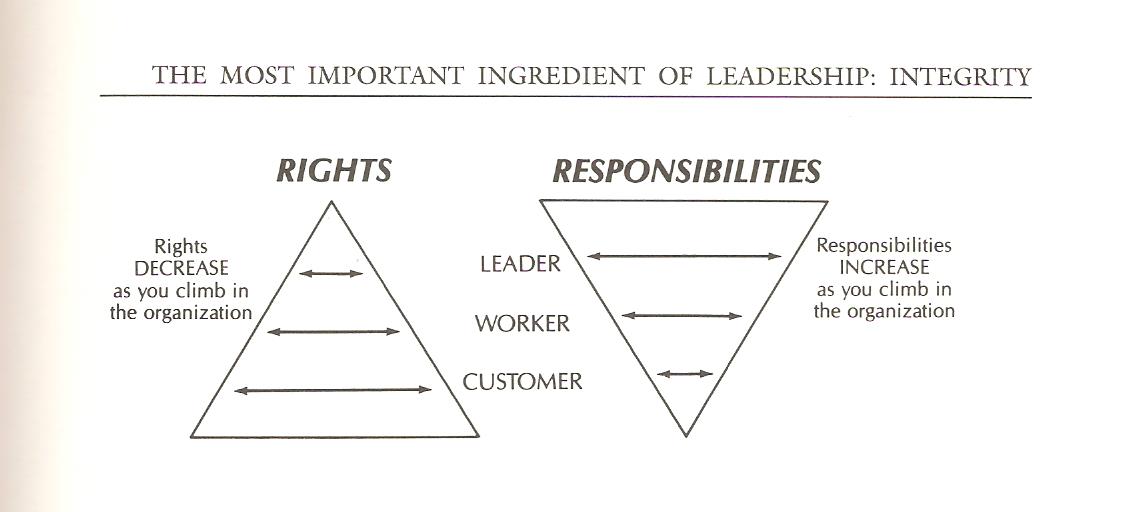
A leadership pyramid I studied some years back by John Maxwell showed that the higher one climbs as a leader the more rights he or she surrenders. In its place is more responsibility. My concern is how less rights and more responsibility fits the narrative of a selfie culture. How do servant leaders emerge from this mindset? How do selfie leaders measure up against servant leaders? Here are but a few examples.

Selfie leaders choose style whereas servant leaders choose substance.

For the selfie type of leader it’s all about their image. Decisions are made and based upon not what’s best for the organization or team but how it makes him or her look. It’s a leadership trap to be sure. Everyone wants to be liked and to be popular, but servant leaders gave up that right a long time ago. Servant leaders will stand for and with those who choose substance over image. In the end it’s about honoring their principles over their popularity. The servant leader sets the example with his integrity.

Selfie leaders are more concerned about receiving while servant leaders care more about giving.

Nothing will more clearly define and set the two apart more readily than this. The selfie  leader is all about what’s in it for him while the servant leader is about giving. It’s all in the math. The selfie subtracts (takes) while the servant leader adds (gives). It’s a reflection of the heart and priorities. The servant leader sets the example not by what he takes but by what he sacrifices and gives.

Maxwellchart 001

Chart is courtesy of: Developing the Leader Within You, by John Maxwell.

Selfie leaders care more about their position while servant leaders care more about their people.

There is no substitute for the human equation in leadership. Positions come and go, but at the end of the day the servant leader who cares less about his title and more about his people is the one who will survive. Selfie leaders can’t help themselves. Eventually it all comes back around to them. Selfie leaders will do whatever it takes to protect that which matters least (position or title) while using the people who matter the most. It’s a sad trap many aspiring leaders fail to see. The servant leader sets the example by modeling humility.

Max de Pree said, “The first responsibility of a leader is to define reality. The last is to say thank you. In between, the leader is a servant.” I believe this leadership philosophy is needed today and is a blueprint for the future. Servant leadership is not about being a weak leader but rather a strong and convincing one. The ultimate measure of a leader’s power is not found in the authority that he or she is willing to grab hold of but in what they are willing to lay down.  It’s not determined by demanding more rights but in assuming more responsibility.

I believe now more than ever in the power of servant leadership. What do you say?


© 2014 Doug Dickerson


I welcome your feedback:

1. What do you believe are the biggest barriers to servant leadership today?

2. Are the selfie leaders as described here more the norm or the exception in your opinion?

3. What tangible things can you do to help build a servant leadership mentality?


Leadership Minute: Listen Up

listen

When people talk, listen completely. Most people never listen. – Ernest Hemmingway

Listening is one of those ever-developing leadership skills. In our high tech world the art of undistracted listening is a waning skill. Listening is one of the highest compliments you can pay to another person. This means putting away your cell phone or tablet and actually making eye contact while acknowledging the other person. To the same degree we expect people to listen when we speak we should extend the same courtesy to others. People will feel respected when they are respected.  Give the other person your undivided attention and hear what they have to say. You will be seen as a leader who cares and you will build your credibility as one who is engaged. Tune out distractions so that you can tune in to what’s really important. Listen up!

Leadership Minute: Get Along

gtaelong

The most important single ingredient in the formula of success is knowing how to get along with people. – Theodore Roosevelt

Knowing how to get along with people is essential in leadership. Building relationships based on trust and respect is necessary if you want to get things done. While it may a stretch to like everyone or for everyone to like you it is a game-changer if don’t know how to get along with others. You develop your leadership skills when you develop your relationship skills. At times you will have to separate the personal from the professional in order to move forward. And the person you think is not your friend now in the long run may be the one to surprise you down the road. The point here is simple: you can get more done and will be more productive when you learn to build bridges to other people instead of burning them. Get along to get ahead.